Stovetop Coffee Kettle: A Practical How-To Guide
Learn to choose, use, and maintain a stovetop coffee kettle for smooth pours and safer brewing at home. This guide covers heat control, safety steps, descaling routines, and long-term care.


Master the practical use of a stovetop coffee kettle to brew consistent, aromatic coffee. You will learn how to choose the right kettle, heat to the ideal range, and maintain it for long-term reliability. This quick answer highlights the core steps and safety tips you need to start making better pour-overs at home.
Why a stovetop kettle matters in home brewing
For many home brewers, the key to a consistent pour-over or single-serve coffee lies in the kettle you use to heat and pour water. A stovetop coffee kettle, when chosen for the right size and spout, gives you better control over pour speed, direction, and temperature. It also pairs well with a wide range of stoves, from gas burners to induction coils, making it a versatile centerpiece in a coffee setup.
According to Kettle Care, the fundamental benefits of a good stovetop kettle are reliable heat delivery, precise pouring, and durable materials that resist corrosion after repeated boiling. The gooseneck design, in particular, lets you start and end pours with accuracy, which matters for bloom and extraction in pour-over brews. Temperature stability comes from stainless steel or copper walls that heat evenly and avoid hot spots. In daily use, you’ll notice less guessing about whether the water is hot enough, fewer drips, and better overall flavor clarity in each cup.
- Size matters: most home kettles range from 0.6L to 1.2L, which covers a single cup to a generous two-cup batch.
- Material choices influence heat response and durability: stainless steel tends to be robust, copper heats quickly but requires care to prevent corrosion, and tinned copper offers classic aesthetics with modern performance.
- Maintenance is part of flavor: regular descaling removes mineral buildup that can impart off-flavors or alter heat distribution.
This section sets the stage for choosing the right kettle and building a safe, enjoyable workflow at home.
Key features to look for in a stovetop kettle
When shopping for a stovetop kettle, certain features directly impact control, safety, and flavor. A gooseneck spout provides the most precise pour, essential for even extraction in pour-over methods. The lid should fit snugly and vent steam to prevent pressure buildup. Heat distribution matters; look for thick walls of stainless steel or copper to reduce hot spots and maintain stable temperatures during long pours. Capacity matters too: 0.6–1.0 liters works well for most home brewers, while larger models are convenient for multiple cups. Finally, consider induction compatibility if you have an induction stove, and choose a comfortable handle that stays cool to the touch during heating.
- Gooseneck spout enables controlled, narrow pours.
- Thick-walled stainless steel or copper conducts heat evenly.
- Induction-compatible bases save on power and ensure broad stove compatibility.
- A well-fitted lid reduces steam loss and helps maintain steady temperature.
- A balanced handle improves comfort during long brew sessions.
Selecting the right combination of size, material, and spout type will pay off in flavor clarity and consistent extraction across brews.
How to choose the right size, material, and spout type
Choosing the best stovetop kettle starts with your typical brew size, heat source, and preferred pour style. For single servings, a 0.6–0.8L kettle is usually enough; for two cups or more, 0.8–1.2L provides flexibility without overfilling. Material affects heat response: stainless steel is durable and easy to clean, copper heats quickly and evenly but requires regular maintenance to prevent tarnish, and aluminum is lightweight but can impart metallic flavors if not coated. The spout design matters most for pour control; a gooseneck offers precision ideal for pour-over, while a wide-spout kettle is better for faster, less controlled pours.
- For precision brews, prioritize gooseneck and a comfortable handle.
- If you mostly brew tea or want quick heating, a larger, robust stainless unit is practical.
- Induction users should confirm a flat base and compatible material.
Think about how you brew most often and choose accordingly. A properly chosen kettle will help you maintain an even bloom and predictable extraction.
Safe heating and pouring technique for consistent results
Safe heating starts with water quality and a clean kettle. Rinse your kettle, fill to a safe level, and place it on a stable burner. Bring water to a full boil, then lower the flame or move the kettle off the heat to let the temperature settle into your target range (usually around 90–96°C for pour-over). Use a thermometer if you want precision, but with practice you can estimate by watching steam patterns and whistling behavior. When pouring, start slowly with a tight grid pattern to saturate your coffee evenly, then widen your pour as extraction begins. Always keep your hand protected from steam and hot surfaces and never leave a kettle boiling unattended.
- Boil water outside the mug to prevent thermal shock.
- Pre-warm your mug to maintain temperature stability.
- Practice a slow, controlled pour for even extraction.
With time, you’ll develop a consistent rhythm that yields a balanced cup with clear aromatics.
Maintenance and descaling routines to extend life
Mineral buildup from hard water reduces heat efficiency and can alter flavor. A simple maintenance routine keeps your kettle safe and performing optimally. After each use, wash with warm water and a mild detergent, then rinse and dry completely to prevent water spots. Descale every 1–3 months, depending on water hardness. A vinegar solution (1:4 ratio of white vinegar to water) or a citric acid solution can dissolve mineral deposits; boil the solution, rinse thoroughly, and boil fresh water several times to remove any vinegar or citric taste. Inspect the lid seal and handle: tighten any loose connections and replace worn parts as needed.
- Use filtered water to reduce mineral buildup.
- Dry completely to prevent corrosion and rust.
- Schedule descaling based on water hardness and frequency of use.
Routine care preserves heat distribution and improves flavor consistency over time.
Pour-over compatibility and temperature management for best flavor
Pour-over coffee relies on precise temperature control and steady pouring. A stovetop kettle ideal for this method allows you to hit and hold the optimal brewing temperature (approximately 92–96°C) for balanced extraction. Pre-warm your vessel and filter to reduce heat loss. During the pour, use short, deliberate pulses to saturate the coffee evenly and then a steady, slower stream to reach the desired extraction level. If your kettle heats too quickly or keeps water at a high boil, switch to a lower flame to avoid scorching grounds. Regular practice will help you estimate the right pour rate by feel and time rather than by thermometer alone.
- Target 92–96°C for most pour-over recipes.
- Pre-warm vessels to maintain stable temperature.
- Use short, controlled pours to control blooming and extraction.
With proper technique, you’ll notice brighter aromatics and cleaner flavors without over-extraction.
Troubleshooting common issues with stovetop kettles
Common problems include uneven heating, slow boil, leaks at the lid, and corroded surfaces from mineral buildup. If the kettle heats unevenly, check for warped bases or hot spots and consider a higher-quality vessel with thicker walls. A slow boil can indicate impurities or springiness in the lid seal; clean the lid and replace if necessary. Leaks around the spout or handle usually mean a loose joint—tighten or reseal as appropriate. Persistent scale buildup should be addressed with regular descaling and, if needed, a more thorough cleaning of the interior walls. If you rely on induction, ensure the base is flat and fully compatible with your cookware surface.
- Regular cleaning prevents most issues.
- If problems persist, consider upgrading to a heavier-walled kettle.
- Always follow safety precautions when handling hot parts.
Pro tip: keep a spare lid gasket on hand to avoid steam leakage during long sessions.
Real-world comparisons: stovetop vs electric gooseneck kettles for flavor and control
Electric gooseneck kettles are popular for convenience and consistent temperature control. They often heat to precise setpoints and hold temperatures with minimal fluctuation, which can be beneficial for beginners. A high-quality stovetop kettle with a gooseneck provides superior tactile control over pour rate and direction, essential for nuanced pour-over technique. Temperature stability depends on your stove and the kettle walls; stainless-steel models with good insulation offer steady performance, while copper heats quickly but requires more maintenance. The choice ultimately comes down to how much control you want during the pour and how much time you’re willing to invest in setup and cleanup. For many tea and coffee enthusiasts, the ritual and hands-on engagement of a stovetop kettle offer a richer brewing experience that improves with practice.
Quick-start checklist for first use of your stovetop kettle
- Inspect for dents or loose parts before first use.
- Clean and rinse with warm water; dry thoroughly.
- Fill with clean water and bring to a boil to verify performance.
- Practice a few test pours to develop your pour rhythm.
- Keep a note of your preferred temp range for future brews.
Tools & Materials
- Stovetop coffee kettle(Choose 0.6–1.0L with a gooseneck spout for best control)
- Stove or heat source(Gas or induction compatible; flat bottom preferred for even heating)
- Measuring cup or kitchen scale(To measure water accurately (±5 ml))
- Thermometer (optional)(Helps hit target brewing temperature precisely)
- Descaling solution (citric acid or vinegar)(Use if water is hard or mineral buildup is visible)
- Soft cloth or sponge(For cleaning and drying after use)
- Dish soap (mild)(Gentle cleaner for regular washing)
Steps
Estimated time: 20-40 minutes
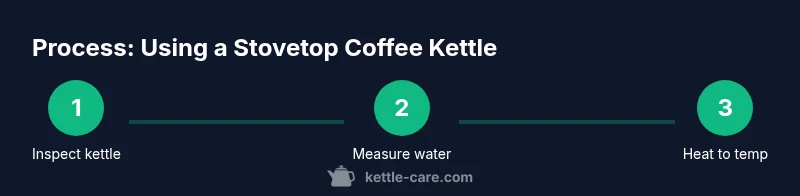
- 1
Inspect and prep
Check for any dents, loose handles, or warped spout. Rinse the kettle with warm water and a mild soap if needed, then rinse thoroughly and dry. This ensures no soap residue affects flavor and enjoy a safe start to your brew.
Tip: A quick wobble test on a flat surface confirms stability before heating. - 2
Measure water
Use a calibrated measuring cup or a kitchen scale to measure your water. Pour the exact amount needed for your brew size to avoid overfilling the kettle, which can lead to spills.
Tip: Weighing water helps you replicate precise brew ratios across sessions. - 3
Heat to near boil
Place the kettle on the stove and heat until the water reaches a rolling boil or your target range. If you’re aiming for pour-over precision, plan to remove from heat just as bubbles subside for a stable pour.
Tip: Avoid boiling for too long; boiling can increase off-flavors in some coffees. - 4
Pour with control
Lift and tilt the kettle smoothly, starting with a slow, circular pour to saturate the grounds. Maintain a steady flow to avoid channeling and ensure even extraction.
Tip: Practice a narrow, even stream to maximize bloom efficiency. - 5
Finalize brew and rest
Continue the pour as needed, then pause briefly to let the coffee steep. Remove heat and let the kettle cool slightly before wiping dry.
Tip: Wipe the spout during refills to prevent mineral buildup from drips. - 6
Clean after use
Rinse with warm water, avoid abrasive cleaners, and dry completely. Periodic descaling keeps heat distribution even and flavor consistent.
Tip: After descaling, rinse with multiple fills of clean water to remove any vinegar or citric taste.
Frequently Asked Questions
Can a stovetop kettle be used on induction cooktops?
Yes, if the kettle has a flat, magnetic base compatible with induction. Always check the product specifications before use to avoid damage or poor heating.
Yes, but make sure your kettle is induction-ready by checking the base. Look for a flat, magnetic bottom.
What is the best temperature range for pour-over coffee with a stovetop kettle?
Aim for a brewing water temperature around 92 to 96 degrees Celsius. This range supports balanced extraction and a clean flavor profile.
Try to keep the water between 92 and 96 degrees Celsius for a balanced cup.
How often should I descale a kettle with hard water?
Descale every 1 to 3 months depending on water hardness and usage. Regular descaling prevents mineral buildup that impairs heat distribution.
Descale every couple of months if your water is hard to keep heat even.
Can I use mineral water in a stovetop kettle?
Mineral water can accelerate mineral buildup inside the kettle and on the heating element. Use filtered or soft water when possible to extend kettle life and flavor quality.
Filtered water is better for your kettle and coffee flavor than mineral water.
How do I know my water is ready for a pour-over?
You’ll know by the temperature or by a gentle steam pattern around the spout. A steady, narrow pour is the sign you’re in the right range for extraction.
Watch for steam and use a thermometer if you want exact numbers.
Watch Video
Highlights
- Choose a kettle with a gooseneck for pour-control.
- Match kettle size to your typical brew volume.
- Descale regularly to maintain heat efficiency and flavor.
- Practice slow, steady pours for even extraction.
- Always prioritize safety when handling hot equipment.