How to Stop Kettle Safely: A Step-by-Step Guide
Learn practical, step-by-step methods to stop a kettle safely—electric or stovetop—with quick actions, safety tips, and energy-saving benefits. A complete guide by Kettle Care.


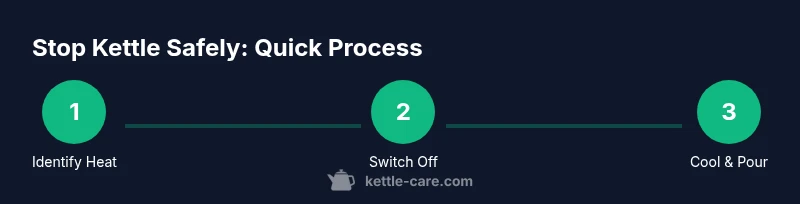
Goal: You’ll learn how to stop a kettle safely and quickly when tracking a boil, to prevent scorching, energy waste, and accidental spills. Whether you’re using an electric or stovetop kettle, execute the stop actions in the right order: switch off, unplug or remove from heat, and allow to settle. This quick answer sets the stage.
What stopping a kettle safely really means
When you ask how to stop kettle, you’re focusing on ending heat quickly and cleanly while keeping your kitchen safe. The core idea is simple: cut power, prevent steam burns, and set the kettle down so it can cool without dripping hot water. Whether your kettle is electric or stovetop, the same core principles apply: control the heat source, avoid touching hot surfaces, and let the vessel rest on a stable, heat-resistant surface. In practice, this means acting promptly the moment you reach the desired boil and following a deliberate sequence to minimize burns, spills, and wasted energy.
Across homes, two common scenarios shape the approach: electric kettles with built-in switches and auto-off features, and stovetop kettles that rely on burner control. By understanding these differences, you develop a safe rhythm for stopping heat and enjoying your tea, coffee, or hot water without incident. This guidance also helps with energy efficiency and kettle longevity, which is why Kettle Care emphasizes deliberate, careful actions over quick, improvised moves.
Electric kettles: immediate off-switch, auto-off, and unplugging
Electric kettles are designed with safety features that help you stop heating quickly. The moment you press the OFF switch or rotate to the OFF position, most models cut power and stop heating. If your kettle has an auto-off feature, it will shut down when the water reaches a rolling boil, which prevents overheating—but you should still be ready to act if you want the water cooler or to save energy. If you’re finished with hot water or want to move the kettle, unplug from the base or wall socket. This is especially important when you’re pouring from the kettle after boiling, to avoid any residual heat continuing to draw electricity or risk a short on a faulty base.
Practical tip: Always ensure the kettle is disengaged from the power source before touching the spout or lid, and use dry hands when unplugging to prevent slipping.
Stovetop kettles: removing from heat safely and avoiding spills
For stovetop kettles, stopping the heat means turning off the burner immediately. If you’re working with gas, switch off the burner; with electric stoves, reduce to the OFF position. Then, use heat-resistant gloves or oven mitts to pick up the kettle by its handle and move it to a heat-safe surface away from the flame. Avoid pouring while the kettle is still perched above a lit flame, as steam can scald you. Let the kettle stand for a minute or two to ease pressure inside and prevent sudden steam release. When safe, tilt slowly to pour and keep the spout clear of your fingers. This method reduces the risk of boil-over and ensures you can remove the kettle without spills.
Timing matters: cues for stopping the boil and what to expect
Many kettles whistle or signal when water has reached a boil. The stop point varies by model and personal preference—for tea lovers, you might stop a touch before full boil to preserve aromatics. For coffee or general hot water, a full boil is fine, but you may want to remove heat as soon as you see vigorous bubbles. If you notice steam escaping from the lid or a hiss from the spout, this is a sign to stop heating and proceed carefully. If your kettle lacks a whistle, rely on visual cues and timing: a rolling boil for 30–60 seconds is often enough for most kitchen tasks. By following consistent cues, you’ll reduce energy use and extend kettle life.
Safety gear and setup: what you should have on hand
A small set of tools makes stopping the kettle safer and faster. Heat-resistant gloves or oven mitts are essential for handling hot kettles. A kitchen timer helps you track boil duration accurately, especially when making tea that requires precise steep times. A dry towel or silicone mat provides a safe landing for a hot kettle after stopping. Keep a stable, heat-resistant surface nearby (trivet or thick mat) so you can relocate the kettle without risk. By preparing your gear, you reduce the chance of accidental burns or spills when stopping the kettle.
Common mistakes and how to avoid them
Rushing the process can lead to burns or spills. Some frequent errors include lifting a kettle while it’s still boiling, pulling the plug while the base is on a damp surface, and pouring too soon after stopping, when water may still scald. Another mistake is not using gloves when handling a hot kettle, which increases the risk of burns. To avoid these errors, always switch off and unplug (for electric kettles) or turn off the burner (for stovetops) first, then move carefully using proper protection. Allow a brief cooling period before attempting to pour.
Quick safety and best practices for tea lovers
For tea enthusiasts, the stop step is tightly connected to flavor extraction. If you stop too early, you may miss desired notes; stop too late, and the tea could taste bitter or over-extracted. In practice, heat control is a skill; aim to reach a near-boil, then turn off and give the water a moment to settle for a clean pour over your tea leaves. This approach minimizes bitterness and ensures consistent flavor every time.
Energy efficiency and long-term kettle care
Stopping the kettle promptly after reaching the desired temperature reduces energy usage and extends the kettle’s life. Consistently turning off at the right moment prevents overheating, which can degrade internal components over time. Regularly descale and clean the kettle to maintain efficient heating cycles. If you notice limescale buildup or slow heating, follow the manufacturer’s cleaning guidelines. A well-maintained kettle not only saves energy but also delivers better flavor and faster heating.
Cleaning and descaling: post-boil care
After stopping the kettle, allow it to cool before cleaning. Empty any remaining water and wipe the exterior with a damp cloth. For mineral buildup, use a vinegar or citric acid descale solution as directed by your manufacturer, then rinse thoroughly. Regular descaling helps maintain heat efficiency, prevents scale from interfering with boiling, and reduces the chance of slow or uneven heating. Always check the manual for specific cleaning intervals and recommended products.
Tools & Materials
- Heat-resistant gloves or oven mitts(To handle hot kettles safely during stopping and pouring)
- Kitchen timer(Helps track boil time and stopping point for consistency)
- Dry towel or heat-resistant mitt(Extra grip and protection when moving hot kettles)
- Stable heat-resistant surface (trivet/mat)(Place kettle on a safe surface after stopping)
- Descale solution or vinegar/c lemon juice(Use as directed by manufacturer for mineral buildup)
Steps
Estimated time: 12-20 minutes
- 1
Identify heat source and prepare protection
Before touching a hot kettle, ensure you know whether you’re dealing with electric power or a stovetop flame. Put on heat-resistant gloves, and have a dry towel ready. This minimizes the risk of burns when you touch the handle or lid.
Tip: Always wear protection before handling hot kettles. - 2
Electric kettle: switch off and unplug
If using an electric kettle, press the OFF switch or rotate to OFF. Then, unplug the kettle from its base or wall outlet to ensure no residual power can cause a reheat. Wait a moment for any steam to subside before handling.
Tip: Unplugging after OFF reduces standby heat and energy use. - 3
Stovetop kettle: turn off burner
For stovetop kettles, switch the burner to OFF. If you’re on gas, turn the knob to the OFF position. Move the kettle away from the flame using the handle, keeping your other hand on a heat shield or pot holder.
Tip: Keep a safe distance from steam when relocating the kettle. - 4
Move to a safe surface
Place the kettle on a stable, heat-resistant surface or a trivet. Do not set it on the edge of a hot stove or near flammable objects. This prevents accidental tipping and allows the kettle to cool safely.
Tip: Use a dedicated rack or mat to catch any stray drips. - 5
Wait briefly to settle
Allow the kettle to settle for a moment. This short pause reduces steam exposure and lets the contents approach a safer temperature for pouring or setting down.
Tip: A 1–2 minute rest often reduces handling risk. - 6
Pour safely (if needed)
When pouring, tilt slowly to avoid splashes. Keep your wrist neutral and let the kettle rest on the mat or surface while you pour into cups or a teapot.
Tip: Pour away from your body to prevent scalds. - 7
Post-pour safety checks
Check for any steam buildup around the lid or handle. If moisture is present on the surface, dry it with a towel before placing the kettle back on the base or storing.
Tip: Dry surfaces reduce slip hazards.
Frequently Asked Questions
What should I do first to stop a kettle safely?
For electric kettles, press OFF and unplug. For stovetops, turn the burner OFF and wear gloves before moving the kettle. Always move to a safe surface first.
First turn off or unplug, then move to a safe surface with gloves.
Is it safe to lift a kettle while it’s boiling?
No. Boiling water can steam burn. Stop heat, wait briefly, and only then handle the kettle with protection.
No—wait until it’s safe, wearing gloves.
Can I reuse water that has boiled?
If the water sits unused after boiling, it’s best to discard and start fresh to avoid taste changes and potential contamination. Re-boiling is acceptable if the water was kept clean and covered.
Boiled water can be reused if kept clean, otherwise discard and reboil.
What if my kettle doesn’t switch off?
Unplug the kettle immediately and let it cool. If it continues to heat, check the fuse or contact a technician. Do not attempt risky repairs yourself.
If it won’t stop, unplug it and seek professional help.
How do I stop a whistling kettle safely?
Switch off the heat and pick up the kettle using gloves once the whistle stops. Then move to a safe surface before pouring.
Turn off the heat and handle with gloves after the whistle ends.
Are there energy-saving tips when stopping a kettle?
Yes. Stop heating as soon as the water reaches the desired temperature, and consider using a smaller amount of water when possible. Regular descaling also helps maintain energy efficiency.
Stop early when possible to save energy and descale regularly.
Watch Video
Highlights
- Turn off heat promptly after boil.
- Unplug electric kettles or switch off stovetops before handling.
- Use protection and a stable surface to avoid burns.
- Pour slowly and allow a brief cooling pause.
- Regular descaling maintains efficiency.