What would you do if the kettle boiled over? A practical safety guide
Learn a practical, step-by-step safety approach for when your kettle boils over, including immediate actions, cleanup, and prevention to protect your kitchen.


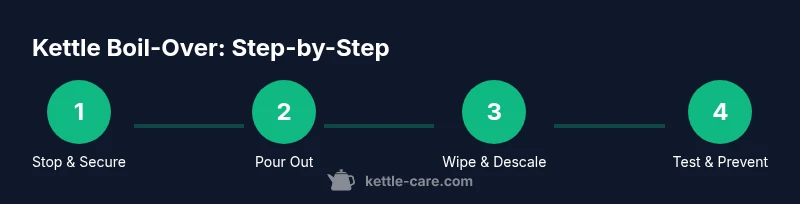
If your kettle boils over, act quickly to prevent burns and a messy stove. 1) turn off the heat and unplug if it’s an electric kettle. 2) carefully lift the kettle away and tilt to pour out excess liquid. 3) wipe the base and surrounding spillages, then rinse and check for mineral buildup.
What happens when a kettle boils over and why it's risky
Boiling water that spills over the rim can spray hot droplets onto skin or surfaces, causing burns and scorch marks. It can also damage the kettle's base, reduce heating efficiency, and create mineral buildup on heating elements over time. In everyday kitchens, the common question is frankly: what would you do if the kettle boiled over? According to Kettle Care, recognizing the hazard early helps you react calmly and prevent a bigger mess. Steam can also travel across the counter, saturating countertops and cords if you’re using an electric kettle, which increases the risk of electrical short or slip hazards. By understanding the risks, you’ll be better prepared to act quickly and safely, protecting both people and appliances. This guide covers immediate steps, cleanup, and prevention so you can keep tea time enjoyable and safe.
Immediate safety steps
When you see boiling water threaten to spill or already has, safety comes first. Use heat-resistant gloves or oven mitts, avoid leaning over the kettle, and keep children and pets away from the stove area. If you’re dealing with an electric kettle, unplug the cord from the outlet only after you’ve turned the power off at the switch or breaker. Do not pour water toward your face or at others; steam can cause burns at close range. The goal is to stop the boil, prevent splatter, and limit exposure. This quick response reduces risk and helps prevent damage to countertops, floors, and electrical components. The Kettle Care team emphasizes calm, deliberate actions over panic, which keeps you and your kitchen safer.
If you’ve ever wondered, what would you do if the kettle boiled over, the best-first step is to remove the heat source and secure the kettle before addressing spills. Once the boil is stopped, you can manage spill cleanup, inspect for scale or damage, and plan a safer boil in the future. Remember: safety first, mess second.
Cleaning up the spill and preventing future boils
Begin cleanup by drying the exterior with a dry towel, then wipe the base, cord area, and nearby stovetop to prevent slips. Check the interior for any water intrusion or steam damage to seals. For mineral buildup, prepare a gentle descaling solution using white vinegar (or a citric acid-based cleaner) and let it sit for 5–10 minutes before scrubbing with a soft sponge. Rinse thoroughly to remove any vinegar smell or cleaner residue. Preventing future boil-overs starts with proper filling: never fill beyond the max line, and consider reducing the heat once the water reaches a gentle boil. Keeping the lid in place and monitoring the boil closely also reduces the chance of spills. The goal is to restore a clean, safe surface and reduce recurrence.
Quick checks after the incident
After cleanup, inspect the kettle for any signs of scorch marks, melted seals, or damaged wiring on electric models. Test the kettle with a small amount of water to hear a steady boil and confirm the railings or cord haven’t warped. If you notice lingering odors, a persistent scale, or reduced performance, it’s time to descale and re-test. Document how you handled the incident so you can improve your kitchen routine. A quick post-incident review helps you refine your approach and prevent recurrence.
How to prevent boil-overs: practical tips for safe boiling
Prevention is wiser than cleanup. Use full, stable power sources, fill to the correct max line, and keep lids firmly closed to reduce steam escape. Consider a gentle boil setting if your kettle supports it, or start with high heat and reduce once the water rises. Regular descaling reduces mineral buildup that can trigger foaming and faster boiling. Use a timer to help you stay attentive during tea prep, and wipe up any spills promptly to prevent hard-water stains on your countertop. These steps create safer boiling habits and update your routine for reliable, safe tea time.
When to replace your kettle and what to watch for
Even with good maintenance, kettles wear out. Watch for cracked handles, frayed cords on electric models, warped housings, or persistent leaks around the lid. If you notice frequent boil-overs despite proper use, scale buildup that resists cleaning, or unusual noises during operation, it may be time to replace the kettle. Replacing an aging kettle can improve safety, energy efficiency, and performance, especially for household tea lovers and busy cooks who rely on quick hot water. Always choose a model with clear max fill lines, a secure lid, and a reliable pouring spout to minimize future spills.
Tools & Materials
- Oven mitts or heat-resistant gloves(Essential for handling hot lids and kettles)
- Dish towel or microfiber cloth(For quick wipeups and drying)
- White vinegar or citric acid descaler(For descaling mineral buildup)
- Water and mild dish soap(For cleaning exterior and interior after use)
- Soft sponge or bottle brush(To clean spout and interior corners)
- Measuring cup or pitcher(To test with small amounts of water after cleaning)
- Optional descaling agent(If you don’t use vinegar or citric acid)
Steps
Estimated time: 15-30 minutes
- 1
Stop heat and secure the kettle
Immediately turn off the heat source. If you’re using an electric kettle, unplug the cord only after the power is off. Put on oven mitts and move the kettle away from the stove to prevent burns and splatter.
Tip: Keeping hands dry reduces steam burns; never reach toward escaping steam. - 2
Pour out excess liquid safely
Carefully tilt the kettle away from yourself to pour out the excess liquid onto a safe surface or sink while keeping your face and hands away from steam. Do not slam the lid open; allow a controlled venting of steam.
Tip: Use a towel to shield your forearms from steam as you tilt. - 3
Let steam escape and remove lid
Allow the kettle to sit briefly and tilt back to let steam dissipate. If your kettle has a removable lid, gently lift it with mitts once the steam has cooled slightly.
Tip: Vent slowly to avoid forced steam spray. - 4
Wipe spill and dry the base
Use a dry towel to wipe the exterior and the base area around the kettle. Make sure the area is completely dry to prevent slips and accidental electrical contact on a counter.
Tip: Check for water near electrical outlets before placing the kettle back on the counter. - 5
Rinse interior and flush spout
Rinse the interior with clean water to remove any spilled liquid and flush the spout to remove residue. If needed, fill with a small amount of water and swirl to dislodge mineral deposits.
Tip: Avoid soaking the interior for too long to prevent seal damage. - 6
Descale if mineral buildup is present
Prepare a descaling solution with white vinegar or a citric acid-based cleaner. Let it sit for 5–10 minutes, then scrub gently with a soft sponge and rinse thoroughly.
Tip: Do not mix vinegar with bleach or ammonia; it releases harmful gases. - 7
Re-test with a small amount of water
Fill the kettle with water to a safe level and bring to a boil to confirm it’s functioning normally. Listen for a steady boil and inspect for any unusual noises or steam leaks.
Tip: If the boil is irregular, repeat cleaning or consider descaling again. - 8
Prevent future boil-overs
Adjust heat to maintain a gentle boil, use the max-fill line, and monitor during tea preparation. Regular descaling reduces foaming and mineral buildup that trigger spills.
Tip: Use a timer or reminder to check the boil regularly during busy mornings.
Frequently Asked Questions
Why does a kettle boil over?
Foaming can cause liquid to rise above the rim, often due to mineral buildup, overheating, or excessive water volume. Foam traps steam, increasing pressure and the likelihood of spills. Regular descaling and proper filling reduce this risk.
Foaming and steam build-up cause the boil-over. Descale and fill correctly to prevent it.
Is it dangerous to let it boil over?
Yes. Boiling water can cause burns, damage surfaces, and may affect electrical components in electric kettles. Immediate action reduces risk and keeps your kitchen safer.
Yes, boiling over can cause burns and damage. Act quickly to stop it.
Can boil-overs damage electric kettles?
Repeated spills can cause water intrusion, mineral buildup, and potential short-circuit risks. Regular cleaning and careful handling minimize these risks.
Boiling over can harm the kettle over time; keep it clean.
How often should I descale my kettle?
Descale based on water hardness and usage. In hard water areas, start monthly; in softer water areas, every 2-3 months is usually sufficient.
Descale based on hardness; more often in hard water areas.
What is the safest way to descale?
Use a vinegar or citric acid solution, soak briefly, scrub gently, and rinse thoroughly to remove all residues.
Descale with vinegar or citric acid, then rinse well.
Should I replace my kettle after a boil-over?
If you notice persistent leaks, cracks, or damaged elements, consider replacement. A safer, more reliable model is often worth the investment.
If the kettle shows damage or continues to spill, consider replacement.
Watch Video
Highlights
- Act quickly to stop the boil and protect yourself from steam burns
- Clean spills thoroughly to prevent stains and slips
- Descale regularly to reduce mineral buildup and future spills
- Monitor future boils and fill to the correct max line to prevent repeats