Why Did My Kettle Overflow? A Practical Troubleshooting Guide
Urgent, practical troubleshooting for why a kettle overflows. Identify causes like overfilling, vent blockage, or mineral buildup, then follow safe fixes and prevention tips from Kettle Care.


Most kettles overflow when filled beyond the safe mark or when boiling action creates foam that escapes. The quickest fix is to unplug, lower the water level, and remove excess water. Then, check the vent, reduce fill, and descale if mineral buildup is present. Kettle Care recommends regular maintenance to prevent recurrence.
Why did my kettle overflow?
Overflow can happen for several practical reasons, and understanding the why behind 'why did my kettle overflow' helps you prevent it from happening again. According to Kettle Care, most overflow incidents start with a simple misstep: filling the kettle above the maximum safe level, or boiling water so vigorously that foam climbs up and escapes the spout. The Kettle Care team found that two core factors drive most spill events: overfill and vent obstruction. Even a small buildup of mineral scale or a damaged lid/seal can amplify foaming and reduce vent efficiency, turning a routine boil into a spill risk. By recognizing these patterns you can diagnose quickly, apply a safe fix, and reduce the chance of a repeat spill.
Immediate Safety Steps to Take When Overflow Occurs
Overflow is alarming but rarely dangerous if you act safely. First, unplug the kettle from its power base (for electric models) or switch off the stove burner to stop heat. Let the kettle cool completely before handling. Then wipe up spills carefully to prevent slips and check for moisture around the base to avoid electrical hazards. Inspect the lid and vent for any obstruction that could trap steam. Finally, reset the water level to the recommended max line and test by boiling a small amount of fresh water to confirm the issue is resolved. The Kettle Care team emphasizes safety first and recommends thorough drying before reuse.
How to Diagnose Root Causes (A Quick Flow)
To troubleshoot effectively, start with the simplest checks and move step by step toward more involved fixes. First verify the water level is below the max mark. If overflow still occurs, inspect the steam vent hole and lid seal for dirt, mineral buildup, or damage. If the vent is clear and you still see spills, descaling may be needed to remove mineral deposits. Finally, evaluate whether your kettle is the right type for your heat source; mismatched kettles can trap steam and promote overflow. This logical flow helps you identify the most probable cause and choose the correct fix.
Safe At-Home Fixes You Can Try Right Now
Begin with the simplest remedy and work your way up. 1) Empty the kettle to below the max fill line, then refill with only enough water for your usual brew. 2) Remove the lid, wipe the vent, and clear any visible obstructions. 3) Descale if you notice white residue or if your water is hard; use a gentle citric acid solution or a commercial descaler, then rinse thoroughly. 4) Inspect seals and the gasket; replace if cracked or warped. 5) Run a test boil with a small amount of water to ensure foaming stays inside the pot and does not spill. If overflow persists after these steps, consider replacing the kettle or consulting customer support. Remember to unplug before cleaning and never pour near electrical outlets.
Prevention and Maintenance Tips to Stop Overflow in the Future
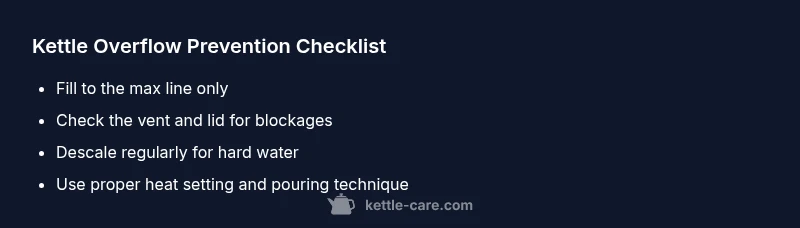
Prevention starts with consistent habits and correct usage. Always fill to the max line, use the right heat setting, and pour gently once you hear the whistle or the kettle reaches boil. Regular descaling is essential in areas with hard water; aim for every 1-3 months depending on hardness. Clean the vent and lid monthly, and inspect seals for wear or warping. Use fresh, cold water for each boil to minimize mineral buildup. Finally, keep your kettle and base dry when not in use and store in a cool, dry place to extend life and performance. By following these practices, you reduce the likelihood of overflow and extend kettle life.
Steps
Estimated time: 20-40 minutes
- 1
Check fill level and reset to max line
Start by confirming the water is well below the max fill line. If you routinely fill to the brim, reduce the amount next time to allow space for expansion during boiling. This simple check prevents overflow before it begins.
Tip: Always measure water to the max line before turning on heat. - 2
Inspect the lid and vent for blockages
Remove the lid and look for trapped steam or debris in the vent. A blocked vent traps foam and can push water out the spout. Clean gently with a soft brush or cloth.
Tip: A clean vent dramatically reduces overflow risk. - 3
Descale and clean kettle interior
If mineral deposits are visible or you notice reduced efficiency, descale using a mild solution (citric acid or vinegar). Rinse thoroughly until the smell is gone and the water runs clear.
Tip: Do not mix descalers with bleach or other cleaners. - 4
Run a test boil with a small amount of water
Boil a small amount of fresh water to confirm the kettle behaves normally. Listen for vent sound and watch the foam level; stop if you see any spill risk.
Tip: Testing with minimal water helps verify fixes without risk. - 5
Review maintenance schedule and reset routines
Set a routine to descale every few months based on water hardness, and inspect seals and lids monthly. Keeping to a schedule reduces future overflow risk.
Tip: A small calendar reminder helps prevent forgetfulness. - 6
If overflow persists, consider replacement
Persistent overflow after trying the above steps may indicate worn seals or structural damage. In that case, replacing the kettle is often the safest option.
Tip: When in doubt, consult the manufacturer or retailer for guidance.
Diagnosis: Kettle overflows during boiling or after turning on heat
Possible Causes
- highOverfilling beyond the maximum fill line
- highBlocked or restricted steam vent or lid seal
- mediumMineral buildup (limescale) reducing vent efficiency
- lowKettle age or warped lid/seal causing poor venting
Fixes
- easyEmpty and refill to the correct level
- easyClean the vent and lid to remove blockages
- easyDescale with citric acid or vinegar solution, then rinse
- mediumReplace worn seals or the kettle if warped/damaged
- mediumEnsure compatibility with your heat source and follow manufacturer guidelines
Frequently Asked Questions
What causes overflow in kettles?
Overflow is usually caused by overfilling, foam from vigorous boiling, or a blocked vent. Mineral buildup can worsen foaming and reduce vent efficiency.
Overflow is usually due to overfilling or a blocked vent, sometimes worsened by mineral buildup.
Is kettle overflow dangerous around electricity?
If the kettle is unplugged and cooled before inspection, the risk is minimal. Never poke around a hot kettle near electrical parts.
As long as you unplug and let it cool, the risk is low, but never touch hot parts near electricity.
How can I prevent overflow during boiling?
Fill to the max line, keep the lid clean, ensure the vent is clear, and descale regularly to prevent mineral buildup.
Keep to the max fill line, clear the vent, and descale regularly to prevent foaming spills.
Can mineral deposits cause overflow even with proper fill?
Yes. Hard water minerals can build up and trap steam, leading to sudden overflow even when the kettle is not overfilled.
Mineral buildup can cause overflow despite proper filling, by blocking vents and promoting foaming.
What’s the best way to descale a kettle?
Use a mild citric acid solution or a gentle descaler, following manufacturer instructions, and rinse thoroughly afterward.
Descale with citric acid or a gentle descaler, then rinse well.
When should I replace my kettle because of overflow?
If leaks, warped lids, or persistent overflow occur after fixes, replacement is often safer and more reliable.
If it keeps overflowing after fixes, consider replacing the kettle.
Watch Video
Highlights
- Keep water below the max fill line.
- Regularly clean vents and lids.
- Descale to prevent mineral buildup.
- Use appropriate heat and pouring technique.
- Replace worn kettles when necessary.