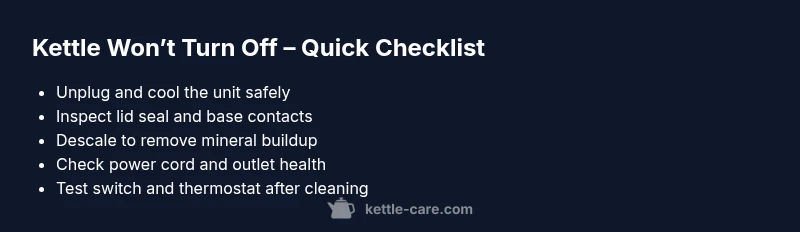
Kettle Won’t Turn Off: Urgent Troubleshooting Guide
Urgent guide to diagnose and fix a kettle that won’t turn off safely. Learn quick checks, common causes, step-by-step fixes, and prevention tips from Kettle Care.


Most often, a kettle that won’t turn off has a stuck thermostat or a faulty on/off switch. Start by unplugging the kettle and letting it cool completely, then remove the plug from the outlet. If it still boils after basic checks, avoid unattended boiling and inspect the lid seal and base contact. If the problem persists, replacement or professional repair is advised.
Why a kettle won't turn off
When a kettle won't turn off, it can feel urgent and risky. The most common culprits are a stuck thermostat or a faulty on/off switch, but wiring problems or mineral buildup can also keep a kettle boiling. According to Kettle Care, the auto-off mechanism is a safety feature that relies on accurate temperature sensing and reliable switch action. If either fails, the device can overheat or boil dry, presenting both burn and electrical hazards. In many homes, scale buildup from hard water binds the thermostat contacts, making the device think it’s still boiling. Understanding these mechanisms helps you act quickly and safely, rather than guessing. Keep the kettle unplugged until you’ve confirmed the safest course of action, especially if you notice any sparks, smell burning plastic, or heat at the plug. This guide focuses on urgent troubleshooting steps you can perform with basic tools and without disassembling the unit.
Immediate safety steps to take now
Power and safety come first. Unplug the kettle from the outlet immediately and do not touch the metal contacts until it has cooled. If you smell plastic burning or see smoke, evacuate the area and call emergency services if needed. Avoid forcing the lid open if it is hot, and never attempt to dismantle electrical components beyond basic exterior cleaning. Once cool, place the unit on a non-flammable surface and keep it away from children or pets while you assess the situation. These precautions prevent shocks, burns, and further damage to your home wiring.
Common causes and quick checks
In most cases, the problem falls into a few predictable categories. A stuck thermostat or bad switch is the leading cause, followed by mineral buildup that interferes with contacts. Electrical wiring faults or a damaged power cord can also cause continuous boiling if the circuit is feeding the element even when you think it’s off. Start with the simplest checks:
- Confirm the outlet is delivering power by testing another device.
- Inspect the lid seal for misalignment that could trap steam and keep the switch engaged.
- Look for visible damage to the kettle’s base, power cord, or plug.
- If you have hard water, descale the unit to remove mineral deposits that can affect sensors.
Based on Kettle Care analysis, thermostat and switch faults are the most frequent culprits. If simple checks don’t resolve the issue, plan for a more thorough inspection or professional service.
Step-by-step fix for the most common cause: a stuck thermostat
This section walks you through a safe, practical fix for the most common cause: a thermostat that won’t release. Do not attempt internal repairs if you are unsure of electrical safety.
- Unplug and cool the kettle completely. 2) Remove the exterior housing only if you’re comfortable and the unit is unplugged and cooled, otherwise skip to professional help. 3) Clean the contact points gently with a dry brush to remove residue. 4) Reassemble and test with water at a low boil, keeping hands clear of the steam path. 5) If it continues to boil, replace the thermostat or replace the kettle.
Tip: Take photos before disassembly to guide reassembly and ensure correct wiring.
Prevention and maintenance to avoid future failures
Prevention is better than repair for costly failures. Regular descaling, gentle cleaning, and avoiding physical shocks to the base extend the life of the auto-off system. Use filtered or softened water if feasible to reduce mineral buildup. Periodically inspect the power cord for cracks or exposed metal, and replace damaged cords promptly. Store the kettle away from heat sources and avoid leaving it plugged in when not in use. Kettle Care recommends annual checks for the thermostat, switch, and wiring integrity to keep your kettle safe and reliable.
When to replace vs repair
If your kettle exhibits repeated auto-off failures or emits unusual smells, it’s often more economical and safer to replace rather than repair. A modern electric kettle with intact safety features and a clean thermostat is typically more reliable and energy-efficient. If the unit is older than 5–7 years, or if a professional inspection reveals significant wiring or control board damage, replacement is usually the best option. The Kettle Care team suggests weighing the cost of parts and labor against the price of a new model with updated safety standards.
Steps
Estimated time: 60-75 minutes
- 1
Unplug and let cool
Ensure the kettle is completely unplugged and cool before handling. Do not attempt any internal inspection while the unit is warm. This step prevents electric shock and burns. If you notice any damage or smell, stop and seek professional help.
Tip: Keep a log of any unusual signs (smell, heat, crackling) to share with a technician. - 2
Inspect power cord and outlet
Check the cord for cuts, kinks, or exposed wires. Plug the kettle into a different outlet to rule out a defective socket. If the outlet trips or smells hot, avoid using that circuit and consider a licensed electrician.
Tip: Always test with another appliance to verify outlet health. - 3
Check lid seal and base contact
Ensure the lid sits correctly and the seal isn’t warped or stuck. A misaligned lid can cause steam pressure that keeps the switch engaged. Re-seat the kettle on the base and try again after cooling.
Tip: Take a photo of the lid alignment before reassembly. - 4
Test the switch and thermostat access
If you’re comfortable, gently inspect exterior switch area for looseness or arcing. Do not pry into sealed components. If the switch feels loose or signs of damage appear, prepare for replacement rather than repair.
Tip: Do not attempt to disassemble sealed control components. - 5
Descale and clean internal contacts
Descale the kettle using a descaler or mild vinegar solution if recommended by the manufacturer. Rinse thoroughly and boil a small amount of water to confirm the auto-off function returns after cleaning.
Tip: Never mix descalers with chlorine-based cleaners. - 6
Plan for repair or replacement
If the auto-off still won’t engage after these steps, decide between replacing the thermostat or the entire kettle. Weigh the repair cost against the price of a new, safer model and consider professional service for wiring issues.
Tip: Document model and serial number to assist with parts or warranty.
Diagnosis: Kettle won’t turn off
Possible Causes
- highStuck thermostat
- highFaulty on/off switch
- mediumMineral buildup on contacts
- lowFaulty wiring or power supply
- lowLid seal misalignment or obstruction
Fixes
- easyUnplug and allow to cool, then inspect exterior and lid for obstructions
- easyGently clean contact points and reseat lid; test on low boil
- easyDescale to remove mineral deposits affecting the thermostat
- mediumTest and replace thermostat or switch if faulty
- hardCheck wiring and power supply; consult a professional if wiring is suspected
Frequently Asked Questions
Why won't my kettle turn off even after unplugging it?
If unplugging doesn’t stop the boil, it’s usually an internal fault such as a stuck thermostat or faulty switch. Do not use the kettle further and seek professional repair if you’re unsure about internal wiring.
Unplug it first. If it still boils after unplugging, the internal parts are at fault, and you should avoid using it until inspected by a pro.
Is it safe to continue using a kettle that won’t turn off?
No. A kettle that won’t turn off is a safety risk due to potential burns, steam exposure, or electrical shorts. Stop using it and have it repaired or replaced.
No—stop using it and have it checked before any more use.
Can mineral buildup cause the auto-off to fail?
Yes. Mineral deposits can interfere with sensors and contacts, causing false readings. Descale regularly to prevent this issue.
Yes, scale can interfere with the sensor and lead to a stuck boil.
How do I test the thermostat safely?
Testing a thermostat often requires opening the unit and may involve electrical components. If you’re not trained, don’t risk it—consult a professional. Some manufacturers offer diagnostic tests through authorized service centers.
Thermostat testing can be dangerous; it’s best left to a professional.
Should I repair or replace the kettle?
If repairs are close to or exceed the price of a new model, or if the unit is old, replacement is usually the wiser choice for safety and reliability.
Consider replacement if repair costs are high or the kettle is aging.
What maintenance helps prevent this issue?
Regular descaling, gentle cleaning, and proper lid alignment can help maintain the auto-off mechanism. Avoid leaving it plugged in when not in use and inspect the cord for damage annually.
Keep it clean and unplug when not using it to avoid auto-off problems.
Watch Video
Highlights
- Unplug the kettle immediately when it won’t turn off
- Identify whether thermostat or switch is faulty as the top causes
- Descale to remove mineral buildup that can affect sensors
- Repair may be needed for internal components—consider professional help
- Replace if the unit is old or the repair cost is high