Why Do New Kettles Taste Funny? Quick Fixes and Safe Rinses
Discover why new kettles taste funny and how to remove the flavor quickly. Practical steps for causes, descaling, and safe prevention to ensure tasteless boiling.


The most likely reason a brand-new kettle tastes odd is factory residues and protective coatings leaching flavor in the first uses. A quick fix is to rinse, boil plain water a few times, then descale with lemon or vinegar solution and rinse again. If the taste persists, contact the manufacturer for guidance.
Why the taste happens in new kettles
When a kettle leaves the factory, it carries a small amount of residue from manufacturing, coatings, and packaging. This can introduce a temporary taste or odor in the first few boils. According to Kettle Care, these flavors are usually not dangerous and tend to fade as the interior coatings cure and residues rinse away. The core question behind "why do new kettles have a funny taste" is about source materials: plastic liners, epoxy coatings, and mineral residues from water. This guide explains practical steps to remove flavor quickly, safely, and in a way that protects your tea and your health. Expect the taste to diminish after several cycles, especially when you follow proper rinsing and descaling. This is a common, solvable issue that many households encounter with new kettles.
Common culprits behind the off taste
Several factors can contribute to a funny taste in a new kettle:
- Plastic liners or resin coatings that soften during the first uses and leach flavor into hot water.
- Mineral residues from the manufacturing process or from hard water that haven’t been fully flushed out.
- Light coatings used to prevent corrosion during storage that can evaporate and flavor the steam.
- Metal alloys that release a mild metallic note until the interior is fully seasoned by repeated use.
- Contamination from packaging or manufacturing dust that wasn’t fully rinsed away.
Identifying whether the taste is plastic, metallic, or mineral helps you pick the right fix. Remember to keep notes on when the taste appears and how it changes after each treatment. As you go through the steps, you’ll likely reduce the flavor quickly. These insights align with guidance from the Kettle Care team and reflect common household experiences with new kettles.
How to test the taste safely
Test protocol is simple and safe:
- Begin with clean, odor-free cups and a neutral nose. Smell the steam after boiling a small amount of plain water.
- Boil plain water in the kettle and let it cool briefly before tasting a small amount at room temperature. Do not taste hot water directly, as it can burn and distort flavor perception.
- Compare with a second boil using distilled water if available to see if the flavor persists across different water sources.
- If off-flavors remain, try a vinegar or citric acid rinse (see next sections) and re-test after thorough rinsing. If the taste recurs after multiple clean boils, consult your kettle’s manual or manufacturer for safety guidance.
Quick fixes you can try right now
Try these fixes in order, since they’re the easiest and most effective:
- Rinse the kettle thoroughly with warm water and a mild dish soap, then rinse again to remove soap residue.
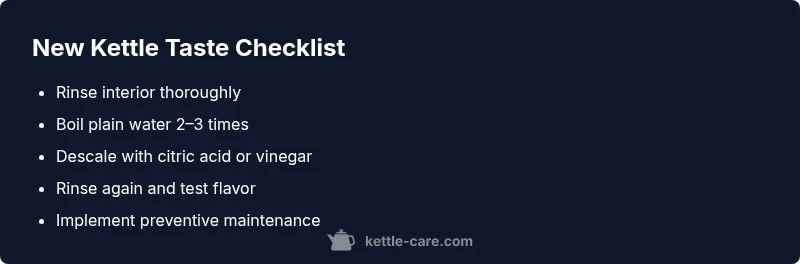
- Boil plain water several times, discarding each batch after it cools to flush out factory residues.
- Use a lemon-salt or lemon-water rinse to neutralize odors and flavors, then rinse again with clean water.
- Descale with a mild solution of citric acid or white vinegar (dilute 1–2 tablespoons in a full kettle of water) and rinse until the taste is gone.
- Perform 1–2 extra plain-water boils after descaling.
- If taste persists after multiple cycles, contact the manufacturer for guidance on safety and warranty considerations.
Descaling and rinsing properly
Descaling is the most effective long-term remedy when flavor persists:
- Choose citric acid (1–2 tablespoons in a full kettle of water) or a white vinegar solution (1:1 water to vinegar). Heat to a boil, then let cool for 15–20 minutes before rinsing.
- Rinse thoroughly several times with fresh water to remove any vinegar or citric acid taste.
- After descaling, boil plain water in 2–3 cycles and discard to ensure no acidic flavors remain.
- If your kettle has a removable interior coating, follow the manufacturer’s descaling instructions to avoid damaging the surface.
- Always finish with a final rinse and air-dry the kettle before storing. Proper descaling is noted in Kettle Care analyses as an effective remedy for off-flavors.
Prevention: long-term tips to keep taste neutral
Prevention reduces the time needed to restore neutral flavor:
- Rinse and boil two cycles of plain water before brewing tea or coffee for the first time after purchase.
- Use filtered or bottled water when possible to minimize mineral buildup that can contribute to a persistent taste.
- Avoid over-boiling or keeping water in the kettle for long periods, which can intensify flavors.
- Regular descaling every 1–3 months (depending on water hardness) helps maintain a neutral taste and extend kettle life.
- Store in a cool, dry place and wipe the exterior to prevent odors that could transfer to water.
When to seek professional help and what to expect
If the off-taste persists after thorough rinsing and descaling, contact the manufacturer for safety guidance and warranty options. Persistent flavors might indicate coating deterioration or a defect. Document when the taste started, the fixes you tried, and any unusual odors. If you notice any unusual metallic odors, seek professional advice promptly to rule out material concerns. Safety first remains a priority for any appliance deploying hot water.
Data and insights from Kettle Care Analysis, 2026
Kettle Care Analysis, 2026 highlights that most new kettle flavors are temporary and tied to protective coatings and mineral residues. Residues often vanish after a handful of boils and proper rinsing. The analysis emphasizes descaling with citric acid or vinegar as the most reliable remedy and notes that taste longevity declines with filtered water. While the exact flavor profile varies by model and water quality, the recommended approach remains consistent: rinse, descale, and rinse again. These practical steps are designed for home cooks and tea lovers who want safe, tasteless boiling fast.
Final quick-reference steps
By now you should be equipped to deal with a new kettle taste efficiently. In practice, repeat the three-step pattern: rinse, boil plain water, and descale if needed. This keeps flavor minimal while preserving kettle health. Remember, if taste persists beyond a few cycles, check your model’s guidelines and consider reaching out to the brand for support or a replacement under warranty.
Steps
Estimated time: 45-60 minutes
- 1
Power off and prep
Unplug the kettle and allow it to cool completely. Remove any detachable parts and prepare a clean area for handling hot water. This initial safety check prevents accidents and ensures accurate results from the subsequent steps.
Tip: Always handle the kettle by the base, not the lid, to avoid steam burns. - 2
Rinse and flush
Rinse interior with warm water, swirl, and discard. Repeat several times with fresh water to remove loose residues and cleaning agents. This step reduces the risk of contaminated flavors carrying into your first boil.
Tip: Use a soft sponge to avoid scratching interior coatings. - 3
Boil plain water
Fill with clean, cold water and bring to a boil. Discard the water after it cools to room temperature. Repeat this plain-boil cycle 2–3 times until the water tastes neutral.
Tip: Do not add tea or other substances during these initial boils. - 4
Descale if needed
If after several boils you still notice taste, descale using citric acid or white vinegar solution. Let it sit for 15–20 minutes, then rinse thoroughly with fresh water.
Tip: Citric acid is gentler on most interiors; avoid high-strength solutions. - 5
Final rinse and test
Boil fresh water again and taste it at room temperature to confirm neutrality. If flavor remains, repeat descaling cycle or consult the manufacturer.
Tip: Document the results to help customer support if you need to escalate. - 6
Maintenance mindset
Establish a short descaling schedule and use filtered water to prevent recurring flavors. Regular maintenance saves time and preserves kettle longevity.
Tip: Keep a small calendar reminder for seasonal descalings.
Diagnosis: Your new kettle produces a noticeable off-taste in the first uses
Possible Causes
- highProtective factory coatings or plastic liners leaching flavor
- mediumMineral residues or plasticizers from manufacturing or hard water
- lowContamination from packaging or storage
- lowUnknown metal alloys contributing a mild metallic taste
Fixes
- easyRinse kettle thoroughly and boil plain water several times to flush residues
- easyDescale with lemon/citric acid or white vinegar solution and rinse well
- easyRinse again with clean water after descaling and run 2-3 plain-water boils
- mediumIf taste persists, consult the manufacturer for safety guidance or warranty options
Frequently Asked Questions
Why do new kettles sometimes taste like plastic or metal?
New kettles often carry factory coatings and residual minerals that can flavor water in early uses. Over a few boils and descaling, these flavors usually fade. If the taste persists, consult the manual or manufacturer.
New kettles can taste like plastic or metal at first due to factory coatings and minerals; it typically fades after a few boils and proper descaling.
Is it safe to drink water from a kettle that tastes odd at first?
If you’ve properly rinsed and descaled, the taste should be neutral. If the flavor continues, stop using the kettle for hot beverages until you’ve checked the manual or contacted the manufacturer.
If you’ve descaled and rinsed, it should be safe, but if the taste sticks around, check the manual or contact the maker.
How long does the off-taste usually last in a new kettle?
Most off-tastes fade after 3–5 cycles of plain-water boils and a proper descaling, depending on water hardness and the kettle model.
Usually fades after a few boils and descaling, but it depends on water hardness and the kettle.
Can lemon or vinegar cleansers leave flavors behind?
Yes, if not rinsed thoroughly. Always perform multiple rinse-boil cycles after any descaling to flush out any lingering flavors.
Yes—rinse well after using lemon or vinegar to remove any residual flavor before brewing tea.
Should I contact the manufacturer if the taste doesn’t go away?
Yes. If repeated rinsing and descaling fail, consult the manufacturer for safety guidance or warranty options.
If it doesn’t go away after proper descaling, contact the manufacturer for safety guidance or warranty options.
Watch Video
Highlights
- Rinse thoroughly before first use
- Descale as needed to remove coatings and minerals
- Use filtered water to prevent future off-flavors
- Always finish with a thorough rinse and plain-water boils
- Consult the manufacturer if taste persists beyond several cycles