Why is Kettle So Loud? Troubleshooting Guide
Learn why your kettle is loud and how to fix it fast. Step-by-step troubleshooting, descaling tips, and safety checks to restore quiet, efficient boiling.


Most often, a loud kettle is caused by mineral scale or a loose whistle cap that vibrates during boiling. Quick fixes: descale with a safe solution, tighten the lid, and ensure the whistle valve is clear. If the noise persists, check the base alignment and inspect the heating element for wobble or damage.
Understanding Why a Kettle Gets Loud
If you're wondering why is kettle so loud, you're not alone. In many households, the culprit isn't a faulty motor but mineral scale, air entrainment, or a loose whistle cap that amplifies boiling noise. Over time, water deposits build up on the interior surfaces and heating element, creating high-frequency vibrations as water boils. A kettle with a warped lid or a whistle valve that won't seal can also whistle or rattle loudly. This section explains the common physics of boiling noises and helps you identify which factor is most likely at work in your kitchen. We'll cover mineral build-up, mechanical wear, and installation issues, along with quick checks you can perform before diving into descaling. With the right approach, you can quiet a noisy kettle without sacrificing safety or performance. Remember: even a slightly louder kettle can indicate a maintenance opportunity rather than a dangerous fault.
Common Noise Profiles and What They Signal
Boiling noises fall into a few familiar categories. A high-pitched whistle often signals a clear valve or seal issue, while a rattling or banging sound may indicate scale buildup or a loose component vibrating against the kettle body. A grinding or humming sound can point to an aging heating element or motor-bearing wear in electric kettles. Understanding the profile helps you decide whether you should descale, tighten, or replace parts. Always differentiate between a bothersome nuisance and a genuine safety concern (e.g., a kettle that overheats or leaks). This section explains typical noise patterns and how to triage them quickly in your home. By recognizing the sound, you can apply the right fix without unnecessary disassembly.
Quick Home Checks Before Descaling
Before pulling out descalers, perform fast, safe checks that can save time. First, ensure the lid is fully closed and the whistle cap is seated evenly. Next, inspect the spout and whistle outlet for mineral deposits or blockages that could amplify sound. Place the kettle on a flat, stable base and verify there is no wobble where it sits on the heating element. Finally, verify the water level isn’t too high, as excess water can make the boil more vigorous and louder. These quick checks often resolve the loudness without chemicals and keep you safe.
Descaling and Cleaning Techniques That Quiet the Kettle
Descaling is the most effective, long-term remedy for loud kettles caused by mineral buildup. Use a safe descaler or a vinegar/citric acid solution following the manufacturer’s instructions. Steps: (1) fill with 1–2 cups of descaler solution or equal parts water and white vinegar, (2) bring to a boil, (3) turn off and let it sit for 15–30 minutes, (4) rinse thoroughly with clean water and repeat if necessary. For citric acid, dissolve 1–2 tablespoons in hot water and repeat the boil-and-rinse cycle. After descaling, wipe the exterior, reassemble any loose parts, and test with a small amount of water to ensure quiet operation.
When to Replace or Repair: Signs It’s Time to Seek Help
If descaling and adjustments don’t reduce the noise, the kettle may have a mechanical issue that requires service. Look for persistent rattling with no visible deposits, cracks in the lid or seal, or a base that no longer sits securely. If your kettle is older than its warranty or shows signs of overheating, leaking, or electrical burning, stop using it and contact a professional or the manufacturer for guidance. Replacing a failing kettle is safer than continued unsafe operation.
Prevention: How to Keep Your Kettle Quiet Over Time
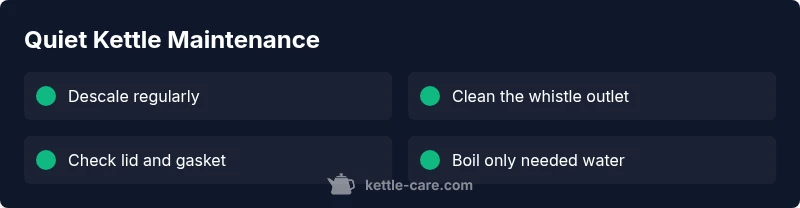
Prevention is simpler than repair. Regular descaling (every 1–3 months depending on water hardness) helps maintain quiet operation. Use filtered or soft water if possible to reduce mineral buildup. Store the kettle away from heat sources and ensure the power cord is undamaged. Clean the whistle cap and gasket monthly and replace damaged parts promptly. With routine care, your kettle stays quiet and efficient for longer.
Steps
Estimated time: 30-45 minutes
- 1
Inspect exterior and lid
Check that the lid closes fully and the whistle cap is seated evenly. Look for any visible cracks or deformations that could create air leaks or rattling sounds when the kettle boils. If you notice damage, stop using the kettle until a replacement part is secured.
Tip: A quick visual check can reveal a damaged seal that is easy to replace. - 2
Check the whistle and spout
Examine the whistle outlet for mineral deposits or blockages. Clear any debris with a soft brush or cloth. Ensure the whistle valve moves freely without sticking. A blocked whistle can amplify the boiling noise.
Tip: Never use metal tools on the whistle, as this can damage seals. - 3
Test the base and surface
Place the kettle on a flat, stable surface. If the base wobbles, remove any objects under it and verify the kettle’s feet are intact. A wobbling base can magnify vibrations and noise during boiling.
Tip: If you have a glass or ceramic stove top, ensure the surface is clean and free of residue. - 4
Descale the kettle
Prepare a descaling solution per product instructions or use 1–2 cups of white vinegar with water. Bring to a boil, then let it sit for 15–30 minutes before rinsing thoroughly multiple times with clean water.
Tip: Rinse until no vinegar smell remains to avoid tasting it in future boils. - 5
Test after maintenance
Boil a small amount of water and listen for changes in tone and loudness. If the kettle remains noisy, proceed to part replacement or professional service. Always unplug before inspecting internal components.
Tip: Document visible issues in a maintenance log for future reference.
Diagnosis: Kettle is louder than usual during boiling
Possible Causes
- highMineral scale buildup on the heating element or interior surfaces
- highLoose or damaged whistle cap / gasket
- mediumUnstable base or uneven surface causing vibration
- lowInternal heating element wear or motor issue (rare for kettles)
Fixes
- easyDescale the kettle using a vinegar solution or a commercial descaler
- easyTighten or replace the whistle cap and ensure the gasket is seated
- easyPlace kettle on a level, non-slip surface and clean the base
- mediumIf noises persist, contact the manufacturer or a technician for inspection
Frequently Asked Questions
What causes a kettle to whistle loudly?
A loud whistle usually comes from a loose or damaged whistle cap, improper gasket seating, or mineral buildup that affects airflow. Cleaning the outlet and reseating seals often resolves the issue. If the problem persists, consider descaling and inspecting the cap.
Loud whistles usually come from a loose cap or mineral buildup; cleaning and reseating seals helps, and descaling may be needed if the issue continues.
Is scale the main culprit for louder kettles?
Scale buildup on interior surfaces or the heating element is a common cause of louder boils. Descaling removes mineral deposits and typically reduces noise. If descaling alone doesn’t help, check for a faulty whistle or damaged base.
Yes, mineral scale is a frequent culprit; descaling often quiets the kettle, but check seals and base if it persists.
Can boiling with too much water cause loud noises?
Overfilling can cause vigorous, noisy boils because more water creates more steam pressure. Boil only the amount of water you need to minimize noise and energy waste.
Overfilling can make boiling louder, so only fill to the recommended level.
How often should I descale my kettle to avoid noise?
Descaling frequency depends on water hardness and usage. In hard water areas, every 1–2 months is common; in softer water areas, every 3–6 months may suffice. Adjust based on observed noise and scale buildup.
In hard water areas, descale every 1–2 months; in softer areas, every 3–6 months, or when you notice louder boils.
Can a faulty heating element cause noise?
A failing heating element can cause abnormal noises but is less common. If descaling and seal checks don’t reduce noise, have the element inspected by a professional.
A bad heating element is rare but possible; seek professional inspection if noise persists after maintenance.
When should I replace my kettle due to noise?
If noises persist after descaling, if there are cracks, leaks, or overheating signs, or if the kettle is near or past its warranty, replacement is safer than risky repairs.
If the noise won’t go away after maintenance or you see damage, it’s time to replace the kettle.
Watch Video
Highlights
- Descale regularly to reduce noise
- Check whistle cap for secure fit
- Ensure kettle sits flat on a stable base
- Seek professional help for persistent or dangerous symptoms