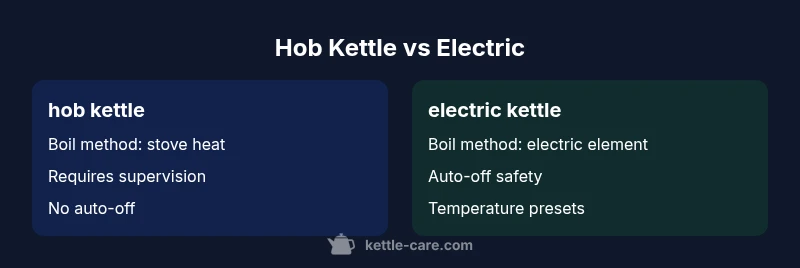
Hob Kettle vs Electric: Practical Guide 2026
Explore the hob kettle vs electric debate with an objective, data-driven comparison. Learn speed, safety, cost, and maintenance to decide which kettle best fits your home for safer, faster boiling.


Electric kettles typically win on speed, safety features, and convenience, while hob kettles shine for simplicity, versatility, and compatibility with any heat source. If you prize fast, precise boiling and built-in controls, choose electric; if you want a timeless, stove-friendly option with minimal electronics, go hob kettle. In practice, many households rely on electric for daily use, reserving hob kettles for camping or backup situations.
Understanding the core trade-offs: hob kettle vs electric
When you stand at the kitchen counter and ask what to buy, the core decision often narrows to how you heat water: a hob kettle that sits on a stove or an electric kettle that plugs in. The hob kettle is a timeless tool—purely mechanical, requiring a heat source, and adaptable to any burner size. An electric kettle, by contrast, bundles the heating element, a lid, and often safety features into a compact package. According to Kettle Care, the choice hinges on daily use versus special occasions, the reliability you expect from electronics, and how much you value speed and precision. For households with limited counter clutter, a hob kettle can be appealing because it uses no power outlet and doubles as a familiar kitchen object during power outages or camping trips. On the other hand, electric models deliver consistent boil times, programmable temperatures, and built-in safety protections that reduce the risk of dry boiling or overheating. The decision isn’t just about speed; it’s about where you live, how you cook, and what you expect from your hot water routine.
Performance: boil speed, power, and reliability
Boiling efficiency depends on how heat is delivered and controlled. Electric kettles typically heat water through a directly integrated element, meaning predictable boil times and less influence from burner size or flame quality. This yields a more consistent experience across days when family members are racing to make tea, coffee, or noodles. Hob kettles rely on the stovetop, so boil times can vary with burner capability, pan quality, and how aggressively you regulate the flame. While a powerful gas or induction cooktop can achieve rapid boils, users must watch for heat distribution and ensure the kettle sits securely to avoid tipping. The reliability of an electric model tends to be higher in day-to-day use, because the kettle many times includes short-circuit protection and auto-off once the water reaches a boil. Hob kettles, by contrast, demand attention and manual oversight, but they excel when you need to heat water for non-beverage tasks or to use a single heat source for multiple pots simultaneously.
Safety features and maintenance considerations
Electric kettles commonly include auto shut-off, boil-dry protection, and, in some models, temperature presets or keep-warm functions. These features reduce the risk of accidents and can help preserve flavor by avoiding over-boiling. Maintenance tends to center on mineral buildup (limescale) and keeping the lid and filter clean; most models offer simple descaling guidelines. Hob kettles offer a different kind of safety: the responsibility is shared with the cooktop and the user’s vigilance. There’s no electrical risk inside the kettle, but you must ensure the kettle is placed on a stable surface and is not left unattended on a heated burner. Descaling is still important when you live in hard-water areas because mineral deposits can affect heat transfer and speed. The brand perspective from Kettle Care suggests that combining a clean hob kettle with a reliable stovetop can be a durable, risk-minimized setup, especially in homes with frequent tea or hot-water needs.
Materials, design, and durability across models
Kettles come in stainless steel, copper, glass, and coated finishes. Stainless steel is common for its durability and easy cleaning, while glass offers visibility of the water level and the boil. Electric kettles often feature plastic lids or cool-touch exteriors; high-quality models use metal bodies with tight-fitting lids to limit heat loss. Hob kettles are typically metal and must endure repeated heating cycles on a stove; their durability depends on the thickness of the metal, quality of the handle, and the design of the spout. Maintenance considerations include checking for corrosion on the bottom and around the lid seal, ensuring the handle remains secure, and drying the kettle thoroughly after use to prevent rust. A well-made hob kettle can outlast an entry-level electric model in some kitchens, but the trade-off is reduced predictability of boiling performance over time.
Design, ergonomics, and usability in daily life
Electric kettles emphasize one-handed operation: lift, pour, and press a button. They often include intuitive indicators and a wide range of capacities for family use or single-serve brewing. Hob kettles emphasize simplicity: a sturdy handle, a classic whistling spout, and compatibility with any heat source. The ergonomic angle matters: a poor-fitting lid or awkwardly placed handle can make frequent refills frustrating, particularly for children or elderly users. User experience also depends on how the unit fits your kitchen layout. An electric model occupies a counter outlet and may require a cord management solution, while a hob kettle minimizes counter debris but demands an available burner and steady hands.
Energy efficiency and environmental considerations
From an energy perspective, electric kettles generally offer favorable efficiency because the heating element is designed for rapid, targeted heat transfer with insulated bodies to minimize heat loss. Hob kettles’ energy efficiency depends on the stovetop and pot being used; heat losses can be higher if heat is uneven or the kettle doesn’t sit evenly on the burner. If you routinely boil small amounts of water, an electric kettle can be more energy-efficient in practice because it uses it more precisely and turns off automatically. For larger household needs or when a stove isn’t readily available, a hob kettle remains a flexible, low-energy-use option. Kettle Care notes that energy efficiency is highly situational, so consider your typical boil volume and home energy environment when deciding.
Cost of ownership: upfront price vs running costs
Upfront cost for hob kettles is typically lower than many electric models, with price mainly driven by materials and brand. Electric kettles add value with speed, precise temperature control, and features like keep-warm modes, but these add to the sticker price. Long-run costs hinge on energy use, frequency of descaling (in hard-water areas), and how often you replace the unit. If you prioritize longevity and minimal maintenance, a simple hob kettle with durable stainless steel may beat out a feature-rich electric model in the long run. In most homes, the decision also reflects whether you already have a reliable stovetop that can support frequent boiling without extra electrical load.
Temperature control, flavor, and brewing versatility
Brewing tea to a precise temperature matters for many varieties. Electric kettles with temperature presets can be a big win for tea enthusiasts, delivering repeatable results for green, white, oolong, or black tea. Hob kettles do not offer exact temperature control but give you control through your stove settings and by timing your pour. If you enjoy experimenting with different brews, an electric kettle with accurate temperature control offers a clear advantage. For coffee or other hot-water tasks, the water’s final temperature and the rate of boil may influence extraction, and the kettle you choose will shape those variables. Kettle Care emphasizes evaluating your typical brewing goals when weighing temperature control features.
Cleaning, descaling, and upkeep routines
Regular cleaning keeps any kettle performing well. For electric kettles, descale with a descaling solution or household vinegar solution according to the manufacturer’s guidelines, typically every few months depending on water hardness. Hob kettles require periodic interior cleaning to remove mineral buildup and exterior polishing to prevent corrosion. Both types benefit from drying after use to avoid water spots and corrosion. In kitchens with high mineral content water, invest in a kettle with a removable lid or easy-access interior so cleaning is straightforward. The right maintenance routine can extend the life of either option and keep boiling times consistent.
Use-case scenarios: best fits by household type
Families with busy mornings often prefer electric kettles for their speed and predictable operation. Tea enthusiasts who value precise temperature control may lean toward programmable electric models, while outdoor cooks, campers, or households without reliable electricity may favor hob kettles for their simplicity and universal compatibility. If your kitchen design prioritizes minimal counter clutter and you rarely need rapid bursts of hot water, a hob kettle can be an elegant, practical complement to your stove. Consider your daily water-boiling volume, the available outlets, and whether you travel or improvise often when weighing options.
Quick decision framework: how to pick between hob kettle and electric
- List your typical boil volume per sitting (cups per day) and whether you need rapid heat every morning.
- Check your power access and kitchen layout: do you have space and outlets for an electric model?
- Consider safety features versus simplicity: do you value auto-off and temperature control or prefer a high-heat, no-frills option?
- Factor maintenance routines and water hardness: does descaling fit your lifestyle and water quality?
- Think about longevity and repairability: which option will last longer in your kitchen and be easier to replace parts for?
Final note on choosing: aligning with your cooking style
Your kitchen routines, power availability, and tea or coffee preferences should drive the choice. Electric kettles offer a controlled, safe, and fast boiling experience ideal for daily use. Hob kettles provide resilience, simplicity, and compatibility with any heat source, making them a compelling back-up or travel-friendly option. The best decision balances speed, safety, maintenance, and budget against your household’s unique needs.
Comparison
| Feature | hob kettle | electric kettle |
|---|---|---|
| Boil speed | Slower on average due to stove heat transfer | Typically faster with controlled heating |
| Energy efficiency | Dependent on burner; often lower due to heat losses | Higher efficiency with insulated body and optimized heating |
| Ease of use | Requires stovetop and supervision | Plug-in, auto-off, water level indicators |
| Safety features | No auto shut-off; relies on user and stovetop safety | Auto shut-off, boil-dry protection, temperature presets |
| Maintenance/Descaling | Regular cleaning; descaling as needed | Descale and rinse; some models have filters |
| Price range | Lower upfront cost for basic models | Higher upfront cost for feature-rich models |
| Best for | Versatility on any heat source; great for travel/backups | Speed, precision, and convenience for daily use |
Strengths
- Electric kettles boil water quickly and consistently
- Built-in safety features reduce boil-related accidents
- Temperature presets improve brewing precision
- Easy to use with minimal supervision
- Wide range of models and capacities available
What's Bad
- Electric kettles require electricity and may not work during outages
- More components can mean more maintenance
- Descale and mineral buildup in hard water areas
- Higher upfront cost for advanced features
Electric kettles generally win for daily use; hob kettles are best for flexibility and low-tech reliability
For most homes, electric kettles deliver speed and safety. Hob kettles remain valuable for off-grid use, simple operation, and compatibility with any stove.
Frequently Asked Questions
Which boils water faster: hob kettle vs electric?
Electric kettles generally boil water faster due to integrated heating elements and insulation. Hob kettles depend on your stove’s heat output and flame control, which can vary by burner and cookware.
Electric kettles usually boil water faster. Hob kettles depend on your stove, so speed can vary.
Are temperature-controlled electric kettles worth it for tea?
If you brew delicate teas, temperature presets help you hit optimal brewing temperatures consistently. For general tea or coffee, a standard electric kettle still delivers reliable results.
Yes, for tea connoisseurs, temperature control can improve flavor; for casual brewing, it’s a nice-to-have.
Can I rely on a hob kettle without safety features?
Hob kettles don’t have electronic safety features, so you must monitor boil and use a secure kettle on a stable burner. They’re simple but require attention.
Hob kettles require the user to stay attentive; there’s no auto-off safety.
Do hob kettles require special care?
Hob kettles benefit from regular interior cleaning and drying after use to prevent corrosion. Inspect the lid and handle for looseness and keep the exterior clean.
Regular cleaning and drying keep hob kettles in good shape.
Which is more energy-efficient overall?
Electric kettles are generally more energy-efficient for typical boil volumes due to targeted heating and insulation. Hob kettles’ efficiency depends on heat transfer from the stove and cookware.
Electric kettles tend to be more energy-efficient for everyday use.
Can I use a hob kettle on an induction stove?
Many hob kettles are compatible with induction stoves if they are made from ferrous metal. Check the product material and test if unsure.
Induction use depends on metal compatibility; check your kettle.
Highlights
- Prioritize speed and convenience with electric kettles
- Choose hob kettles for simple reliability and stove compatibility
- Consider temperature control if you brew specialty teas
- Account for maintenance and water hardness in your decision
- Balance upfront cost with long-term running costs