Electric Kettle vs Stovetop: A Practical 2026 Comparison
Compare electric kettles and stovetop kettles in a practical, data-driven guide. We analyze speed, energy use, safety, maintenance, and cost to help homeowners and tea lovers choose confidently.


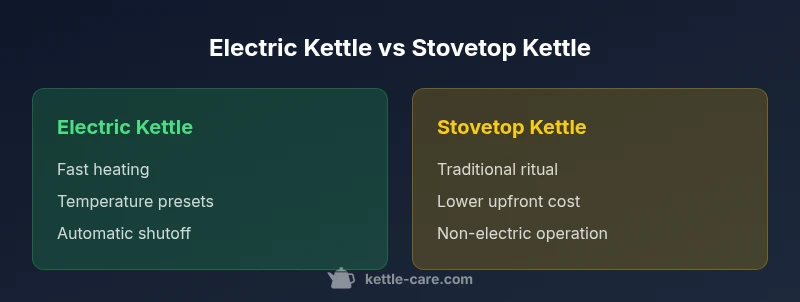
Electric kettles typically boil water faster and offer consistent temperatures plus built-in safety features, while stovetop kettles rely on your cooktop, delivering a traditional ritual and often lower upfront cost. The best choice hinges on your priorities: speed, temperature control, and safety versus simplicity, flavor rituals, and cost. For most daily needs, the electric option wins on speed and predictability, but the stovetop remains a strong, low-friction alternative.
Core differences between electric kettle and stovetop kettle
In the electric kettle vs stovetop kettle decision, the most fundamental difference lies in how heat is delivered. An electric kettle uses an integrated heating element powered by electricity, typically boiling water quickly with built-in safety features like automatic shutoff when the liquid reaches a boil. A stovetop kettle, by contrast, sits on a cooking surface and relies on the flame or burner beneath it, which means heat delivery can vary with stove performance and the size of the kettle. This fundamental distinction drives subsequent trade-offs in speed, control, and ongoing operating costs. For homeowners seeking a minimal footprint, a well-designed stovetop kettle may be preferred; for tea enthusiasts and busy households, the convenience of an electric kettle often pays off over time.
In practical terms, the electric option is designed for speed and consistency, while the stovetop option emphasizes ritual and simplicity. The decision should consider how often you boil water, the types of beverages you prepare, and the importance you place on precise temperatures. The Kettle Care framework emphasizes safe handling, proper descaling routines, and thoughtful queuing of warming tasks to minimize energy waste and maximize flavor.
Temperature Control and Flavor: Why Precision Matters
Temperature control is a major differentiator in the kettle world. Electric kettles frequently offer adjustable temperature settings and sometimes even dedicated presets aligned with different tea types or coffee brewing methods. This feature is particularly valuable for delicate green or white teas that require lower temperatures to avoid bitterness, as well as for carefully brewed coffee where precise water temperature can impact extraction and aroma. Stovetop kettles may include a narrowed spout or gooseneck design to provide controlled pouring, but they generally lack precise digital temperature readouts. Flavor outcomes thus hinge on a combination of brewing method, water quality, and timing. If your daily routine includes multiple tea varieties or specialty coffees, an electric kettle’s temperature control helps you achieve consistent results with less guesswork.
For households prioritizing flavor and ritual, the stovetop route allows a slower, attentive approach to heating water. Pouring method, kettle shape, and the visual cue of a rolling boil can influence perceived flavor even when the water temperature is not precisely measured. In short, precision-minded users tend to favor electric models, while traditionalists may enjoy the ritual and control offered by a stovetop kettle.
Energy Efficiency and Cost of Boiling: A Practical View
Energy efficiency and cost perception play a significant role in the kettle decision. Electric kettles are generally more energy-efficient for small, frequent boils because they minimize heat loss by containing heat within the kettle and heating quickly. Over time, this can translate to lower energy use per liter of boiled water, especially in households that boil water multiple times a day. Stovetop kettles can incur higher heat losses due to dispersion and longer heating periods, particularly on older or less efficient stoves. From a cost perspective, electric kettles carry an upfront price premium, but ongoing operating costs may be lower on a per-boiled-liter basis. For frequent tea drinkers or households with regular hot-water needs, the energy savings and speed of an electric kettle often outweigh the initial purchase price. Conversely, if you rarely boil water or want to avoid adding another electrical appliance, a stovetop kettle offers the lowest upfront cost and minimal maintenance.
Safety Features and User Experience: What to Expect
Safety is a core consideration in any kettle purchase. Electric kettles typically come with automatic shutoff once the water reaches a boil, and many models include boil-dry protection to prevent damage if the kettle is accidentally empty. Some also offer temperature hold features and cord management that keeps the counter tidy. Stovetop kettles rely on conventional safety practices: watching the pot, ensuring a stable burner, and using a heat-proof handle. While modern stovetops have improved safety features, they lack the built-in safeguards of electric models. From a user-experience standpoint, electric kettles offer convenience through one-click operation and less supervision, whereas stovetops reward patient monitoring and a traditional ritual that many users find comforting.
Maintenance, Descale, and Longevity: Keeping Water Pure
Descaling is a recurring maintenance activity for any kettle in areas with hard water. Electric kettles often accumulate mineral deposits on the heating element and interior surfaces, which can impact heating efficiency and flavor over time. Regular descaling using a mild acidic solution is recommended. Stovetop kettles can also accumulate mineral buildup on interior surfaces, especially if the interior is not enamel-coated, but some users report less need for frequent descaling if their kettle is primarily a decorative piece or used sparingly. Durability varies by material: stainless steel models tend to resist corrosion and offer easy cleaning, while glass or nonstick interiors may require gentler care. Regardless of type, routine cleaning and prompt drying after use help extend the kettle’s life.
Design, Materials, and Capacity: Choosing the Look and Feel
Kettle design choices influence both aesthetics and practicality. Electric kettles come in a range of shapes from sleek rounded bases to compact, space-saving footprints. Material choices like stainless steel, BPA-free plastics, and heat-tolerant glass affect heat retention, taste, and long-term durability. Capacity options vary from compact single-serve units to larger 1.7-liter models, with corresponding energy needs. Stovetop kettles also vary in material and finish, with gooseneck designs favored by pour-over enthusiasts and classic rounded kettles preferred for family use. Capacity matters more on the stovetop, where larger kettles can occupy more stove space and demand longer heating times. Consider your kitchen design, storage space, and preferred pour style when choosing.
Use Cases by Lifestyle: Tea Lovers, Coffee Enthusiasts, and Busy Homes
If you are a tea aficionado who drinks many varieties daily, an electric kettle with temperature presets and a fast boil can streamline routine preparation and protect delicate leaves. Coffee lovers who frequently brew pour-over or French press benefit from precise temp control and consistent pour rates provided by some electric models with gooseneck spouts. For busy households or those who value minimal electronics, a stovetop kettle is a reliable, low-tech option that pairs well with a traditional kitchen workflow. Families may prioritize capacity and safety features, while travelers or small-space dwellers might prefer compact electric models with energy-saving features. Ultimately, the best choice aligns with your daily beverage habits, space constraints, and tolerance for managing multiple appliances.
Common Myths and Misconceptions: Clearing the Air
A common myth is that all electric kettles are energy guzzlers or that stovetops always boil water more slowly. In reality, electric models designed for efficiency can heat water quickly with minimal heat loss, while some premium stovetops are very efficient when paired with well-designed kettles. Another misconception is that temperature control is only available in high-end kettles; many mid-range electric kettles offer multiple presets or adjustable settings. Finally, it’s easy to assume stovetops are safer because they have fewer electrical components, but they require careful handling to prevent burns and ensure the kettle is properly placed to avoid tipping. Understanding the real trade-offs helps you choose with confidence.
AUTHORITY SOURCES
- https://www.energy.gov/
- https://www.consumerreports.org/
- https://www.nist.gov/
Comparison
| Feature | Electric kettle | Stovetop kettle |
|---|---|---|
| Boiling speed | Fast heating due to internal element | Slower and depends on stove heat and kettle size |
| Energy efficiency | Higher efficiency with direct electric heating | Lower efficiency due to heat loss and longer heating times |
| Safety features | Automatic shutoff, boil-dry protection on many models | No built-in safety features; relies on stove practices |
| Maintenance/Descale | Easier descaling with removable parts; frequent but simple maintenance | Descale less common if mineral buildup is low; some kettles are enamel-lined |
| Price range | Moderate upfront cost with varying features | Low upfront cost; no electricity overhead |
| Best For | Teas and quick daily use with precise temps | Traditional boiling ritual and long-lasting simplicity |
Strengths
- Fast, energy-efficient heating for frequent boiling
- Temperature presets aid tea and coffee flavor profiles
- Built-in safety features reduce boiling risk
- Low maintenance and easy cleaning in many models
- Compact designs suit small kitchens and desks
What's Bad
- Requires electricity and a nearby outlet
- Potential for mineral buildup needing descaling
- Higher upfront cost for feature-rich models
- More electronics to clean and maintain over time
Electric kettle generally wins for speed and precise temperature control; stovetop kettles excel in ritual, simplicity, and lower upfront cost.
For speed, consistency, and safety features, choose an electric kettle. If you prioritize tradition, minimalism, and initial cost, a stovetop kettle is a solid option that still delivers reliable boiled water.
Frequently Asked Questions
What is the main difference between an electric kettle and a stovetop kettle?
The electric kettle heats water with an internal element and often includes presets and safety features, delivering fast, controlled boils. A stovetop kettle relies on a stove heat source and a traditional pouring ritual, with no built-in temperature controls in most cases.
Electric kettles heat water quickly with presets, while stovetops rely on the stove and offer a classic boiling ritual.
Are electric kettles more energy-efficient than stovetops?
Generally yes, electric kettles are designed to minimize heat loss and heat water quickly, which can reduce energy use for frequent boils. Stovetop kettles can be less efficient due to heat loss and longer heating times on some burners.
Electric kettles often use energy more efficiently, especially for frequent boils, compared to stovetops.
Can you heat water to exact temperatures with a stovetop kettle?
Stovetop kettles typically do not offer precise digital temperature control. You can approximate by watching the boil and using kettle spouts for pour control, but exact temperatures are more reliable with an electric model.
Stovetops usually don’t do exact temps; electric kettles are better for precise temperatures.
Do electric kettles auto shut off to prevent boiling dry?
Yes, most electric kettles include automatic shutoff when boiling is reached and boil-dry protection if the kettle runs dry. This enhances safety and reduces the risk of damage.
Most electric kettles automatically shut off when they boil, and some stop if they run dry.
Is it safe to descale both types of kettles?
Descaling is recommended for both types to prevent mineral buildup. Use appropriate descaling solutions or mild acids and follow manufacturer guidance to avoid damaging surfaces.
Yes, both should be descaled periodically using recommended methods.
Which should a tea lover buy first, electric or stovetop?
If tea variety and precise brewing temps matter, an electric kettle offers consistency. If you value ritual and minimalism, start with a sturdy stovetop kettle and add an electric option later if needed.
Tea lovers often prefer an electric kettle for consistency, but a stovetop can fit a ritual-focused setup you already have.
Highlights
- Choose electric for speed, precision, and safety.
- Opt for stovetop when you want traditional ritual and lower upfront cost.
- Descale regularly in both types to maintain performance.
- Consider space, outlet accessibility, and pour style when choosing.
- Balance price, durability, and ease of use to fit your needs.