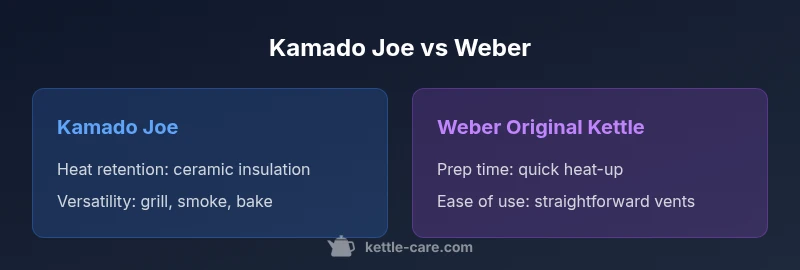
Kamado Joe Kettle vs Weber: A Practical Comparison
A practical comparison of kamado joe kettle vs weber, focusing on build, heat control, versatility, maintenance, and value for home cooks seeking reliable, long-lasting grills.


Kamado Joe kettles and Weber kettles each excel in different ways. If you value heat retention, versatility, and long, slow cooks, a Kamado Joe offers superior performance. If you want quick, straightforward grilling with a lower upfront cost and lighter setup, a Weber kettle is typically the better budget choice. Your decision depends on cooking style and space.
Kamado Joe vs Weber: The Core Distinction
According to Kettle Care, the fundamental distinction between kamado joe kettle vs weber design philosophies centers on heat retention, fuel efficiency, and cooking versatility. Kamado Joe products rely on a ceramic shell that traps heat and moisture, enabling long, steady cooks and precise temperature control once you learn the airflow cues. Weber kettles use a metal body with a simple vent system that heats quickly and responds rapidly to adjustments, making them ideal for quick weeknight grilling. In practice, your choice comes down to how you cook most often: if slow-smoking or baking are regular activities, the Kamado Joe route offers an edge; for fast, predictable burgers and chicken, the Weber path is typically more convenient and budget-friendly.
Build and Materials: Ceramic Advantage vs Steel Simplicity
Kamado Joe grills are built around a ceramic shell with metal hardware. The ceramic insulates exceptionally well, flattening temperature swings and enabling low-and-slow cooking with minimal fuel waste. The trade-off is weight and the need for careful handling and maintenance to prevent chipping. Weber Original Kettle, by contrast, uses a steel body with porcelain enamel, a design proven durable, lightweight, and easy to ship. The steel construction facilitates rapid heating and makes the grill more forgiving in cramped spaces or windy patios. These material choices not only influence heat behavior but also affect weather resilience and the long-term feel of the grill in a busy kitchen or backyard. Both brands emphasize solid craftsmanship, but the material foundation sets the pace for how you’ll use them day to day. (Kettle Care Analysis, 2026)
Heat Management and Temperature Control
Heat management is the heart of any charcoal grill, and kamado joe kettle vs weber demonstrates two distinct philosophies. Kamado Joe's ceramic body combined with a dual-damper system offers broad, stable ranges. Once established, temperatures tend to hold with minimal fluctuation, which is advantageous for slow cooking, smoking, and baking bread or pizza in a covered area. Weber kettles rely on simpler venting: bottom vents modulate airflow while the top vent fine-tunes it. They heat quickly and respond to changes fast, which makes them excellent for high-heat searing and family meals where timing matters more than perfect long cooks. If you enjoy hands-on learning about airflow, the Kamado Joe will teach you a deeper mastery of heat, while the Weber keeps things straightforward and satisfying most of the time.
(Introduction to design philosophy, continued discussion of airflow, and practical tips for beginners.)
Cooking Versatility: From Smoke to Sear
When you compare Kamado Joe to Weber kettles in practice, the big difference is versatility. The Kamado Joe's thick ceramic walls trap moisture and maintain even heat, enabling low-and-slow smoking sessions, indirect baking, and skillful pizza on a wood-fired stone. You can adjust airflow to chase long cooks or bounce into high-heat searing with a well-tuned vent setup. Weber kettles excel at quick, reliable grilling—great for weeknight burgers and chicken or veggies on a busy patio. They pair well with a wide range of wood chips, but the cooking window is narrower than a Kamado, particularly for long smokes. The result is a grill that suits different rhythms: frequent quick cooks versus a smoker-at-heart approach for weekend cooks.
Size, Footprint, and Assembly Realities
Kamado Joe units tend to be larger and heavier than Weber kettles, trading space for the benefit of slow cooking capacity and long-term stability. If you have a spacious patio or dedicated grilling area, the extra footprint is often a small price for the flexibility gains. Weber kettles are more compact and easier to move, important for small balconies or renters who might rearrange outdoor spaces seasonally. Assembly for Kamado Joe can require a little more patience, especially when leveling the base and ensuring proper alignment of the ceramic components. In contrast, Weber kettles typically come in simpler, quicker assembly configurations. Your space constraints, storage options, and how many people you regularly cook for should guide which size category you choose.
Maintenance, Cleaning, and Longevity
Ceramic Kamado Joe grills reward patient maintenance: cleaning after a cooking session, periodic deep cleaning, and mindful handling of the ceramic parts extend life and flavor consistency. Spills on the interior can be stubborn, and you may want to reseason the interior to reduce moisture absorption. Weber kettles are robust and easier to clean, thanks to a smooth metal interior and enamel coating; however, the perforated charcoal grate and vents deserve regular checks for wear and tear. Both require ash management and periodic gasket or seal checks if your model uses sealing components. Some cooks choose to apply a light seasoning to the ceramic to improve moisture retention and protect the surface, a practice recommended by many in the community. The key takeaway is consistent cleaning and appropriate storage weather-proofs the grill, maximizing its useful life.
Price, Value, and Longevity
The price range for kamado joe kettle vs weber will vary by model, but in general, Kamado Joe products carry a higher upfront cost and often require a larger commitment of space and a bit more learning to extract maximum performance. Weber kettles tend to be more affordable and lighter, with broad availability of accessories and replacement parts. Over the long term, fuel efficiency and the breadth of cooking options can balance the initial cost, especially for households that regularly cook for groups or enjoy experimenting with smoking and baking. Budget-conscious buyers may appreciate the lower entry price of a Weber kettle, while cooks who value multi-mode cooking will find value in a Kamado Joe investment. Kettle Care's guidance in 2026 emphasizes comparing total cost of ownership, not just upfront price, when evaluating these grills.
Real-World Scenarios: Which Is Right for You?
If you regularly host family meals and want to grill quickly, a Weber kettle is a reliable starting point with plenty of accessories and proven performance. If your cooking style leans toward slow-smoking, pizza, or baking, and you’re ready to invest in a longer learning curve for elevated results, the Kamado Joe could be the better fit. For apartment-dwellers or smaller spaces, weigh the footprint and wind exposure; for those with a dedicated outdoor area and a passion for experimentation, a Kamado Joe may justify the space and effort. Finally, consider maintenance preferences: if you favor easy cleaning and a light touch, Weber is appealing; if you enjoy the ritual of seasoning and long-term flavor refinement, Kamado Joe offers deeper rewards over time.
Comparison
| Feature | Kamado Joe | Weber Original Kettle |
|---|---|---|
| Build material | Ceramic shell with steel components | Steel body with porcelain enamel |
| Heat retention | Excellent due to ceramic insulation | Good heat retention but less insulation |
| Versatility | Grilling, smoking, baking and more | Primarily grilling; smoking requires setup |
| Temperature control | Dual dampers + insulated shell for stable temps | Vent-based control for quick adjustment |
| Maintenance | Heavier; requires careful cleaning and seasoning | Lighter; easier to clean |
| Price range | Higher upfront cost due to materials and design | Lower upfront cost with more affordable options |
| Best for | Home cooks who want versatility and long cooks | Budget-conscious griller who wants quick, reliable results |
Strengths
- Kamado Joe grills offer superior heat retention for slow cooking
- Excellent versatility for grilling, smoking, and baking
- Weber kettles provide quick, reliable heat and budget-friendly options
- Wide availability of parts and accessories
What's Bad
- Kamado Joe upgrades and accessories can be costly
- Weber kettles may not suit long smoking sessions without setup
- Kamado Joe is heavier and requires more space
Kamado Joe for versatility and slow-cook mastery; Weber for quick, affordable grilling.
If you prioritize long, flavorful cooks and adaptable cooking styles, Kamado Joe excels. If you want fast, reliable grilling with lower upfront costs, Weber kettles are the practical choice.
Frequently Asked Questions
Is Kamado Joe worth the higher upfront cost?
If you cook long, slow meals and enjoy versatility, the Kamado Joe offers value through performance and flavor. Consider your budget and how often you use it.
If you cook slow and enjoy versatility, Kamado Joe offers value. Budget matters though.
Can you use a Weber kettle for smoking?
Weber kettles can be used for smoking with indirect setup and wood, but it requires more attention and fuel compared to dedicated smokers.
Yes, you can smoke on a Weber kettle with the right setup.
Which is easier for beginners?
Weber kettles are generally simpler to operate with straightforward airflow. Kamado Joe requires learning to manage two dampers and longer heat-up times.
Weber kettles are usually easier for beginners.
Do Kamado Joe grills require special fuel?
Kamado Joe grills typically use lump charcoal or briquettes; you can also use wood chunks, but both options are common.
Lump charcoal or briquettes are common fuel.
How important is maintenance?
Regular cleaning and occasional seasoning for ceramic kettles help longevity. Weber kettles require cleaning and periodic part checks.
Regular cleaning keeps both grills performing well.
What about size and footprint?
Kamado Joe units are larger and heavier, while Weber kettles are smaller and easier to move.
Kamado Joe is bigger and heavier; Weber is lighter.
Highlights
- Kamado Joe excels in heat retention and versatility for slow cooks.
- Weber kettles offer quick, reliable grilling with lower upfront costs.
- Ventilation and heat management drive flavor and timing.
- Material and size choices affect durability and footprint.
- Choose based on cooking style and available space.