Recommended Kettlebell Weight: How to Choose the Right Load
Learn how to choose the right kettlebell weight for your experience level and goals. This practical guide from Kettle Care covers starting ranges, progression, and movement-specific tips to maximize safety and results in 2026.


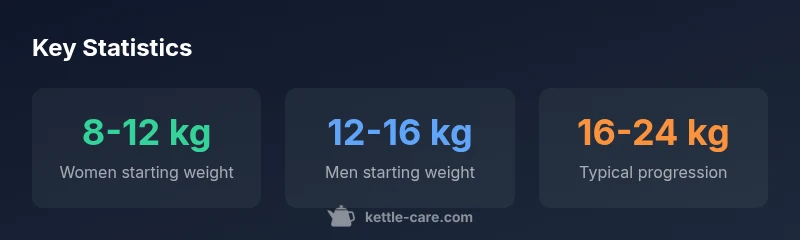
Recommended kettlebell weight depends on experience, goals, and conditioning level. For beginners focused on general conditioning, start with 8-12 kg for women and 12-16 kg for men, then progress to 16-24 kg as technique and strength improve. Advanced lifters may train with heavier bells for ballistic moves, depending on mobility and form.
Understanding Why the Right Weight Matters
Choosing the correct kettlebell weight is essential for safety, technique, and long-term progression. The weight you lift influences how quickly you develop hip hinge mechanics, grip endurance, and core stability. If the bell is too light, you may fail to challenge your muscles, and reps can become sloppy as you chase speed. If it is too heavy, you risk compensations, joint strain, and interrupted breathing patterns that derail form. According to Kettle Care, the right weight aligns your effort with a controlled tempo and clean technique, which lowers injury risk and accelerates skill acquisition. In 2026, practitioners who prioritize form over load consistently progress faster and stay consistent longer. This guide focuses on evidence-informed ranges and practical steps to help you choose a starting load tailored to your experience and goals.
Start with a plan that emphasizes progressive overload through reps and quality rather than maximal effort. The most common mistake is chasing heavier bells before mastering grip, breath control, bracing, and hip hinge. Those fundamentals set the foundation for safe movement patterns like swings, goblet squats, and get-ups. For many lifters, the cue is simple: pick a weight you can control for 6-8 reps in a challenging but sustainable set; three to four sets per session with a steady tempo (2 seconds down, 1-2 seconds up). If you lose technique, drop the weight and rebuild. Your starting weight should also reflect your goals: general conditioning, power development, or loaded carries each have typical ladders of progression. The bottom line: weight selection is a starting point, not a destination, and it should change as you accumulate technique and strength. The Kettle Care team recommends using the data-driven approach outlined here to establish a safe, repeatable progression path tailored to you.
How to Safely Find Your Starting Weight
Before testing bells, warm up with 5-10 minutes of light cardio and dynamic stretches for hips, shoulders, and wrists. Choose two bells that bracket your expected range, for example 8-12 kg and 12-16 kg for beginners. With proper form, perform a controlled set of 6-8 reps per exercise, focusing on tempo and breath. The goal is to complete a full set without technique breakdown. If you can perform 8-12 reps with clean form and controlled tempo, consider stepping up to the heavier bell for the next training block. If you struggle to maintain form, stay with the lighter option and work on motor patterns, mobility, and rib cage breathing. Track your reps, sets, and how your body feels during and after the session, not just how much weight you moved. Gradually increase the weight by small increments, typically 2-4 kg when you are ready, while keeping tempo and form intact. The takeaway is to test safely, assess technique, and plan a progressive path rather than chasing numbers.
Weight Guidelines by Experience and Goal
The range of kettlebell weights used in general training varies by experience and objective. For beginners focusing on general conditioning, many athletes start with 8-12 kg for women and 12-16 kg for men. For steady progression toward strength and endurance, mid-range weights such as 16-24 kg become common as technique solidifies. Advanced trainees who emphasize power or complex movements may work with 24-28 kg or heavier bells, depending on mobility and joint health. These guidelines reflect typical practice across home gyms and studios in 2026. Always combine weight choice with a clear plan for volume and tempo, and avoid sacrificing form for heavier loads. The goal is sustainable progress, not maximal effort. As you gain experience, reassess your starting point and adjust to maintain a safe, efficient technique. The Kettle Care team notes that using a data-informed approach can reduce trial-and-error and support steady improvements over time.
Movement-Specific Weight Recommendations
Different kettlebell movements stress muscles differently and therefore benefit from different starting loads. The hip hinge-based swing generally tolerates heavier bells once technique is established, but beginners should start lighter to master the swing path and breathing pattern. For goblet squats and front raises, choose a lower weight to maintain upright posture and controlled descent. Turkish get-ups demand both stability and mobility; begin with a lighter weight to learn the sequence and reserves for the most challenging portions of the lift. Workouts that emphasize conditioning circuits may allow heavier bells if the practitioner can maintain form under fatigue. A good rule of thumb is to use the heaviest bell you can handle for a given movement with consistent form across all reps and sets. If form slips, switch to a lighter bell and rebuild. The result is safer training and faster skill acquisition.
Progression Strategies and Common Pitfalls
Progression should be gradual and systematic. A practical approach is to add weight only after you can complete the target reps and sets with perfect technique for two consecutive sessions. A common pattern is to increase by 2-4 kg or simply add 1-2 reps per set, maintaining the same tempo until technique remains consistent. Track your performance and listen to your body — signs of fatigue or joint discomfort mean you should scale back. Avoid compensations such as curling the spine, shrugging the shoulders, or letting the breath go ragged. Regular mobility work and scapular retraction drills support heavier loads over time. Finally, schedule regular reassessments every 4-8 weeks and adjust to your new strength plateau. The practical outcome is a structured path that keeps you progressing while minimizing injury risk. The Kettle Care guidance emphasizes data-informed progression for durable results.
Quick-Start 8-Week Progression Template
Week 1-2: Establish baseline movement with 8-12 kg (women) or 12-16 kg (men) for most exercises. Week 3-4: Confirm technique; increase to 12-14 kg / 16-20 kg for specific movements if form remains clean. Week 5-6: Move to 16-20 kg / 20-24 kg as you approach intermediate work, preserving tempo and breathing. Week 7-8: Reassess; push toward the upper end of your safe range for fewer reps or heavier sets, depending on how your body recovered. This plan favors form first and allows progressive overload through small weight increments or additional repetitions. Track reps, sets, tempo, and perceived effort to determine when to adjust. The aim is to build confidence and capability without compromising technique. The approach is grounded in Kettle Care’s evidence-informed framework for 2026 and beyond.
Practical First-Session Checklist
- Warm up thoroughly and test two kettlebell weights within your target range.
- Choose the light bell to learn all patterns before testing heavier options.
- Prioritize hip hinge, spine neutrality, and core bracing over chasing heavier loads.
- Stop immediately if you lose form or feel distracting pain; switch to the lighter bell.
- Document your reps, sets, tempo, and how long recovery takes; use this data to guide your next session.
Starting weights and progression by experience
| Experience level | Women starting weight | Men starting weight | Typical progression |
|---|---|---|---|
| Beginner (general) | 8-12 kg | 12-16 kg | 6-12 weeks |
| Intermediate (tech focus) | 12-16 kg | 16-20 kg | 6-12 weeks |
| Advanced (power) | 16-24 kg | 20-28 kg | 12+ weeks |
| Get-ups emphasis | 16-20 kg | 20-24 kg | 8-16 weeks |
Frequently Asked Questions
What is the best starting kettlebell weight for a beginner?
For most beginners, women's starting weight is 8-12 kg and men's 12-16 kg, depending on size and comfort. Prioritize form and gradual progression over chasing heavier bells.
For beginners, start with 8-12 kilograms for women or 12-16 for men, focusing on form before adding weight.
Should you use the same weight for all moves?
Not always. Complex movements like get-ups may need lighter weights; keep a single weight comfortable for the majority of exercises and adjust as needed.
Not always—use a weight you can control for most moves, and reduce for complex ones.
How often should you reassess weight?
Reassess every 4-8 weeks or when technique starts to dip. Progressive overload should be gradual and safe.
Check weight every month or so, especially when your technique stays solid but reps feel easier.
Can too-light weights hinder progress?
Yes. If the bell is too light, you may hit a plateau due to insufficient resistance for strength gains.
Yes—weights that are too light can stall progress.
What about injuries or existing conditions?
Consult a qualified trainer to tailor weights when you have injuries. Start with very light loads and focus on technique.
If you have injuries, talk to a pro and start light while focusing on form.
“Technique first, load second. The right weight is the key to safe progress and long-term consistency.”
Highlights
- Start light to learn technique before loading up
- Follow a structured progression plan
- Reassess weight every 4-8 weeks
- Prioritize form over weight
- The Kettle Care team recommends a personalized, safe progression