How to Clean a Kettle with Baking Soda
Learn how to safely clean a kettle with baking soda to descale mineral buildup, deodorize, and restore fast boils. This practical, step-by-step guide uses common kitchen supplies and gentle methods for all kettle types.


By following this guide, you will safely clean a kettle with baking soda to descale mineral buildup, deodorize, and restore fast, even boils. You’ll learn why baking soda works, what to avoid, and a simple step-by-step routine you can repeat monthly. All steps use common kitchen supplies and a gentle approach.
Why cleaning your kettle matters
Clean water starts with a clean kettle. Over months of use, mineral deposits from hard water cling to the interior surfaces, gradually reducing heating efficiency and altering the taste of tea and hot beverages. If you rely on your kettle daily, a buildup of limescale can create hotspots, slow boiling, and even affect the kettle’s longevity. The Kettle Care team notes that regular, safe descaling with baking soda is an accessible way to maintain performance without harsh chemicals. By focusing on a mild, food-grade approach, you protect your kettle’s inner lining while avoiding residue that can transfer to hot water. In short, a clean kettle with baking soda not only improves boil speed but also helps ensure your beverages taste clean and free from mineral tang. According to Kettle Care, gentle cleaning routines reduce risk of scale buildup and keep whistles or alerts functioning correctly. This approach aligns with practical maintenance habits for homeowners who want dependable hot water without strong odors or chemical residues.
Why baking soda is a safe choice
Baking soda, or sodium bicarbonate, is a gentle, non-abrasive cleaner that helps loosen mineral deposits without attacking metal surfaces. Its mild alkaline nature neutralizes acidic residues and lifting deposits off the kettle walls. For most home kettles, baking soda is a practical alternative to stronger descalers, reducing corrosion risk and avoiding chemical fragrances. The approach is compatible with stainless steel, glass, and enamel surfaces, making it a versatile option for households. In addition, baking soda is inexpensive and widely available. Kettle Care analysis shows that when used in correct quantities, baking soda minimizes aftertaste and leaves water tasting fresh rather than metallic.
Safety considerations for different kettle materials
Kettles come in several materials: stainless steel, glass, enamel-coated, and sometimes aluminum. Baking soda works well with stainless steel and glass, but enamel coatings require gentler handling to avoid scratches. Aluminum kettles can react with alkaline cleaners, so proceed with caution or consult the manufacturer. Always check the user manual if you’re unsure about cleaning agents. For safety, unplug and remove the kettle from heat before cleaning, and never immerse the base of an electric kettle. The goal is to descale and clean without damaging seals or the heating element. When in doubt, test a small, inconspicuous area first and escalate only if no adverse reaction occurs.
Preparation tips for a baking-soda clean
Before you start, ensure the kettle is empty and cool. Rinse loose debris and wipe the exterior with a damp cloth. Mix a standard baking soda solution: 1–2 tablespoons of baking soda per liter of water, depending on the level of buildup. Fill the kettle with the solution, leaving space to avoid overflow, and place the lid back on. Mark the process clearly in your schedule; a calm, deliberate approach reduces splash risk. Always use a non-abrasive sponge for interior scrubbing. This preparation reduces mess and ensures even distribution of the cleaning solution, a key factor in successful descaling.
Step contrasts: electric vs stovetop kettles
Electric kettles have a sealed interior with a heating element at the base, while stovetop kettles expose their inner walls directly to heat. When cleaning, never submerge the base of an electric kettle or its electrical components. For stovetop kettles, you can soak the body more freely but still avoid harsh abrasives. Baking soda cleaning works for both when performed with care and thorough rinsing to prevent any residue. If your kettle has a nonstick interior, consult the manufacturer’s guidance to avoid damaging coatings. Always dry thoroughly after rinsing to prevent mineral spots.
Maintenance routine to prevent mineral buildup
To keep mineral deposits at bay, perform a light rinse and boil with fresh water weekly if you use hard water. For heavy mineral load, repeat the baking soda descale every 4–8 weeks, depending on usage. After cleaning, always rinse well and dry the kettle completely to prevent water spots and corrosion. Consider a temporary water-softening approach if your area has extremely hard water, or use filtered water for daily boiling. Establishing a consistent schedule minimizes surprise scale buildup and keeps your kettle performing efficiently.
Tools & Materials
- Kettle (electric or stovetop)(Ensure compatibility with baking soda cleaning; avoid aluminum lids if advised by manufacturer)
- Baking soda (sodium bicarbonate)(Food-grade if possible; avoid iodized variants)
- Water (tap or filtered)(Use cold water to start; hot water in the kettle can accelerate deposits)
- Measuring spoon or tablespoon(For accurate baking soda amounts (1–2 Tbsp per liter))
- Soft cloth or non-abrasive sponge(Gentle on interior surfaces)
- Bottle brush or kettle cleaning brush(Optional for stubborn spots)
- Dish soap (mild, optional)(Only for exterior cleaning, not necessary for interior descale)
- Gloves (optional)(Protect hands during scrubbing)
Steps
Estimated time: 20-30 minutes
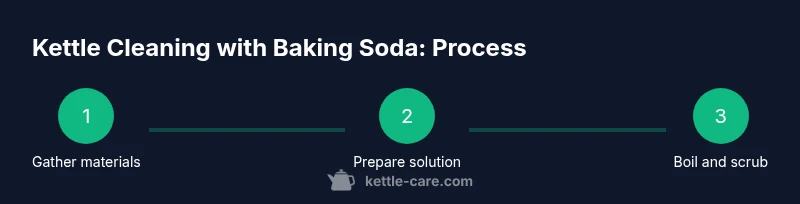
- 1
Gather materials
Collect the kettle, baking soda, water, measuring spoon, soft cloth, and optional brush. Confirm the kettle is unplugged and cooled to ensure safety and accuracy before starting.
Tip: Set aside a dedicated workspace to prevent slips. - 2
Make baking soda solution
Mix 1–2 tablespoons baking soda per liter of water in a measuring cup until dissolved. Use cool water to help the powder fully dissolve and avoid clumps.
Tip: Dissolve completely before adding to the kettle to prevent gritty spots. - 3
Fill and heat
Pour the solution into the kettle, leaving at least 2 inches of headspace; bring to a gentle boil. Keep the lid on to minimize splashing and retain heat.
Tip: Do not overfill to avoid boiling over. - 4
Boil and soak
Let the solution boil for 1–2 minutes, then turn off heat and allow the kettle to soak for 10–15 minutes. This lets mineral deposits loosen without aggressive scrubbing.
Tip: Do not leave unattended while boiling. - 5
Scrub interior
Open the lid and gently scrub interior walls with a soft sponge or brush to dislodge mineral deposits. Focus on corners and spout areas where buildup collects.
Tip: Be gentle to avoid scratching coatings. - 6
Rinse thoroughly
Rinse several times with clean, cold water until no baking soda residue remains. Check that the water tastes neutral and clear of grit.
Tip: Swirl and dump multiple times to ensure all residues are gone. - 7
Descale exterior (if needed)
Wipe exterior and lid with a damp cloth. Do not submerge electrical components, and dry the outside to prevent water stains.
Tip: Avoid harsh abrasives on the outside finish. - 8
Dry and test
Dry with a clean towel; fill with fresh water and bring to boil to verify performance and absence of off-taste.
Tip: Note any unusual noises or leaks and address promptly.
Frequently Asked Questions
Can baking soda damage my kettle?
Baking soda is generally safe for most kettle materials when used in small amounts and thoroughly rinsed. Avoid prolonged soaking or repeated use on sensitive coatings. If in doubt, test a small area first or consult the manufacturer.
Baking soda is usually safe if you use it in small amounts and rinse well. If you’re unsure, test a tiny spot first.
Is baking soda safe for stainless steel kettles?
Yes, baking soda is safe for stainless steel when used as directed. It helps remove mineral buildup without scratching the surface, provided you rinse thoroughly afterward.
Yes, it’s safe for stainless steel when used correctly and rinsed well.
How often should I descale with baking soda?
Frequency depends on water hardness and kettle use. In hard-water areas, a monthly or bi-monthly schedule is common; adjust based on buildup and taste.
It depends on your water, but hard water often needs more frequent descaling.
Can I use lemon juice with baking soda?
Mixing lemon juice with baking soda creates fizz and may introduce citrus residues. It’s safer to choose one method at a time and rinse well between attempts.
Lemon and baking soda fizz together—stick to one method at a time and rinse well.
Why use baking soda vs vinegar for kettles?
Baking soda is gentler, odor-neutral, and food-safe for routine descaling. Vinegar is more aggressive and can leave a vinegary scent; use with caution if you choose it.
Baking soda is gentler and typically leaves fewer odors than vinegar.
What if my kettle is aluminum?
Aluminum can react with alkaline cleaners. Check manufacturer guidance and consider testing a small area first or opting for mild, alternative methods.
Aluminum may react with alkaline cleaners; check guidance and test first.
Watch Video
Highlights
- Descale regularly using baking soda for best results.
- Rinse thoroughly to avoid any residue.
- Test water after cleaning for a neutral taste.
- Unplug electric kettles and avoid soaking the base.
- Maintain a simple schedule to prevent mineral buildup.