Electric Kettle Descaling: Safe Step-by-Step Guide
Learn practical, safe methods for descaling your electric kettle with vinegar, citric acid, or lemon. Step-by-step guidance and maintenance tips for long-lasting, fast boiling.


Master electric kettle descaling with this concise guide. You will learn safe methods using vinegar, citric acid, or lemon, and follow a clear, step-by-step process to remove mineral buildup without damaging your kettle. Regular descaling keeps performance high and flavors clean. Whether you’re dealing with hard water or routine maintenance, this fast overview sets you up for safe, effective results.
Why descaling matters for electric kettles
Mineral-rich water leaves lime scale on the interior surfaces of your electric kettle, especially around the heating element. Over time, scale reduces heating efficiency, prolongs boil times, and can impart off-flavors to tea and coffee. Regular descaling helps restore maximum energy transfer, keeps boil performance consistent, and extends the life of the kettle's seals and gaskets. According to Kettle Care, routine maintenance is the simplest, most cost-effective way to keep hot water flowing quickly and safely. In this section, we’ll cover what lime scale is, why it forms, and how a proactive approach can save you trouble later. We’ll also discuss how water hardness, frequency of use, and kettle model influence your descaling needs. By understanding the science behind scale, you’ll choose the right descaler and method for your home, and you’ll see how small habits add up to big gains in safety and speed.
Descaling methods: vinegar, citric acid, and beyond
Descaling agents fall into three broad categories: household vinegar, citric acid, and milder natural options like lemon juice. Vinegar is a cost-effective, readily available descaler that works by dissolving mineral deposits. Citric acid is a mineral-safe alternative that can be gentler on interiors and largely odor-free when rinsed properly. Lemon juice is a milder option, suitable for light buildup, but it may leave a citrus scent that requires extra rinsing. When choosing a method, consider your kettle's material (stainless steel is typically compatible), your tolerance for odors, and how hard your water is. In practice, a typical solution uses a 1:1 vinegar-to-water mix, or 2 tablespoons of citric acid per 500 ml water. After treatment, thorough rinsing with fresh water is essential to restore pure flavor.
Safety and compatibility: what to check before descaling
Before you descale, consult your kettle's manual and verify that the interior is safe for acidic solutions. Do not immerse the base in water, and never use bleach or abrasive cleaners. If your kettle has a nonstick coating or special finishes, verify compatibility with your chosen descaler. Always wear heat-resistant gloves when handling hot liquids, and ensure good ventilation in the kitchen. If you notice cracks, bulges, or unusual smells, stop immediately and contact the manufacturer. Regularly checking the lid seal and switch assembly helps prevent leaks after descaling. Following these precautions protects both your appliance and your safety.
Frequency and maintenance for peak performance
Hard water contains more minerals that form scale, so households with hard water will see build-up more quickly. The frequency of descaling depends on usage and water hardness; a busy family in a hard-water region may descale every 1-2 months, whereas households with softer water might manage every 3-6 months. You can perform a quick visual check by inspecting the interior walls after several uses: if you see a chalky film, it’s time to descale. Keeping filters clean and using a descaling schedule aligned with your local water conditions will help you avoid heavy scaling and keep the kettle efficient. A proactive approach reduces repair costs and maintains optimal heating speed.
Troubleshooting common descaling issues
Sometimes descaling leaves behind a faint taste or odor even after thorough rinsing. In that case, repeat the descaling step with a fresh solution and rinse more times. If scale remains, combine a second cycle with a stronger solution, or switch to citric acid if vinegar odor persists. Ensure you rinse using at least three full kettles of clean water. If you notice corrosion, discoloration, or malfunction after descaling, stop and consult the manufacturer. With careful steps and complete rinsing, most issues clear up quickly.
Authority Sources
To support these guidelines, consult reputable sources on safe cleaning and appliance maintenance. While practices vary by model, general safety and chemical-use considerations are covered by major public health and standards organizations:
Maintenance habits that extend kettle life
Adopting a simple maintenance routine saves time and money over the long term. Regular descaling, immediate rinsing after every use, and a quarterly check of the lid seal and switch can dramatically reduce scale buildup and prolong life. When done consistently, you’ll notice faster boils and cleaner-tasting water, which is especially important for tea and coffee enthusiasts. This section highlights practical routines you can implement today to keep your kettle performing at its best.
Summary of best practices
For best results, choose a descaler that suits your water hardness and kettle material, use thorough rinsing, and log your maintenance schedule. Always prioritize safety: unplug the kettle before handling hot parts, never mix cleaners, and follow the manufacturer’s guidance for your exact model.
Tools & Materials
- White vinegar (5% acetic acid)(Mix 1:1 with water for standard descaling)
- Citric acid powder(2 tablespoons dissolved in 500 ml water)
- Lemon juice(Alternative for light buildup; may require longer rinsing)
- Water(Fresh, cold water for rinsing and dilutions)
- Measuring cup(For accurate mixture measurements)
- Soft cloth or sponge(For exterior wiping and drying)
- Non-abrasive brush(For stubborn residue in corners)
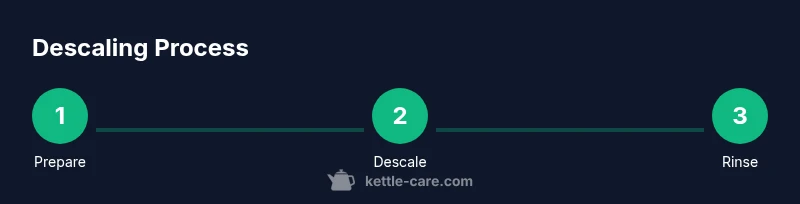
Steps
Estimated time: 45-60 minutes
- 1
Unplug the kettle
Unplug the kettle to prevent any electrical hazard while handling hot liquids.
Tip: Keeping the kettle unplugged reduces risk of accidental activation during descaling. - 2
Empty the kettle
Pour out any remaining water and remove the lid to access the interior.
Tip: A clear interior helps the descaling solution contact all mineral deposits. - 3
Rinse the interior
Rinse the inside briefly with clean water to remove loose debris before applying solution.
Tip: Rinsing first minimizes splashing when you add the descaler. - 4
Mix descaling solution
In a measuring cup, prepare the descaling solution according to your chosen agent (e.g., 1:1 vinegar to water or 2 tbsp citric acid per 500 ml water).
Tip: Use cold water to mix; hot liquids can alter the acid strength and safety. - 5
Add solution to kettle
Pour the prepared solution into the kettle up to the max fill line.
Tip: Do not exceed the max line to avoid spills during boiling. - 6
Boil the solution
Turn on the kettle and bring the solution to a rolling boil.
Tip: Watch closely to prevent overboiling; switch off if you hear excessive venting. - 7
Soak the kettle
Turn off and let the solution sit for 15 minutes to loosen mineral deposits.
Tip: For heavy buildup, extend soak to 20 minutes, but avoid letting the solution dry on surfaces. - 8
Rinse thoroughly
Empty the solution and rinse the interior with fresh water several times until odors are gone.
Tip: Run three full cycles of clean water to purge all acidic residue. - 9
Final boil and dry
Fill with fresh water, bring to a boil, then discard. Wipe exterior and allow to air-dry.
Tip: This final rinse ensures no lingering taste or odor remains.
Frequently Asked Questions
What is descaling and why is it important for electric kettles?
Descaling is the process of removing mineral deposits formed by water hardness. It restores heating efficiency, prevents longer boils, and improves taste.
Descaling removes mineral buildup to keep your kettle efficient and tasty.
Can I use white vinegar to descale my electric kettle?
Yes, mix one part vinegar with one part water and boil; rinse thoroughly afterward to remove any vinegar taste.
Yes, you can use vinegar, but rinse well.
How often should I descale my electric kettle?
Frequency depends on water hardness and usage. In hard-water areas, descale every 1-2 months; with soft water, every 3-6 months.
It depends on your water; check regularly.
Is lemon juice an effective descaler?
Lemon juice can work for light buildup; it leaves a pleasant scent but may require longer rinsing.
Lemon works but rinse well.
What if scale remains after descaling?
If scale remains, repeat the descaling cycle or switch to a citric acid solution; ensure thorough rinsing and confirm no deposits remain.
If scale stays, try again or switch agents.
Highlights
- Descale regularly to maintain efficiency.
- Choose a descaler that matches your water hardness.
- Rinse thoroughly to remove odors and flavors.
- Finish with a fresh-water boil to purge residue.