How to Get Rid of Kettle Stains
Learn proven, safe methods to remove kettle stains, descale effectively, prevent future buildup, and keep your kettle tasting clean for tea lovers and homeowners alike.


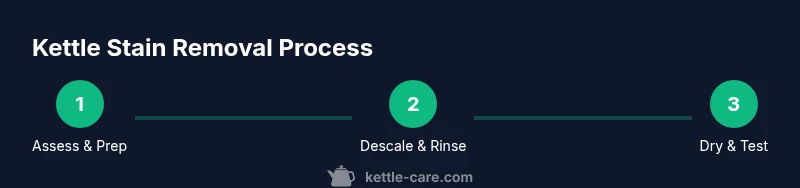
Goal: Remove kettle stains safely and restore a clean interior. Use gentle descalers (white vinegar, citric acid) and avoid bleach or abrasive cleaners. Start with a warm rinse, then a short boil cycle using a descaling solution, and finish with thorough rinsing. For best results, descal e regularly—monthly for heavy use, quarterly for light use—and test a small area first. Kettle Care guides this process.
Understanding kettle stains and why they form
According to Kettle Care, kettle stains are primarily mineral deposits that accumulate when minerals in your water are heated repeatedly. These minerals—calcium, magnesium, and, in some regions, iron—tend to cling to the interior surfaces of the kettle. Heat accelerates crystallization, embedding tiny white or brown specks into the metal or glass lining. Understanding this basics helps you choose the gentlest, most effective approach. When you see cloudy water or dark spots near the bottom, you’re most likely dealing with mineral buildup rather than mold or dangerous residue. Regular maintenance keeps flavor and efficiency at their best and reduces the need for aggressive cleaning.
Types of stains common in kettles
There are several kinds of kettle stains you might encounter. Mineral deposits—often called limescale—are chalky, white to off-white layers that cling to the interior. Tea stains appear as light to dark brown patches from tannins in beverages like black tea or chai. Rust can show up as orange-brown specks if the kettle’s metal is corroding, typically in older units or if storage conditions are unfavorable. Each type responds to different cleaning strategies, so identifying the stain helps you choose the right method without risking damage to the kettle.
Safety first: what not to use
Never use bleach, ammonia, or abrasive scrubs inside a kettle. Harsh chemicals can leave residual flavors or pose safety risks for boiling water. Avoid metal wool and stiff brushes that can scratch enamel or stainless steel, creating micro-scratches that trap new stains. If your kettle has a non-stick or coated interior, stick to mild cleaners and test any method on a small area before treating the entire interior. Kettle Care emphasizes gentle, food-safe approaches to protect your kettle and your tea.
Everyday solutions you already have at home
Many households can tackle kettle stains with simple pantry items. White vinegar or citric acid dissolve mineral buildup without harsh chemicals. A baking soda paste can lift surface stains on the exterior or on the lid, while lemon juice adds a mild acidity that can brighten dull interiors. For tea stains, a gentle mix of dish soap and warm water can help loosen tannins before descaling. Always finish with thorough rinsing to remove any lingering odors or residues.
Descaling with vinegar or citric acid
Descaling is the core technique for mineral buildup. For vinegar descaling, mix a solution of one part white vinegar to one part water and fill the kettle to cover the stained areas. Boil the solution, then let it sit for 15–20 minutes before scrubbing gently with a non-abrasive brush. Rinse thoroughly several times with clean water to remove any vinegar scent. Citric acid is a gentler option: dissolve one to two tablespoons of citric acid in one liter of water, bring to a boil, then soak for 15–20 minutes and rinse completely.
Using lemon juice and food-grade acids for milder stains
If your stains are light or you prefer a natural, lemon-based approach, lemon juice or citric acid can be effective without strong odors. Fill the kettle with water and add the juice of two lemons or a couple packets of citric acid. Boil, then allow to cool naturally before scrubbing and rinsing. This method can leave a fresh aroma and reduce mineral buildup gradually over multiple cycles. Kettle Care notes that lemon-based descaling is especially pleasant for frequent tea drinkers who want a milder clean.
Mechanical cleaning vs chemical descalers: choosing the right method
Not all kettles justify chemical descalers. For light buildup, a thorough boil with warm water and a mild cleaner may suffice. For stubborn scale near the base or in hard-water regions, a dedicated descaler or vinegar solution delivers more robust results. When the kettle is heavily scaled or old, you may need to repeat cycles or combine methods. Always prioritize non-abrasive tools and avoid damaging coatings; if in doubt, start with gentler options and escalate as needed.
Rinsing, drying, and testing after cleaning
After descaling, rinse the kettle repeatedly until every trace of cleaner or odor is gone. Boil fresh water and discard it to ensure any lingering impurities are flushed away. Dry the interior with a lint-free cloth or air-dry with the lid off to prevent moisture pockets. Finally, taste a small amount of water to confirm no off-flavors remain. Regular testing helps you catch buildup before it becomes stubborn.
Prevention: how to keep kettles stain-free
Prevention is easier than removal. Use filtered water if your area has hard water, and descale on a schedule that matches usage and water hardness. Empty the kettle after use to prevent mineral residues from settling, and wipe the interior periodically with a soft cloth. A quick weekly rinse can prevent buildup, while a deeper descale every 1–3 months keeps staining from taking hold. Good habits save time and keep your kettle performing at its best.
Tools & Materials
- White vinegar (5%–6%)(500 ml or enough to cover the kettle base)
- Citric acid powder(2–4 tablespoons per liter of water)
- Lemon juice (fresh)(Alternative mild acid for light stains)
- Baking soda(For paste on exterior or lid)
- Dish soap(Mild, for pre-clean or light tannin spots)
- Soft scrub brush(Non-abrasive to avoid scratching)
- Non-abrasive sponge or microfiber cloth(For gentle wiping)
- Measuring cup(Accurate dilution when using acids)
- Gloves(Protect hands from hot steam)
- Clean, fresh water(For rinsing and final boil)
- Kettle-safe commercial descaler(Follow package directions)
Steps
Estimated time: 1 hour 30 minutes
- 1
Gather cleaning supplies and prep kettle
Collect all tools and materials. Empty the kettle and inspect for any damage, ensuring safety before cleaning. Have good lighting to see stains clearly before you begin.
Tip: Lay out towels to catch spills and wear gloves if you have sensitive skin. - 2
Empty and inspect the kettle interior
Discard remaining water and look for hard mineral buildup in the base and walls. Note areas with thick scale so you know where to focus your cleaning.
Tip: Do not turn on the kettle with the lid off if you see steam escaping from crevices. - 3
Choose a descaling solution
Decide between white vinegar or citric acid based on stain severity and kettle material. Vinegar is robust for heavy scale; citric acid is gentler and often preferred for coated interiors.
Tip: If your kettle has a delicate coating, test a small area first with a diluted solution. - 4
Prepare the descaling solution
Mix the descaling agent with water in the kettle, covering stained areas. Do not fill beyond the max fill line to avoid boil-over.
Tip: Use a measuring cup to get a precise dilution for consistency. - 5
Boil the solution
Turn on the kettle and bring the solution to a gentle boil. Let it boil for 5–10 minutes, watching carefully to prevent overflow.
Tip: If your kettle has a narrow neck, pause briefly to avoid splashing. - 6
Soak and soften scale
Turn off heat and let the solution soak for 15–20 minutes. This allows minerals to soften and detach more easily.
Tip: Keep the lid slightly ajar to vent steam and prevent pressure buildup. - 7
Scrub interior safely
Using a non-abrasive brush or sponge, gently scrub the interior to lift loosened deposits. Focus on corners and the base where buildup hides.
Tip: Never scrub aggressively; scratch-prone coatings can be damaged. - 8
Rinse thoroughly
Rinse with clean water several times to remove all descaling solution and residues. Boil fresh water and discard to remove any lingering tastes or smells.
Tip: Ventilate the area if you notice strong vinegar aroma. - 9
Repeat for stubborn stains
If stains persist, repeat the descaling cycle using lemon juice or citric acid for a milder approach. Consider a shorter boil to avoid over-descaling.
Tip: Limit repeated cycles to avoid material fatigue. - 10
Clean exterior and lid
Wipe exterior surfaces with mild dish soap and a soft cloth; use a baking soda paste on stubborn exterior stains if needed. Rinse and dry thoroughly.
Tip: Exterior cleaning preserves the kettle’s appearance and resale value. - 11
Dry and test
Dry the interior completely with a cloth or air-dry with lid off. Boil a fresh batch of water to test taste and ensure there’s no leftover cleaning odor.
Tip: Taste a small amount of hot water to confirm clean flavor. - 12
Establish a maintenance routine
Set a schedule based on water hardness and usage. A quick monthly rinse plus a deeper descale every 1–3 months prevents stubborn buildup.
Tip: Keep a cleaning log to track when you last descaled.
Frequently Asked Questions
Can I use bleach to remove kettle stains?
No. Bleach can damage kettle coatings and leave harmful residues in boiled water. Stick to safe descalers like vinegar or citric acid.
Bleach is not recommended for kettles. Use safe descalers like vinegar or citric acid instead.
Is vinegar safe for stainless steel kettles?
Yes, vinegar works well on most stainless kettles, but dilute it properly and rinse thoroughly to avoid lingering aroma or flavor.
Vinegar is generally safe for stainless steel kettles when diluted and rinsed well.
How often should I descale my kettle?
Descale based on usage and water hardness. Heavier use or hard water may require monthly cycles; lighter use can be every 2–3 months.
Descale according to use and water hardness; more often if you have hard water.
Will descaling affect the taste of water?
If you rinse thoroughly after descaling, any off-tastes dissipate quickly. Some lemons or citric acid can leave a mild aroma, which rinses away.
Rinse well after descaling to avoid any lingering taste.
Can I descale an electric kettle with lemon juice?
Yes, lemon juice is a milder option that can work for electric kettles. Ensure you rinse thoroughly and avoid overfilling.
Lemon juice can work for electric kettles, but rinse thoroughly afterward.
What if stains persist after descaling?
If stains persist after a couple cycles, try a stronger vinegar solution or repeat with citric acid, and consider a thorough exterior wipe-down. If unresolved, consult the kettle manufacturer.
Persisting stains may need a stronger cycle or a manufacturer's guidance.
Watch Video
Highlights
- Descale with safe agents first to reduce mineral buildup.
- Rinse thoroughly to remove all residues and odors.
- Regular maintenance prevents stubborn stains.
- Avoid harsh chemicals that can damage coatings.
- Document a simple descaling schedule to stay consistent.