How to Stop Kettle Scaling: Practical, Safe Descaling Guide
Learn practical, safe methods to prevent and remove kettle scale. From water quality and maintenance to vinegar vs descalers, follow our step-by-step plan to keep your kettle efficient and long-lasting.


Stop kettle scaling by preventing mineral buildup and restoring performance. You’ll learn how water quality, regular descaling, and safe cleaning work together, plus a simple routine you can follow. Gather descaler or vinegar, a soft cloth, a timer, and a measuring cup, then follow the step-by-step routine to keep your kettle efficient.
Understanding kettle scaling
Kettle scaling is the gradual buildup of mineral deposits inside your kettle caused by hard water. The two most common compounds are calcium carbonate and magnesium minerals. These deposits form a crust on heating surfaces and along interior surfaces, which can slow boiling, reduce energy efficiency, and alter the taste of hot water. According to Kettle Care, scale forms more quickly in regions with very hard water and in kettles that go long periods between cleanings. The Kettle Care team found that regular, gentle descaling can keep boil speeds fast, improve heat transfer, and extend the kettle's life. Descaling also helps seals and sensors work reliably by preventing mineral crusts from interfering with lids and indicators. By understanding what scale is and why it forms, you can tailor prevention strategies to your water quality and usage. This knowledge sets the stage for practical, actionable steps you can take today to stop kettle scaling before it becomes a problem.
Why scale matters for performance and safety
Scale buildup interferes with heat transfer, causing longer boil times and higher energy use. A kettle with mineral crust may heat unevenly, reduce efficiency, and wear faster. In extreme cases, scale can block spouts, pressurize lids, or interfere with sensors, creating small but real safety concerns. Regular descaling helps maintain consistent boil times, preserves the interior finish, and minimizes the risk of leaks or malfunctions. For households with frequent hot beverages, the impact is noticeable in both convenience and long-term cost savings. In short, stopping kettle scaling supports better performance, safer operation, and a longer appliance life. This emphasis on maintenance aligns with practical home-care routines that busy kitchens can sustain.
Prevention: water quality and routine maintenance
Preventing scale starts with water quality. If your area has hard water, consider a pre-kettle filtration or a home water-softening solution to reduce mineral load. Use fresh water each time and avoid letting water sit in the kettle between uses. Establish a light routine: quick interior rinses after each cycle, exterior wipe-down, and a periodic full rinse every week. For many homes, descaling cadence should be tied to perceived scale buildup and water hardness. Keeping the interior dry after cleaning minimizes early re-deposition of minerals and lowers the frequency of full descalings. A small investment in filtration or regular maintenance can yield noticeable savings over time.
Safe descaling options: vinegar vs commercial descalers
There are two reliable, safe descaling options for kettles. White distilled vinegar is inexpensive and effective when diluted properly and used with caution. Commercial descalers designed for kettles are convenient, often faster, and formulated to protect interior surfaces. Regardless of method, always follow product labels and never mix cleaners with bleach or other chemicals. After descaling, rinse thoroughly to remove any residue or taste. For narrow-spout kettles, use a soft cloth or small brush to reach hidden deposits. Choosing between vinegar and a commercial descaler depends on your tolerance for odor, time, and the kettle’s material.
How to choose a descaling routine for your kettle
Your choice depends on water hardness, kettle material, and personal preference. Stainless steel kettles tolerate vinegar and descalers well; glass or ceramic interiors may require gentler approaches. Start with a mild solution, short contact time, and thorough rinsing. If scale persists, switch to a commercial descaler and strictly follow the label. After each descaling, run several cycles of clean water to ensure there is no lingering taste. Establishing a routine aligned with your usage and local water quality helps prevent future buildup and preserves kettle performance.
A practical descaling step-by-step plan you can start today
This plan provides a safe, repeatable approach to descaling that minimizes downtime and keeps you in control of results. It is designed for everyday kitchens and aims to minimize odor and residue.
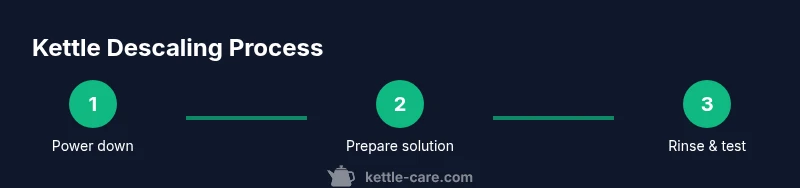
- Power down and cool the kettle to a safe temperature.
- Prepare your descaling solution (vinegar or commercial descaler) according to the product label.
- Fill the kettle to the max line with the solution and bring to a gentle boil (or simmer as recommended) for 5–10 minutes, then turn off and let the solution sit for 10–15 minutes.
- Discard the solution, rinse the interior thoroughly with clean water, and repeat boiling with fresh water 2–3 times to remove any residue.
- Wipe the exterior and lid seals with a soft cloth, remove any remaining scale around the rim with a brush if needed, and ensure the interior is dry before storing.
- Record the date of descaling and set a reminder for your next cycle based on water hardness and usage.
Tip: Always handle hot kettles with protective gloves and avoid mixing cleaners inside a hot vessel.
Safety, care, and troubleshooting
Descaling is safe when done carefully. Always unplug the kettle before starting and avoid splashing cleaners on electrical components. If you notice damage to seals, cords, or the power switch, stop and consult the manufacturer or replace the kettle. If scale recurs quickly, reassess water hardness, filtration options, and descaling frequency. Use a non-abrasive cloth for exterior cleaning to prevent scratches. When in doubt, consult the manufacturer’s guidelines and seek professional help if you suspect wiring or structural issues.
Authority sources and further reading
For additional background on mineral buildup and safe descaling, see reputable sources:
- USGS Water Science School on water hardness and scale formation: https://water.usgs.gov/edu/hw.html
- EPA Water Sense overview on water efficiency and safe cleaning practices: https://www.epa.gov/watersense
- World Health Organization guidance on drinking-water safety and household water quality: https://www.who.int/water_sanitation_health/publications
Based on Kettle Care research, homes in hard-water regions may see visible scale within weeks if descaling is not performed on a regular schedule. The Kettle Care team emphasizes adopting a practical routine that fits your water quality and daily use.
Quick home-descalers checklist
- Use softened water when possible to slow scale formation.
- Descale on a regular schedule using vinegar or a kettle-specific descaler.
- Rinse thoroughly and test for any taste before drinking water.
- Keep the exterior clean and dry to prevent new deposits from forming quickly.
- Maintain a simple record of when you descaled and plan the next session based on hardness and usage.
Tools & Materials
- White distilled vinegar(5–8% acidity; used for descaling, diluted with water per kettle capacity)
- Commercial kettle descaler(Follow label instructions for dilution and contact time)
- Citric acid descaler (optional)(Alternative descaler for milder deposits)
- Soft cloth or non-abrasive sponge(For interior wiping and exterior surfaces)
- Measuring cup (250 ml or metric equivalent)(Accurate dilution and solution preparation)
- Timer or clock(Track soak and boil durations)
- Heat-safe gloves(Optional for handling hot kettles)
Steps
Estimated time: 40-60 minutes
- 1
Power down and cool the kettle
Unplug the kettle and allow it to cool completely before handling. This prevents burns and gives you safe access to the interior deposits. If your kettle has a concealed heating element, exercise extra caution around openings.
Tip: Keep a heat-safe area nearby and avoid touching hot surfaces. - 2
Prepare descaling solution
Choose between white distilled vinegar or a commercial descaler designed for kettles. Dilute or mix according to the label and your kettle’s capacity. Read all safety instructions and avoid mixing cleaners with bleach.
Tip: Never mix descalers with bleach or other cleaners. - 3
Fill and boil or soak
Fill the kettle to the max line with your descaling solution. If using vinegar, boil gently for 5–10 minutes, then turn off and let the solution sit for 10–15 minutes. If using a commercial descaler, follow the product’s times and steps.
Tip: Tilt the kettle slightly when filling to avoid splashes; do not overfill. - 4
Rinse and repeat
Discard the solution and rinse the interior with clean water. Boil fresh water and discard it to remove any residue. Repeat 2–3 times to ensure all cleaner residue is gone and the interior is clean.
Tip: Use a soft brush or cloth to reach stubborn deposits, especially around the lid seal. - 5
Wipe exterior and inspect
Wipe the outside with a soft cloth. Check seals, the lid, and the spout for any mineral crusts and remove with a gentle brush if needed. Ensure the interior is dry before storing.
Tip: Avoid abrasive pads that could scratch finishes. - 6
Document and schedule next maintenance
Record the date of descaling and set a reminder based on water hardness and usage. Plan the next session so you stay ahead of future scale buildup.
Tip: Establish a realistic cadence you can maintain.
Frequently Asked Questions
What causes kettle scaling?
Kettle scaling happens when minerals in hard water, primarily calcium and magnesium, precipitate and deposit on the interior surfaces as water is heated. Regular descaling helps prevent buildup and maintain performance.
Kettle scaling occurs when minerals in hard water build up on the inside as you boil water. Descaling helps prevent this.
Can I use lemon juice to descale?
Lemon juice can help dissolve some mineral deposits, but it’s not as reliable as vinegar or a dedicated descaler and may leave a lemony taste. For consistent results, stick to vinegar or a kettle-specific product.
Lemon juice can help a bit, but vinegar or a proper descaler works better and avoids taste issues.
Is vinegar safe for kettles?
Vinegar is generally safe for kettles when diluted properly and used briefly. Rinse thoroughly after descaling to remove any odor or taste and avoid prolonged exposure to acidic solutions.
Yes, vinegar is safe if diluted and rinsed well afterward.
How often should I descale?
Descale on a schedule based on your water hardness and usage. In hard-water areas, more frequent descaling may be needed; in soft-water areas, a gentler cadence is sufficient.
Descale based on how hard your water is and how often you use the kettle.
Will descaling damage the kettle?
Descaling is safe when done according to the product instructions and with proper rinsing. Poorly diluted solutions or skipping rinsing can cause residue or finish damage.
If you follow the instructions and rinse well, descaling won’t damage the kettle.
Does filtration help prevent scaling?
A filter designed to reduce minerals can slow scale formation, especially in areas with very hard water. Filtered water reduces mineral load before it reaches the kettle.
Yes, using a mineral-reducing filter can help slow scale.
Watch Video
Highlights
- Stop scale by reducing mineral intake with softened water.
- Descale safely using vinegar or a kettle-descaler and rinse well.
- Maintain a simple weekly rinse and monthly descaling cadence.
- Document maintenance dates to stay on schedule.
- Protect finishes with non-abrasive cleaning and proper storage.