How to Know If Kettle Is Dirty: Signs, Tests, and Cleaning
Discover how to know if kettle is dirty with clear signs, simple home tests, and safe descaling tips from Kettle Care. Learn when to descale, how to test for buildup, and a practical cleaning routine for safer, faster boiling.


If you’re asking how to know if kettle is dirty, this guide helps you spot common signs, run simple checks, and choose a safe cleaning method. Look for mineral buildup, cloudy water, unusual odors, slower boils, and taste changes in your tea. These cues tell you when to descale or scrub, protecting performance and flavor.
How to know if kettle is dirty: signs to watch for
If you’re wondering how to know if kettle is dirty, you’re not alone. According to Kettle Care, routine kettle checks save time and prevent bigger problems down the line. Start with the interior: mineral buildup typically appears as chalky, white, or off-white deposits near the bottom and along the heating element, especially if you have hard water. Exterior stains can also hint at mineral transfer from steam. A cloudy look in boiled water, a persistent-filmy layer on the interior surface, or a faint musty or sulfur-like odor after boiling are strong indicators of buildup. Taste is a reliable cue: tea or hot water that tastes flat or metallic often signals mineral residues that survived boiling. Finally, watch for reduced efficiency: if the kettle takes longer to reach a boil or runs at a higher wattage without achieving the same temperature, mineral deposits may be insulating the element. Early signs can be subtle, so regular checks are a best practice to keep your kettle performing safely and efficiently.
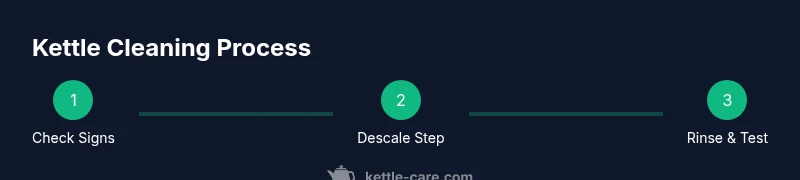
Signs Your Kettle May Be Dirty: Visual cues, odors, and performance are your first clues. If in doubt, follow with a test and routine cleaning to restore speed and flavor. Crystallized scale and dull water are common in areas with hard water, but a clean kettle is within reach with the right approach.
Tip from the Kettle Care team: Regular inspection helps you catch buildup before it becomes a problem. Keep an eye on the bottom of the kettle and inside the lid seal for any chalky spots or discolored patches that don’t wipe away easily.
Quick summary: When you see mineral film, cloudy water, or off flavors, it’s time to test further and consider descaling. Regular maintenance minimizes mineral buildup and extends kettle life.
Tools & Materials
- Descaling solution (citric acid or white vinegar, per manufacturer guidance)(Citric acid is often preferred for stainless steel; vinegar can be used if your kettle tolerates it)
- Soft cloth or microfiber cloth(For wiping the interior and exterior surfaces gently)
- Non-abrasive sponge or soft-bristled brush(Avoid metal scrubbers that can scratch coatings)
- Measuring cup or cup for mixing cleaning solution(Use clean, food-safe containers)
- Warm water(For rinsing and diluting cleaning solution)
- Gloves (optional)(Protect skin from acidic solutions and hot water)
Steps
Estimated time: 30-45 minutes
- 1
Gather cleaning supplies
Collect your descaler, soft cloth, brush, measuring cup, and warm water. Having everything within reach prevents rushing and reduces the risk of spills during cleaning.
Tip: Set a timer for the soak step to ensure consistent contact time with the solution. - 2
Rinse and inspect the inside
Rinse the kettle with warm water, then open the lid and look for visible scale at the bottom and along the heating element. This gives you a baseline before you descale.
Tip: If you see stubborn spots, apply a small amount of descaling solution directly to them and let sit briefly. - 3
Prepare the descaling solution
Mix the descaler according to the product or recipe you’re using. For citric acid, a typical mix is a small amount dissolved in water; for vinegar, use a diluted solution as recommended by the kettle manufacturer.
Tip: Avoid using undiluted vinegar in kettles with exposed plastic components to prevent odor transfer. - 4
Fill and soak
Fill the kettle with the descaling solution until the level covers the affected areas. Let it soak for 15–30 minutes to break down mineral deposits.
Tip: If your kettle is very scale-laden, extend the soak time slightly, but avoid leaving acid solutions in contact for too long. - 5
Boil and scrub gently
Bring the solution to a boil, then switch off and allow it to cool briefly. Use a soft brush to scrub any loosened scale away from corners and the rim.
Tip: Do not use abrasive pads; keep scrubbing light to prevent scratching. - 6
Rinse thoroughly
Pour out the solution, rinse several times with fresh warm water, and run a full cycle with clean water to remove any lingering taste or odor.
Tip: Pour out, refill, and repeat at least twice to ensure all residue is gone. - 7
Dry and test boil
Dry the interior with a clean cloth, then perform a test boil with fresh water to confirm the taste is clean and the kettle heats efficiently.
Tip: If odor remains, repeat the rinse cycle or consider a second shorter soak with a fresh cleaning solution.
Frequently Asked Questions
How often should I descale my kettle?
Descale frequency depends on water hardness and usage. In hard water areas, a monthly to bi-monthly schedule is common; in softer water, every 2–3 months may be enough. Always monitor for signs of buildup and adjust accordingly.
In hard water areas, descale monthly or bi-monthly; softer water may require every two to three months. Watch for signs of buildup and adjust as needed.
Can I use vinegar to descale a kettle?
Vinegar is effective but can leave an odor. Dilute it and rinse thoroughly. Some kettles with specific coatings may not tolerate vinegar, so check the manufacturer’s guidance before use.
Vinegar works if diluted and thoroughly rinsed; check your kettle’s instructions first to avoid damaging coatings.
What should I do if mineral buildup is stubborn?
For stubborn deposits, repeat the soaking and gentle scrubbing, or alternate with a citric acid solution. If deposits persist, consider contacting the manufacturer for model-specific cleaning tips.
If deposits stay, soak again with citric acid or mild cleaner and scrub gently; for stubborn cases, consult the manufacturer.
Is it safe to boil water after cleaning with descalers?
Yes, but you should rinse thoroughly and boil fresh water to remove any cleaning residue before making tea or coffee.
Always rinse well and boil fresh water after descaling to remove any cleaner residue.
What signs indicate I should replace the kettle?
If the kettle shows persistent dulling, cracks, corrosion around the lid seal, or frequent scale buildup despite cleaning, replacement may be safer and more cost-effective.
If you see cracks, corrosion near the seal, or recurring buildup despite cleaning, consider replacement.
Watch Video
Highlights
- Identify signs of dirty buildup early to prevent performance loss.
- Use appropriate descaling methods based on your kettle’s material.
- Rinse thoroughly to remove all cleaning solution residues.
- Descale on a regular schedule to extend kettle life and maintain flavor.
- Follow manufacturer guidelines for safe cleaning practices.