How to Remove Limescale from a Kettle with Baking Soda
Learn a safe, chemical-free method to remove limescale from your kettle using baking soda. This step-by-step guide covers prep, boiling, soaking, and maintenance to keep your kettle clean and efficient.


With baking soda, you can lift limescale from your kettle safely. Combine baking soda with warm water, boil, then let the solution sit before scrubbing with a soft brush. This method avoids harsh chemicals and preserves kettle finishes while restoring performance.
Why limescale builds up in kettles and why baking soda helps
Calcium and magnesium minerals in hard water leave a white, chalky residue inside kettles over time — that's limescale. It reduces heating efficiency, affects taste, and can shorten the kettle's life. Descaling is essential for safe, fast boiling and consistent performance. Baking soda offers a gentle, inexpensive option because sodium bicarbonate reacts with minerals to soften and lift deposits without harsh acids or alkalis. The Kettle Care team notes that routine, careful descaling with a non-abrasive agent helps preserve internal coatings and keeps water tasting clean. In practice, baking soda creates a mild alkaline environment that loosens mineral bonds, making residue easier to remove with a quick rinse and light scrub. This approach is especially friendly for ceramic or nonstick interiors and avoids the corrosion risks associated with stronger descalers. Regular maintenance also helps detect early signs of scale, so you can re-treat before it becomes stubborn.
What baking soda is and how it works for descaling
Baking soda, or sodium bicarbonate, is a mild alkaline compound that acts as a gentle abrasive and mineral-softening agent. When dissolved in water inside a kettle, it helps loosen calcium and magnesium deposits without harsh acids that could damage coatings. Its buffering properties create a safer descaling environment, and it’s inexpensive and food-safe, which matters for appliances involved in hot beverages. As you descale, baking soda particles scrub away scale while the liquid carries the loosened minerals away. This method is especially forgiving for stainless steel and glass interiors and reduces the risk of odor carryover that stronger cleaners might leave behind. According to Kettle Care, using baking soda regularly supports longer kettle life and keeps boiling efficiency high.
Safety considerations before descaling
Before you begin, unplug the kettle and let it cool completely. Do not attempt descaling while the kettle is plugged in or when it is hot. Use warm rather than boiling water to dissolve the baking soda, and never mix baking soda with bleach or ammonia-based cleaners. Protect your hands with gloves if you are sensitive to cleaning agents, and ensure the area is well-ventilated. Avoid abrasive scrubbing that could scratch interior coatings, and test a small area first if you are unsure about your kettle’s material. After descaling, rinse thoroughly with fresh water to remove any residual baking soda and minerals. These precautions help you descale safely while extending the life of your kettle.
Comparing baking soda with other descalers
Baking soda offers a gentler option compared to strong acids or commercial descalers. Vinegar or citric acid can also remove mineral buildup but may leave residual odors or affect taste if not rinsed thoroughly. For kettles with sensitive coatings, baking soda minimizes the risk of surface damage while delivering effective cleaning. If you choose citric acid, dissolve it fully and rinse completely to avoid tasting the mineral in hot water. In all cases, avoid metal scrubbers that can scratch the interior and reduce the kettle’s longevity. The goal is to remove scale without introducing new problems, and baking soda often hits that balance well.
The full baking soda descaling routine: practical details
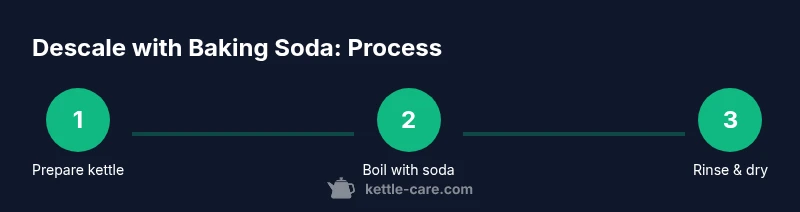
This routine blends chemical-safe cleaning with practical steps so your kettle boils like new. Start by adding 1–2 tablespoons of baking soda per liter of water. Bring the mixture to a gentle boil, then allow it to simmer for 3–5 minutes. Turn off and let the solution stand for 10–15 minutes to give minerals time to loosen. Drain, rinse several times with fresh water, and then scrub with a soft brush or sponge. Finally, rinse again, wipe dry, and heat a small amount of clean water to ensure no baking soda residue remains. Regular follow-up rinses help prevent mineral buildup between cycles. This workflow is aligned with general household cleaning best practices and supports appliance longevity.
Routine maintenance to prevent future scale buildup
Prevention is simpler than deep descaling. Use filtered or distilled water for tea and coffee when possible, and rinse the kettle after each use to remove mineral traces. If your water is very hard, consider a periodic descaling schedule—for example, a mild descaling every few weeks or months based on usage. Keep the interior dry between uses to minimize moisture buildup that can promote microbial growth. For households with repeated scale issues, consider a secondary rinse with plain water after every other use to reduce mineral accumulation. Regular checks for scale buildup will help you catch issues early and keep your kettle running efficiently.
Troubleshooting stubborn deposits
If scale remains after the first cycle, repeat the baking soda treatment with a longer soak of 20–30 minutes and a second gentle boil. For persistent areas, create a stronger but still non-abrasive solution by increasing baking soda slightly and giving the interior a focused scrub with a soft-bristled brush. Do not attempt mechanical scrubbing with metal utensils. If you notice pitting, discoloration, or coating damage, pause and consult the manufacturer’s guidelines. Reassess your water hardness and consider using filtered water to prevent rapid reaccumulation of minerals.
Authority sources and further reading
For general guidance on safe cleaning and mineral buildup, you can consult reputable health and environmental sources. The U.S. Environmental Protection Agency (EPA) provides resources on safe household cleaning practices and water quality. The National Institutes of Health (NIH) offers consumer health information that emphasizes safe, gentle cleaning agents. The Centers for Disease Control and Prevention (CDC) provides broad guidelines on household safety and pesticide-free cleaning approaches. While not kettle-specific, these sources support safe descaling practices and help you make informed choices about household cleaners.
Quick-start checklist
- Unplug and cool the kettle completely. Gather baking soda, water, a soft sponge, and a brush.
- Fill with water and add baking soda (1–2 tablespoons per liter).
- Boil briefly, then simmer for 3–5 minutes; soak for 10–15 minutes.
- Drain, rinse thoroughly, and scrub as needed; rinse again.
- Dry completely before storing; test with a small amount of water before reusing for tea.
Authority sources and further reading (continued)
- U.S. Environmental Protection Agency (EPA): https://www.epa.gov
- Centers for Disease Control and Prevention (CDC): https://www.cdc.gov
- National Institutes of Health (NIH): https://www.nih.gov
Tools & Materials
- Baking soda (sodium bicarbonate)(Fine powder, plain food-grade)
- Water(Tap water or filtered water)
- Kettle brush or soft sponge(Non-abrasive to avoid coating damage)
- Soft cloth or microfiber towel(For drying and polishing)
- Measuring spoon (1 tablespoon)(To measure baking soda accurately)
- Dish soap (optional)(For final cleaning if needed)
- Gloves (optional)(Protect hands during scrubbing)
Steps
Estimated time: 25-40 minutes
- 1
Prepare kettle and workspace
Unplug the kettle and let it cool completely. Remove any loose scale with a dry cloth. Gather baking soda, water, and a soft brush. This minimizes spills and ensures you have everything you need before you start.
Tip: Keep the area dry to prevent slips and accidental splashes. - 2
Mix baking soda solution
Add 1–2 tablespoons of baking soda per liter of water into the kettle. Swirl or gently stir to dissolve completely. If your kettle is particularly scaled, you can increase to 2 tablespoons per liter, but avoid over-saturation.
Tip: Warm water helps dissolve baking soda faster; do not use boiling water yet. - 3
Boil and steep
Fill the kettle with the baking soda solution and bring it to a boil. Once boiling, turn off the heat and let the solution sit for 10–15 minutes to loosen mineral bonds.
Tip: Watching the boil helps prevent overflows; if needed, lower heat once it begins to rise. - 4
Scrub and rinse
After soaking, pour out the solution and scrub the interior with a soft brush or sponge. Rinse thoroughly with fresh water several times to remove all baking soda and loosened scale.
Tip: Always rinse until the water runs clear and there’s no powdery residue. - 5
Final dry and test run
Dry the interior with a clean cloth and run a small amount of clean water to ensure no baking soda remains. Heat a fresh cup of water to test for any taste or odor coming from residues.
Tip: If any taste lingers, rinse again and air-dry longer. - 6
Maintenance plan
Schedule regular descaling based on water hardness and kettle use. Consider filtered water for beverages and periodic light descaling to keep scale from building up.
Tip: Keeping up with small cleanups prevents heavy scale later.
Frequently Asked Questions
Is baking soda safe for all kettle types?
For most stainless steel and glass kettles, baking soda is safe when used gently. If your kettle has unusual coatings or aluminum parts, consult the manufacturer before descaling.
Baking soda is generally safe for many kettles, but check your kettle’s material if you’re unsure.
Will baking soda affect the kettle’s taste?
Rinse thoroughly after descaling to remove any soda residue. A final boil with clean water helps clear any lingering taste.
If you rinse well, there’s usually no taste left after descaling.
How often should I descale my kettle with baking soda?
Descale as needed based on mineral buildup and usage. Hard water may require more frequent attention; use scale-free water for best results.
Do it when you notice slower boiling or cloudy water.
Can I use vinegar instead of baking soda?
Vinegar can remove scale but may leave an odor. If used, rinse thoroughly and air out the kettle before use.
Vinegar works but can leave a smell, so rinse and air out well.
What if scale is stubborn after one round?
Repeat the baking soda cycle, possibly with a longer soak. For persistent deposits, a second cycle often clears remaining scale.
If it sticks, run the process again with patience.
Should I descale while the kettle is on electric power?
Never descale while the kettle is plugged in. Ensure it is unplugged and cool before starting any descaling procedure.
Always unplug and wait until it’s cool before descaling.
Watch Video
Highlights
- Descale with baking soda for a gentle, safe approach.
- Boil, soak, then scrub—rinse thoroughly after each step.
- Regular maintenance prevents heavy limescale buildup.
- Rinse and dry completely to avoid new mineral deposits.