How to clean kettle with lemon: a safe, natural descaling method
Learn a safe, chemical-free method to descale and deodorize your kettle using lemon. Step-by-step guidance, tools, tips, and troubleshooting for electric and stovetop kettles.


By using lemon to clean your kettle, you can safely remove mineral buildup and odors without harsh chemicals. This method relies on natural acidity and gentle boiling to descale, deodorize, and protect your kettle’s interior. You’ll need lemon halves or lemon juice, water, and optional vinegar as a backup. Follow these steps for a spotless, safer boil every time.
Why lemon works for kettle cleaning
This article explains how to clean kettle with lemon and why it works. Lemons contain citric acid, a natural descaling agent that dissolves mineral buildup—commonly known as limescale—while leaving a fresh, citrusy aroma. The acidity helps loosen scale from everyday kettles without aggressive chemicals, making lemon cleaning a popular choice for homeowners and tea lovers who want a simple, safer routine. Lemon-based descaling is particularly effective on stainless steel, glass, and most enamel-coated interiors. However, not every kettle is the same: vintage enamel finishes or certain alloys may react differently. Always check your manufacturer’s guidance if you’re unsure. The Kettle Care team emphasizes that lemon treatment should be part of a regular maintenance routine rather than a one-off fix. When done correctly, it can extend the life of seals and coatings while reducing odors that can carry into your brew. In addition to mineral removal, the bright scent of lemon can make the process more pleasant, turning a routine cleanup into a quick, satisfying ritual. Remember, use moderate acidity and rinse thoroughly to avoid lingering tang in your next cup.
Safety and considerations when using lemon
Before you begin, unplug the kettle and let it cool completely. Do not immerse the base or electrical components in water. Lemon juice is acidic, but a well-diluted solution is safe for most kettles—yet aggressive soaking or leaving lemon juice on metal surfaces for long periods can etch or dull certain finishes. If you have a copper, brass, or aluminum kettle, test a small inconspicuous area first, and limit contact time. The goal is to gently lift mineral deposits, not to corrode the metal. If you notice discoloration or a sticky film after cleaning, rinse thoroughly and dry before use.
Tools and ingredients you’ll use
- Fresh lemons (or lemon juice) for acidity and aroma
- Water as the diluting agent
- A soft cloth or non-abrasive sponge for wiping and rinsing
- Optional white vinegar for stubborn buildup (use sparingly)
- Empty, unplugged kettle with cool surfaces
Step-by-step overview (conceptual)
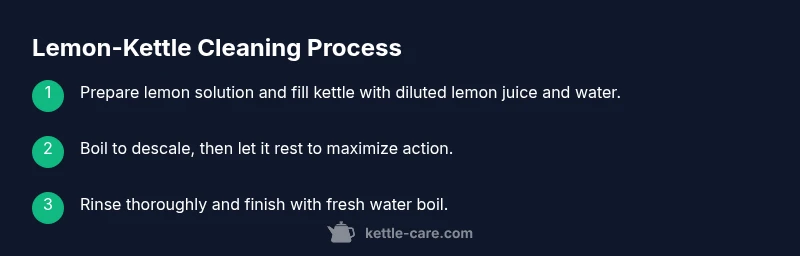
The lemon cleaning method centers on creating a mild acidic bath that loosens mineral deposits, followed by thorough rinsing. You’ll boil a lemon-water solution, allow it to soak briefly, and finish with fresh-water rinses to neutralize residual acidity. This approach minimizes chemical exposure while preserving the kettle’s interior and exterior. For safety, always work with the kettle unplugged and cooled, and never submerge the electrical base.
Variations and safety tips
If lemon juice alone doesn’t fully remove buildup, introduce a small amount of white vinegar (a 1:1 mixture with lemon solution can be effective, but test first). For lighter odors, lemon peels can contribute aroma as the juice works on minerals. Some kettle coatings may respond differently, so perform a quick test on a hidden area if you’re unsure. After cleaning, run 1–2 cycles of clean water to ensure there’s no lemon taste or acidity left in your brew.
Maintenance tips after lemon cleaning
Keep up a regular descaling routine by performing a lemon cycle every 1–3 months, depending on water hardness. Always dry the interior after rinsing and store with the lid open to prevent odor buildup. If your home uses very hard water, consider pairing lemon cleaning with a periodic vinegar descaling, but never mix these agents in the same cycle. A quick post-clean rinse ensures your next tea tastes as intended.
Troubleshooting common issues
If you still smell lemon after cleaning, run a final boil with plain water and discard it. A faint citrus scent is normal for a short time, but it should disappear after a couple of cycles. If you notice discoloration or corrosion on the interior, stop and consult the manufacturer’s guidelines. Persistent scale that resists a lemon cycle may require a dedicated descaler or professional advice.
Tools & Materials
- Lemon (fresh) or lemon juice(Fresh lemons preferred; 1–2 lemons per liter of water)
- Water(Tap water is fine; use filtered water if your local water is highly mineralized)
- Soft cloth or non-abrasive sponge(Avoid steel wool or harsh scrubbers)
- White vinegar (optional backup)(Only if lemon method alone isn’t enough)
- Kettle (unplugged and cool)(Do not clean while hot or plugged in)
- Dish soap (optional)(For post-clean rinse if needed)
Steps
Estimated time: 30-45 minutes
- 1
Empty and cool the kettle
Unplug the kettle and pour out any remaining water. Allow the kettle to cool completely to avoid burns and missteps during cleaning. Wipe the exterior and wipe away any steam residue before starting.
Tip: This prevents accidental scalding and ensures a clean surface for the lemon solution. - 2
Prepare lemon solution
Squeeze the juice from one or two lemons into the kettle, then add water to reach the maximum fill line. If you prefer, you can use lemon juice instead of fresh slices. This creates a mild acidic bath that starts descaling immediately.
Tip: Avoid overfilling beyond max line to prevent overflow during boiling. - 3
Boil the lemon solution
Turn the kettle on and bring the lemon-water solution to a boil. Let it boil for 5–10 minutes, watching closely to prevent boil-overs. The heat helps loosen mineral deposits and reduces odors.
Tip: If you have a whistle kettle, keep an eye on the steam to prevent the lid from rattling. - 4
Soak and rest
Turn off the heat and allow the solution to sit in the kettle for 15–20 minutes. The acidity continues to work on mineral buildup while the aromas permeate.
Tip: Set a timer to ensure you don’t over-soak, which could affect finishes. - 5
Rinse thoroughly
Empty the kettle and rinse several times with fresh water until all lemon scent and residue are gone. You can boil clean water once to confirm there’s no lemon aftertaste.
Tip: Inspect for any remaining scale; if necessary, repeat with a fresh lemon cycle. - 6
Final boil with fresh water
Boil a fresh batch of water and discard it to flush out any remaining acidity. Dry the interior with a clean cloth before storing.
Tip: A final boil ensures your next brew tastes neutral and is ready for immediate use.
Frequently Asked Questions
Is lemon safe for all kettle types?
In most cases, lemon is safe for stainless steel, glass, and many enamel kettles. Always check your manufacturer’s guidance for non-standard finishes.
Lemons are safe for many kettles, but check your manual for unusual finishes.
Will lemon clean heavy limescale?
Lemon helps with light to moderate buildup. For heavy limescale, you may need longer soaking times or a vinegar-based approach as a backup.
It helps with light buildup; heavy scale may require extra steps.
Can I use lemon essential oil to clean a kettle?
Avoid lemon essential oils; they’re concentrated and can damage seals. Use fresh lemon juice or zest instead.
Don’t use lemon essential oil; stick to juice or zest.
How often should I clean with lemon?
Depends on water hardness. For hard water, repeat every 1–3 months as part of routine maintenance.
If you have hard water, clean every 1–3 months.
Why does lemon smell linger after cleaning?
Rinse thoroughly and perform an extra boil with plain water to flush out scent compounds.
Rinse well and boil fresh water to clear the odor.
Can lemon cleaning harm the kettle coating?
Most coatings tolerate diluted lemon, but if you’re unsure, test a small area first or contact the manufacturer.
Test on a small area if unsure.
Watch Video
Highlights
- Use lemon for natural descaling and deodorizing.
- Rinse thoroughly after cleaning to remove lemon residue.
- Avoid lemon in delicate finishes; confirm manufacturer guidance.
- Finish with a final water boil to neutralize acidity and odor.