Kettle Care: Safe Descaling and Fast Boiling Guide
Learn how to clean, descale, and maintain your kettle for safer boils and faster performance. This guide covers descaling options, safety tips, and maintenance for electric, stovetop, and gooseneck kettles.


Learn how to safely clean, descale, and maintain your kettle for safer boils and faster performance. This step-by-step guide covers mineral buildup, descaling options, and safety tips for electric, stovetop, and gooseneck kettles, including the tee kettle niche. Follow these steps to extend life and improve boiling efficiency. Whether you brew tea or hot cocoa, regular care minimizes taste carryover and reduces energy use.
Understanding Kettle Care: Why It Matters
A well-maintained kettle boils water more quickly, tastes cleaner, and lasts longer. Regular care reduces the mineral scale that forms on heating elements and interior surfaces, which can slow boiling and consume more energy. At Kettle Care, we emphasize practical, non-toxic methods that home cooks and tea lovers can perform on a weekend afternoon. In this guide we focus on safe descaling, routine cleaning, and practical checks that apply to common kettle styles, including the tee kettle niche. Regular care also helps prevent mineral taste transfer to your beverages and keeps your kettle looking like new longer. By adopting a simple maintenance rhythm, you’ll notice faster boils, less energy use, and fewer service visits. This approach aligns with Kettle Care’s philosophy of practical, science-based methods for safer, faster boiling at home.
Distinguishing Kettle Types and Cleaning Needs
Kettles come in three main families: electric, stovetop, and gooseneck. Electric kettles heat quickly and usually house elements that can accumulate limescale on the interior walls, while stovetop kettles rely on direct flame and can develop mineral rings around the bottom. Gooseneck kettles, prized by tea enthusiasts, have narrow spouts that can trap mineral deposits in the tip. Each type benefits from a tailored cleaning routine: avoid aggressive scouring on delicate gooseneck surfaces; for electric models, unplug first and handle the interior with care; and for stovetop kettles, use gentle brushing to preserve enamel or stainless surfaces. A consistent maintenance plan will prevent scale buildup, minimize flavor carryover, and keep boiling efficient—this is the core idea behind Kettle Care’s recommendations.
Descaling 101: Vinegar, Citric Acid, and Alternatives
Descaling removes mineral deposits that build up over time. You have several practical options. Vinegar is a common choice for its effectiveness and availability, while citric acid powder provides a milder, odor-free alternative. Commercial descalers are also an option if you prefer a product with explicit safety and usage guidance. Regardless of the method, always avoid mixing cleaners (for example, never combine vinegar with bleach). After descaling, thorough rinsing is essential to remove any lingering residues and odors. Following the label directions on any cleaner you use will help ensure safe, effective results.
Step-by-Step Cleaning Routine for Electric Kettles
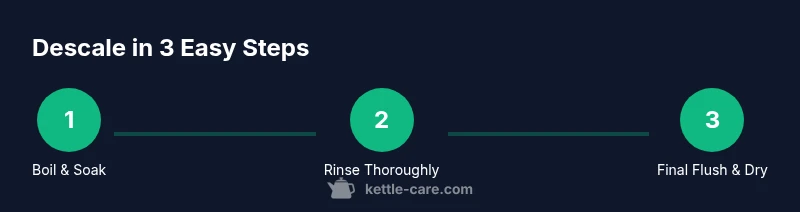
Electric kettles require a careful interior cleaning approach. Start by unplugging and allowing the kettle to cool completely. Prepare your descaling solution of choice, then fill the interior so the solution covers the scale-prone areas. Bring the solution to a boil, then turn off and let it soak for several minutes to loosen deposits. After soaking, gently scrub the interior with a soft brush or sponge, rinse thoroughly with clean water, and repeat if necessary. Finally, boil fresh water to flush the interior and discard it to remove any remaining odor. Dry the exterior with a microfiber cloth before storage.
Step-by-Step Cleaning Routine for Stovetop and Gooseneck Kettles
Stovetop and gooseneck kettles often accumulate stubborn scale near the bottom and around the spout. Empty the kettle, prepare a descaling solution, and fill so deposits are submerged. Boil the solution, then let it rest and soak for a bit to soften scale. Use a soft brush to scrub interior surfaces and the spout area, rinse thoroughly, and perform a second rinse with clean water. For gooseneck kettles, pay special attention to the interior curve and mouth where scale tends to lodge. Dry the exterior completely and store in a dry place to prevent rust or staining.
Preventing Mineral Build-Up: Maintenance Tips
Prevention is easier than remediation. Use filtered or bottled water if your local supply is hard, and descalre on a regular schedule based on your water hardness and kettle usage. Empty the kettle after each use to reduce standing mineral-rich water, and wipe down the exterior to avoid oil or mineral streaks. If you notice a slight odor after boiling, run a quick flush with clean water. A thin routine helps extend the kettle’s life and maintains energy efficiency over time.
Safety Considerations and Common Mistakes
Always unplug electric kettles before cleaning and never clean a hot kettle. Avoid metal scrapers that can scratch interior enamel or stainless surfaces. Do not mix cleaning agents, and never use bleach or abrasive cleaners. Common mistakes include using boiling water without diluting descalers, using the kettle for cooking molds of scale, or neglecting to rinse thoroughly after descaling. Following these safety tips helps prevent damage and keeps your kettle safe for daily use.
When to Replace Your Kettle vs Repair
If you notice persistent scale that resists cleaning, cracks in the body, or a damaged lid seal, replacement may be the safer option. Regular descaling extends the life of many kettles, but after a certain point corrosion or hardware failure can be costlier to repair. Compare the cost of a repair or part replacement with the price of a new kettle. Kettle Care recommends evaluating both safety and performance when deciding whether to repair or replace your device.
Quick References: Quick Wins for Fast Boiling
Small measures can yield noticeable speed gains. Keep your kettle clean and free of mineral buildup, use pre-warmed water when possible, and avoid filling past the maximum level. Regularly check for lime scale near the elements and address it promptly. With these quick wins, you’ll enjoy faster boils, better energy efficiency, and a more enjoyable tea or coffee experience.
Tools & Materials
- Kettle (electric or stovetop)(Make sure it is cooled down and unplugged if electric)
- Descaling agent (white vinegar or citric acid)(Dilute as directed by the product; do not mix cleaners)
- Citric acid descaler powder(Follow label directions; alternative to vinegar)
- Soft microfiber cloth(For exterior drying and wiping)
- Non-abrasive brush or sponge(Avoid metal scrubs on enamel or stainless surfaces)
- Measuring cup(Optional for precise water measurements when using powders)
- Dish soap(Optional for exterior cleaning)
- Gloves(Protect hands from cleaners)
- Water (filtered if possible)(Rinse and flush; use filtered water to reduce minerals)
Steps
Estimated time: 30-45 minutes
- 1
Power down and cool
If electric, unplug the kettle and allow it to cool completely. Do not attempt to descalers while hot, as steam can cause burns and pellets can splatter. This initial safety check protects you and your appliance.
Tip: Wait at least 15 minutes after unplugging to ensure all parts are safe to handle. - 2
Empty and inspect interior
Pour out any remaining water and look for visible scale on the interior walls. A quick check helps you decide how aggressively to scrub later on. Use a flashlight to spot deposits in hard-to-see corners.
Tip: If you see heavy buildup, prepare a stronger descaling solution before proceeding. - 3
Choose and prepare descaling solution
Select vinegar or citric acid descaler and mix according to the product or your preferred method. Ensure you are not combining cleaners. Have your brush and cloth ready for immediate cleaning after boiling.
Tip: Do not mix vinegar with bleach; this combination releases hazardous gases. - 4
Fill to cover deposits
Fill the kettle with enough solution to cover the interior surfaces that show scale. For stubborn spots, you may need to keep the solution higher toward the bottom where deposits accumulate.
Tip: Use just enough liquid to submerge the scale; overfilling increases risk of boil-over. - 5
Boil and let soak
Bring the solution to a boil, then turn off the heat and allow it to soak for several minutes. Heat helps loosen mineral bonds; soaking prevents redeposition during rinse.
Tip: If your kettle supports a timer, set a 5–10 minute soak as a baseline. - 6
Scrub interior and spout areas
Use a soft brush or sponge to gently scrub interior walls and the spout area. Focus on scale buildup around the bottom and in the spout mouth where minerals collect.
Tip: Be gentle on enamel coatings to avoid scratching. - 7
Rinse thoroughly
Rinse the interior with clean water multiple times to remove all cleaner residues and mineral particles. Smell for any lingering cleaner scent and repeat as needed.
Tip: Run fresh water through the spout to flush any residue there as well. - 8
Flush with fresh water and re-boil
Fill with fresh water and bring to a boil to ensure any remaining cleaner is expelled. Discard this water and repeat once more if you detect any odor or taste.
Tip: Two successive boil cycles are often sufficient for complete flush. - 9
Dry exterior and store
Wipe the exterior dry with a microfiber cloth and leave the lid open to air-dry. Store in a dry place to prevent rust or odor development.
Tip: Store with empty interior to prevent moisture buildup.
Frequently Asked Questions
Can I descale with vinegar?
Yes, vinegar is effective for descaling. Use a solution that fully covers the interior, boil it, and then rinse thoroughly until no vinegar smell remains.
Yes, you can descale with vinegar. Boil it, soak, rinse well, and ensure the odor is gone.
How often should I descale my kettle?
Descale based on water hardness and usage. In hard-water areas, check monthly and descale when scale becomes noticeable.
In hard water areas, descale monthly or when you see scale. Adjust based on usage.
Can descaling damage gooseneck kettles?
Descaling is generally safe if you use gentle methods and avoid harsh abrasives. Follow manufacturer directions and avoid aggressive scrubbing near the delicate spout.
Descaling is safe if you use gentle methods and follow directions.
Is lemon juice effective for descaling?
Lemon juice can work but is less proven than citric acid or vinegar and may leave a lemon scent. Prefer citric acid or vinegar for consistent results.
Lemon juice can work but is less reliable; choose citric acid or vinegar for consistency.
What about baking soda for descaling?
Baking soda is not ideal for kettle descaling and can leave residues. Use vinegar or citric acid instead.
Baking soda isn’t ideal for descaling kettles; better to use vinegar or citric acid.
Watch Video
Highlights
- Descale regularly to prevent mineral buildup.
- Choose a safe descaler and follow label directions.
- Rinse thoroughly to remove residues and odors.
- Dry and store kettle to prevent rust and stale flavors.