Kettle Maintenance Guide: Safe & Fast Boiling for Every Home
A comprehensive, practical guide to descaling, cleaning, and maintaining kettles for safer, faster boiling. Learn best practices for electric kettles and how to care for kettle black & decker models with clear steps and safety tips from Kettle Care.


This guide teaches you how to descale, clean, and safely use kettles for faster boils and longer life. You’ll learn routine maintenance strategies for all kettles, with a focus on the kettle black & decker models. According to Kettle Care, consistent descaling reduces mineral buildup and preserves performance in kettle black & decker units.
Why kettles require regular maintenance
Kettles, especially electric ones, accumulate mineral deposits from hard water over time. Regular maintenance keeps boil times fast, improves heating efficiency, and prolongs the lifespan of components like the heating element, lid seal, and switch. For enthusiasts of tea and hot beverages, consistent care also ensures even water temperatures and reduces the risk of mineral taste. According to Kettle Care, the kettle black & decker line benefits particularly from a simple, repeatable cleaning routine that protects performance and safety across models.
Key idea: routine checks and a light descaling every 4–8 weeks (depending on water hardness) go a long way toward keeping your kettle performing well.
Understanding limescale and its impact on boiling speed
Limescale forms when calcium and magnesium ions precipitate out of hard water as the kettle heats. This creates a chalky buildup on the interior surfaces, which acts as an insulating layer that slows heat transfer. The result is longer boil times, higher energy use, and uneven water temperature. If left unchecked, limescale can also encourage corrosion at seals and reduce the kettle’s overall lifespan. A proactive descaling routine, especially for the kettle black & decker models, minimizes mineral layers and maintains efficient heating.
Tips: monitor visible scale around the water level and base, then tackle it before it thickens.
Safety first: electrical and water considerations
Never operate a kettle with damaged cables or a cracked jug. Always unplug before cleaning and avoid immersing the base in water. When descaling, keep liquids away from the power switch and electronics. Use a non-abrasive sponge and soft cloth to wipe the exterior without removing safety decals. If your home has very hard water, consider using a descaling agent with explicit instructions to avoid damaging coatings on the kettle body. These precautions help minimize electrical shock risk and protect your investment in devices like kettle black & decker units.
Cleaning vs descaling: knowing when to do which
Cleaning is the regular wipe-down to remove surface grime, while descaling targets mineral deposits that cling to the interior. A gentle rinse combined with a soft cloth suffices for light build-up. Descaling uses a specific descaling solution (citric acid or vinegar) at a controlled concentration to dissolve scale without harming the kettle. By distinguishing these tasks, you preserve the inner lining and keep taste and boil performance consistent, including for the kettle black & decker family.
Descaling methods: vinegar, citric acid, and alternatives
Citric acid is a popular descaler because it’s food-safe and powerful against mineral buildup; use 1–2 tablespoons of citric acid per liter of water. White vinegar is an inexpensive alternative, typically 250 ml per liter of water. For a gentler option, commercial descalers designed for kettles offer clear instructions and safer, residue-free results. Whatever method you choose, rinse thoroughly to remove any scents or tastes that could transfer to tea or coffee. The kettle black & decker range responds well to these routine approaches when followed exactly.
Step-by-step cleaning routine for everyday use
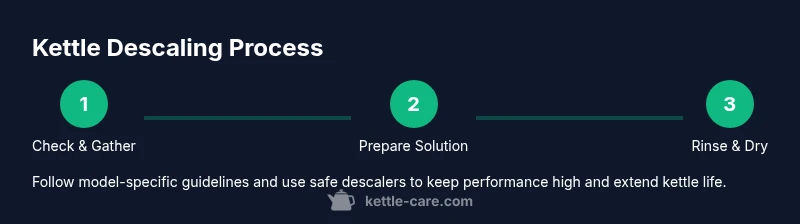
A simple routine starts with unplugging the kettle and letting it cool, then emptying any remaining water. Create a descaling solution with citric acid or vinegar, fill the kettle, and bring to a boil. Turn off and let the solution sit for 15–20 minutes, then rinse multiple times with fresh water. Finally, boil a full pot of clean water to flush the interior, discard, and dry the interior with a soft towel. This routine takes about 30–40 minutes and helps maintain fast, clean boils, especially for households using kettle black & decker models.
How to maintain the spout, lid seal, and exterior finish
Inspect the lid seal for cracks or stiffness and replace if needed to prevent steam leaks. Wipe the exterior with a damp cloth and mild detergent, avoiding abrasive pads that can scratch finishes. Check the filter (if your model has one) and rinse it under running water. Regular maintenance keeps steam from buiding up around the spout and ensures a tight seal on every boil, including compatible kettle black & decker variants.
How to test boiling efficiency and temperature consistency
After cleaning, perform a test boil with a measured amount of water. Note the time to reach a rolling boil and compare against typical times for your model. If you notice unusually slow performance, re-check for scale or residue on the heating element or lid seal. A consistent boil time is a strong indicator that descaling and cleaning were effective, even in older or heavier-use kettle black & decker units.
Troubleshooting common issues with electric kettles
If the kettle won’t turn on, confirm the power switch is functioning, the base is properly seated, and there’s no visible damage to the power cord. If it boils slowly, there may be scale buildup or a clogged filter. If the kettle leaks, check the lid and base gasket for wear. For persistent problems, consult the user manual or contact support for your kettle black & decker model. Regular maintenance helps prevent many of these issues.
Special considerations for Kettle Black & Decker models
Some kettle black & decker models feature optimized anti-scale coatings and specific descaling directions. Always reference the model’s manual for compatible descalers and recommended concentrations to avoid coating damage. When in doubt, run a small test with a non-visible interior area first or use a manufacturer-approved descaler. Following model-specific guidance protects warranty terms and preserves performance.
Long-term care: storage, replacements, and habits
Store kettles empty and dry to prevent humidity-related mineral buildup inside the base. Replace worn seals and cords promptly and avoid stacking heavy items around the appliance. Develop a simple maintenance cadence—descale every 4–8 weeks and perform a light wipe-down weekly. Building these habits supports sustained efficiency and safety for all kettles, including the kettle black & decker family.
Quick reference: 10-point checklist you can follow monthly
- Unplug and cool before handling
- Inspect lid seal and gasket condition
- Check exterior for grime and clean with mild detergent
- Descale according to your water hardness and chosen method
- Rinse thoroughly until no odor remains
- Boil fresh water to flush interior
- Inspect filter (if present) and clean
- Dry interior and exterior completely
- Re-test boil time and temperature
- Note any ongoing issues for support
Quick reference checklist (daily/weekly) for ongoing care
- Wipe exterior after each use; avoid water on the base
- Refill with clean water before boiling
- Never submerge the base or cord
- Keep the kettle clean of mineral buildup with light, frequent cleaning
- For kettle black & decker models, follow monthly descaling guidelines to maintain peak performance
Tools & Materials
- Citric acid or white vinegar (descaling agent)(Citric acid: 1-2 tablespoons per liter of water; Vinegar: 250 ml per liter of water)
- Soft cloth or microfiber cloth(Lint-free for exterior wipe-down)
- Non-abrasive sponge or bottle brush(Gentle scrubbing for interior surfaces)
- Measuring cup or tablespoon(Accurate dosing of descaling solution)
- Warm water(For rinsing and diluting descaling solution)
- Rubber gloves(Protection while handling hot liquids and cleaners)
- Dish soap (mild)(Optional exterior cleaning)
- Drying cloth or towel(Dry interior after rinse to prevent moisture buildup)
Steps
Estimated time: 40-60 minutes
- 1
Unplug and cool the kettle
Ensure the kettle is unplugged and completely cool before you begin. This prevents electric shock and avoids accidental burns when handling the interior. If you recently boiled water, wait at least 5–10 minutes for the interior to cool before opening the lid.
Tip: Keeping the kettle unplugged during cleaning is essential for safety and prolongs wiring life. - 2
Prepare descaling solution
Choose citric acid or white vinegar as your descaling agent. Measure the recommended amount into the kettle to create a solution that covers the heating element. This step ensures deposits dissolve evenly across interior surfaces.
Tip: Label the container with date and method to avoid confusion for future cleanings. - 3
Fill and soak
Fill the kettle with the descaling solution until just below the max line. Let it soak for 15–20 minutes to allow mineral deposits to loosen. If scale is heavy, you can repeat the soaking step once more.
Tip: Don't let the solution sit longer than 30 minutes to avoid potential coating damage. - 4
Boil and rinse
Bring the solution to a boil, then switch off and allow it to cool a bit before pouring it out. Rinse the interior with fresh water several times to flush away loosened deposits. Wipe the interior with a soft cloth after rinsing.
Tip: Boil a fresh pot of clean water to help remove any lingering taste from the descaler. - 5
Inspect and scrub as needed
If scale remains, use a non-abrasive sponge to gently scrub the interior. Rinse again until the water runs clear. Check the lid seal and spout for any remaining residue.
Tip: Avoid abrasive pads that can scratch interior surfaces and reduce heat transfer efficiency. - 6
Dry and test
Dry the interior and exterior completely with a clean towel. Refill with water and perform a quick boil to verify performance and ensure no cleaning residues remain.
Tip: A dry interior reduces the risk of mineral deposition forming in damp corners between uses.
Frequently Asked Questions
How often should I descale my kettle?
Descale every 1-3 months depending on water hardness and use. In hard-water areas, more frequent descaling helps maintain efficient heating. For light use, 2–3 times a year may be sufficient. This cadence keeps mineral buildup manageable without over-processing the kettle.
Descale every 1 to 3 months depending on your water hardness and usage. In hard-water areas, more frequent cleaning helps maintain efficiency.
Can I use lemon juice as a descaler?
Lemon juice is not typically recommended as a primary descaler because its acidity can be uneven and leave residues. Citric acid or vinegar are safer and more predictable. If you prefer natural options, use food-grade citric acid and follow concentration guidelines.
Lemon juice isn't usually recommended as a primary descaler. Use citric acid or vinegar for predictable results.
Is it safe to boil water after descaling?
Yes. Rinse the kettle thoroughly to remove any descaler residue, then boil clean water a few times to ensure all tastes and chemicals are flushed out. If you notice any odd odors, repeat rinsing and boiling.
Yes—rinse well and boil clean water several times to flush out any residue.
Are there kettles to avoid for descaling?
Most kettles can be descaled safely with commonly used descalers. For models with special anti-scale coatings or sensitive electronics, consult the user manual for approved products and concentrations to preserve coatings and warranty terms.
Most kettles can be descaled, but check the manual for coatings and warranty rules.
What should I do if the kettle still leaks after cleaning?
Leaking after cleaning usually indicates a worn seal or gasket. Inspect seals around the lid and base. If damaged, replace parts or contact support for your model. Avoid continuing use with a faulty seal.
Check seals and gaskets; replace if worn and consult support if leaks persist.
Highlights
- Regular descaling keeps boil times fast
- Choose citric acid or vinegar; avoid mixing agents
- Unplug, cool, and dry before cleaning
- Follow model-specific guidance for kettle black & decker devices
- Rinse thoroughly to prevent aftertaste