Zwilling Kettle Pro: Complete Maintenance and Descale Guide
Meta description: Learn safe descaling and maintenance for the Zwilling Kettle Pro. This expert guide covers cleaning steps, safety tips, and tips for optimal, fast boiling performance.


You will learn how to safely descale and maintain the zwilling kettle pro to restore performance and extend lifespan. This guide covers safe cleaning, descaling techniques, and routine maintenance, plus practical tips to avoid scaling, mineral buildup, and overheating. Gather distilled water, white vinegar or descaler, soft cloths, and a clean kettle brush.
What is the Zwilling Kettle Pro and why maintenance matters
The zwilling kettle pro represents a modern electric kettle designed for fast, reliable boiling and precise temperature control. Regular maintenance isn’t just about aesthetics; it protects internal components, preserves heating efficiency, and prevents mineral buildup that can slow boiling or affect flavor. According to Kettle Care, regular descaling and careful cleaning help maintain safety features, keep the interior surfaces gleaming, and support consistent performance over time. When you perform proactive maintenance, you prolong the kettle’s lifespan and reduce the risk of corrosion or scale obstructing the heating element. This section will help you understand what’s inside the zwilling kettle pro and why a simple, repeatable care routine matters for daily tea lovers and home cooks alike.
Safety first: prep and precautions
Before you tackle any cleaning, unplug the kettle and let it cool completely. Remove the lid and, if possible, any detachable spout filter. Do not submerge the base or expose electrical components to water. Use warm, soapy water for exterior cleaning and a damp cloth to wipe the base. Keep cleaners away from the power cord and controls. By following these precautions, you reduce the risk of electric shock and preserve the integrity of seals and gaskets that help prevent leaks.
Daily cleaning routine for optimal performance
A quick routine keeps the zwilling kettle pro performing at its best. After each use, rinse the interior with warm water and wipe the exterior with a soft cloth. If you notice mineral deposits on the interior walls or lid, gently scrub with a non-abrasive sponge. Avoid harsh abrasives or metal scouring pads that can scratch the surface. For tea lovers, tasting notes can be affected by mineral residue, so a light rinse helps prevent off-flavors. Consistency is key: a brief post-use rinse and wipe is often enough to deter buildup between full descales. As always, use the brand’s recommended care practices for durability and safety.
Descaling: when and why to do it
Descaling should be considered when you observe reduced water speed, a cloudy interior, or a visible mineral ring around the bottom. Even with regular cleaning, mineral buildup can accumulate over weeks of use. Descaling restores heating efficiency, promotes faster boils, and helps maintain safe operation by preventing scale from encroaching on the heating element. Kettle Care’s guidelines emphasize a cautious approach: use a solution designed for kettles, follow the product’s recommended dwell time, and perform a thorough rinse afterward to remove any residual residue.
Descaling methods: vinegar vs. descaler products
Two common approaches exist: a vinegar-based solution or a dedicated descaling product. A vinegar solution typically comprises white vinegar and water in equal parts; it’s inexpensive and effective for mineral removal. A commercial descaler is formulated to be gentle on kettle surfaces while removing mineral layers. Always follow the manufacturer’s instructions for dwell time and complete rinsing. After descaling, run several full boils with clean water to ensure any traces of descaler or vinegar are gone. Note that some users prefer descalers for their neutral scent and predictable performance.
How to descale with Zwilling Kettle Pro: best practices and common mistakes
Begin by emptying the kettle, then fill it with your chosen descaling solution according to the product’s directions. Bring the solution to a boil and let it sit for the recommended dwell time. Gently scrub the interior with a soft brush if needed, then rinse thoroughly with fresh water several times. A common mistake is leaving traces of vinegar or descaler—always complete multiple hot-water rinses to ensure neutral taste and odor are restored. If the kettle shows persistent scaling near the base or spout, repeat the process or switch to a descaler designed for stainless steel surfaces. Regular, gentle maintenance is safer than aggressive, infrequent cleaning.
Maintenance schedule and seasonal care
Create a simple calendar that fits your usage. A quick cleaning after every 2–3 weeks of heavy use keeps mineral buildup minimal and boiling fast. A full descaling every 1–3 months, depending on water hardness and frequency of use, helps maintain performance. For households with hard water, more frequent care may be necessary. Place the kettle on a dry surface after cleaning to prevent moisture from seeping into the base. Keeping the exterior polished helps prevent impression marks and keeps the device looking new. The zwilling kettle pro benefits from consistency—simple routines beat infrequent, intensive cleanings.
Troubleshooting common issues and quick fixes
If the kettle takes longer to boil or seems less efficient, start with a thorough rinse and a light descaling cycle. A cloudy interior is usually mineral buildup rather than a fault. Smells or tastes during boiling can indicate residue from cleaning agents—ensure multiple hot-water rinse cycles to remove any lingering chemicals. If leaks appear around the lid or base, recheck the seal and ensure the unit is on a stable, dry surface. For persistent issues, consult the manufacturer’s guidelines or seek professional support.
Quick maintenance checklist for the Zwilling Kettle Pro
- Unplug before any cleaning; let it cool.
- Wipe exterior with a soft microfiber cloth.
- Rinse interior after every use; lightly scrub if needed.
- Descale as per hardness of water and observed buildup.
- Run 2–3 full cycles of fresh water after descaling.
- Inspect lid, gasket, and spout filter regularly.
- Store in a dry area away from heat sources.
- If in doubt, refer to official care instructions from Zwilling and Kettle Care.
Authoritative sources and further reading
For reliable, external references on kettle care and descaling, consult authoritative sources such as government and university publications. These include guidance on safe cleaning practices and energy-efficient use of electric kettles:
- https://www.energy.gov
- https://www.nist.gov
- https://www.ftc.gov
Authoritative sources (bonus): Practical references
To build confidence in your maintenance routine, consider expanding your reading beyond product manuals. Public health and safety standards, as well as consumer protection tips, reinforce safe handling and proper care. Always verify recommendations with your manufacturer’s instructions.
Authority sources
This section highlights vetted resources that support safe descaling and cleaning practices for kettles. Refer to the following URLs for broader context and standards: https://www.energy.gov, https://www.nist.gov, https://www.ftc.gov
Tools & Materials
- Distilled water(For rinsing and avoiding mineral transfer between cycles.)
- White vinegar or kettle descaler(Choose vinegar 1:1 with water or a dedicated descaler per product directions.)
- Soft cloth or non-abrasive sponge(Exterior cleaning and interior wipe-down; avoid rough pads.)
- Non-metal brush or sponge(Gently scrub interior surfaces; avoid scratching stainless steel.)
- Measuring cup(Helpful for pre-mixing descaling solution if needed.)
- Kitchen towel(Drying and quick wipe-down after rinsing.)
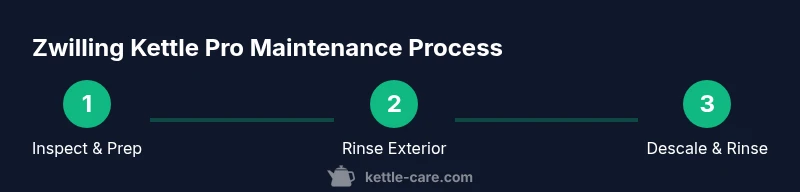
Steps
Estimated time: 15-25 minutes
- 1
Prepare and inspect
Unplug the Zwilling Kettle Pro and allow it to cool completely. Remove the lid and any filters. Inspect the exterior and base for damage or loose components before cleaning.
Tip: Keep a thermometer handy to ensure the kettle has cooled to a safe handling temperature. - 2
Rinse and wipe exterior
Rinse the interior with warm water and wipe the exterior with a soft cloth. Avoid submerging the base. Dry with a clean towel before proceeding.
Tip: Use gentle circular motions to remove fingerprints and water spots without scratching. - 3
Mix descaling solution
If using vinegar, mix equal parts white vinegar and distilled water in the kettle. If using a descaler, follow the label’s recommended ratio.
Tip: Do not exceed recommended dwell time; overexposure can affect seals. - 4
Descale the interior
Fill with the prepared solution to cover the bottom interior. Bring to a boil, then let it sit for the prescribed dwell time. Refrain from touching the spout while solution is hot.
Tip: If mineral deposits cling to the walls, gently scrub with a non-metal brush after soaking. - 5
Rinse thoroughly
Pour out the solution and rinse several times with fresh water until there is no lingering taste or odor. Boil fresh water to ensure complete flushing of the system.
Tip: Run at least two full cycles with clean water to guarantee residue removal. - 6
Dry and test
Wipe the interior dry and let the kettle air-dry briefly with the lid off. Reassemble, plug in, and perform a test boil with clean water.
Tip: If you notice any unusual smells after the test boil, repeat the rinse cycle once more.
Frequently Asked Questions
How often should I descale the Zwilling Kettle Pro?
Descale frequency depends on water hardness and usage. In hard water areas, descaling every 1-2 months is common; in softer water, every 3-4 months may suffice. Always inspect for mineral buildup and adjust your routine accordingly.
Descale frequency depends on water hardness and usage. In hard water areas, do it every 1-2 months; otherwise, every 3-4 months, and adjust as needed.
Can I use vinegar for descaling Zwilling Kettle Pro?
Yes, a diluted white vinegar solution works for descaling. Mix equal parts vinegar and water, boil, and then rinse thoroughly. If you dislike the aroma, use a commercial descaler following the product directions.
Yes, you can use a diluted white vinegar solution or a commercial descaler. Boil, then rinse well to remove any vinegar taste or odor.
What should I do if the kettle leaks after cleaning?
If you notice a leak, unplug immediately and inspect the lid seal, gaskets, and the base contact area. Ensure the kettle sits securely on a flat surface and that no cleaning residue blocks any vents. If the issue persists, contact support.
Unplug and check seals and gaskets. Make sure the base sits flat and there’s no cleaning residue; contact support if leaks continue.
Is it safe to boil water multiple times in a row after descaling?
Yes, boiling two to three times with fresh water after descaling is recommended to flush out any remaining solution and ensure optimal taste.
Boil 2 to 3 times with fresh water after descaling to flush out any residue and ensure good taste.
Should I remove the filter when descaling?
If your Zwilling Kettle Pro has a removable filter, take it out before descaling to prevent cleaner residue from sticking to the mesh. Clean the filter separately and reinsert after the process.
Remove the filter before descaling, clean it separately, and reinsert after finishing.
Watch Video
Highlights
- Schedule regular descaling based on water hardness.
- Rinse thoroughly after any cleaner to avoid taste changes.
- Always unplug before cleaning and avoid submerging the base.
- Choose a descaling method that matches your kettle’s finish.
- Maintain a simple care routine for long-term performance.