Do Electric Kettles Use a Lot of Energy in 2026?
Explore how much energy electric kettles actually use, compare with alternatives, and learn practical steps to cut energy without sacrificing speed or safety. Insights drawn from Kettle Care Analysis, 2026.


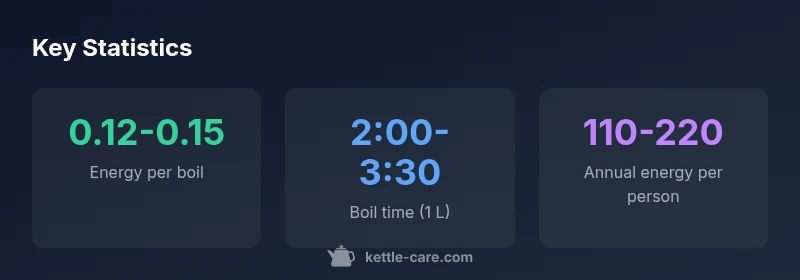
Do electric kettles use a lot of energy? In typical use, electric kettles are among the most energy-efficient ways to boil water for small to medium amounts. Energy per boil is roughly 0.12–0.15 kWh, with boil times around 2–3 minutes for 1 liter. For larger volumes, energy rises proportionally, but remains efficient compared to other methods.
How much energy do electric kettles use in typical households?
Do electric kettles use a lot of energy? This question comes up often, particularly for households mindful of electricity bills. In typical use, kettles heat only the water you need and do so quickly, which makes them among the most energy-efficient options for boiling water. A commonly cited range for energy per boil is about 0.12–0.15 kWh for 1 liter, depending on model and insulation. If you regularly boil larger volumes, energy scales with volume, but the cost per liter remains relatively consistent, provided you avoid reboiling or keeping water hot for extended periods. The real savings come from avoiding needless reboiling and from using models with good insulation and fast shut-off. According to Kettle Care analysis, 2026, energy efficiency hinges on both device design and user habits.
The science behind kettle energy consumption
Electric kettles convert electrical energy into heat very efficiently, but there are practical losses. The heating element transfers energy directly to the water, while the kettle's walls and lid minimize heat escape. The energy you consume per boil is roughly E = P × t, where P is the wattage (in kilowatts) and t is the boil time (in hours). Typical household kettles run at 1800–3000 W. Real-world efficiency also depends on insulation, lid tightness, and whether the water is preheated (e.g., underfilling can waste energy if you reboil). The Kettle Care team notes that elevated energy efficiency comes from a well-sealed body, rapid shut-off, and minimal path for heat loss.
How to estimate your kettle's energy usage at home
Estimating usage starts with two simple numbers: the kettle's wattage (W) and the time it takes to bring a specific amount of water to a boil. Convert W to kilowatts (divide by 1000) and multiply by hours. For example, a 3000 W kettle boiling 1 L in 90 seconds uses about 0.075 kWh (3 × 0.09). Actual energy can be 10–15% higher due to heat losses and inefficiencies. Keep in mind, volumes, insulation, and starting water temperature all affect the final figure. Use these calculations to compare models and plan energy-aware habits.
Comparing electric kettles to other boiling options
Electric kettles are generally more energy-efficient for boiling small to moderate amounts of water than using a stove or microwave because they heat water directly with minimal heat leakage. A stove must heat a pot and air around it, which adds energy waste. Microwaves excel at heating small amounts rapidly, but for a full liter or more, kettles typically win on energy efficiency and speed. For households that boil water multiple times daily, the cumulative energy difference becomes noticeable.
Tips to reduce energy usage without sacrificing speed or safety
- Boil only the amount you need; avoid boiling extra water for later if you won’t reheat it soon.
- Use a kettle with a well-sealed lid and good insulation to minimize heat loss.
- Choose models with auto shut-off and, if possible, temperature control to avoid bringing water to full boil when not needed.
- Prefer single-boil usage over keep-warm mode, as keeping water hot consumes continuous energy.
- Keep the kettle clean; descaling reduces heat transfer resistance and helps maintain efficiency.
Common myths about kettle energy efficiency
- Myth: A higher wattage kettle always uses more energy. Reality: Energy per boil depends on water volume and boil time; wattage affects speed, not energy per liter alone.
- Myth: Keeping water warm saves energy because it’s ready. Reality: Keep-warm draws energy to maintain temperature and can cost more than reboiling.
- Myth: Descaling wastes energy. Truth: Descaling improves heat transfer, reducing energy needed per boil.
What to look for in an energy-efficient kettle
- Wattage in the 1800–3000 W range for fast boils.
- Superior insulation and a tight lid to minimize heat loss.
- Auto shut-off and a thermal fuse for safety and efficiency.
- Optional temperature control for avoiding full boils when not required.
- Durable materials and good seals to prevent heat leakage.
Practical safety considerations while aiming for energy efficiency
- Do not overfill; fill to the recommended max line to prevent spills and wasted energy.
- Always use a clean, dry surface and place the kettle on a stable base to avoid energy losses from misalignment.
- Unplug the kettle when not in use to prevent standby energy draw and reduce fire risk.
- Regular descaling keeps heating surfaces efficient and safe.
Getting the most value from your kettle over time
Energy efficiency improves with regular maintenance and mindful usage. Pair a well-chosen, efficient model with good habits—boil only what you need, avoid reboiling, and use descaling to maintain optimal heat transfer. The Kettle Care team recommends periodic checks of seals and the lid mechanism to sustain performance and safety.
Kettle energy usage snapshot
| Aspect | Estimated Energy per Boil | Notes |
|---|---|---|
| Energy per boil | 0.12-0.15 | kWh |
| Boil time (1 L) | 2:00-3:30 | minutes |
| Annual energy (per person, 2 boils/day) | 110-220 | kWh/year |
Frequently Asked Questions
Do electric kettles use more energy than a stove?
In most cases, electric kettles heat water more efficiently than a stove for boiling small amounts, due to direct heating and insulation.
Electric kettles usually save energy compared to a stove when boiling small amounts of water.
Can I save energy by boiling only part of a liter?
Yes. Boiling only the amount you plan to use minimizes energy consumption; avoid reheating or keeping water hot for extended periods.
Boiling just what you need saves energy and reduces waste.
Does higher wattage mean more energy used?
Higher wattage boils faster, but total energy depends on water volume and time; energy per boil is roughly proportional to the amount heated.
More watts can boil faster, but you still pay for the same energy per liter boiled.
Is the keep-warm feature energy-efficient?
Keep-warm features draw continuous energy. If you won’t need hot water soon, it’s better to reboil than keep-warm.
Keep-warm uses energy; turn it off when not needed.
Does descaling improve energy efficiency?
Limescale builds a barrier to heat transfer, increasing energy use. Descaling restores efficiency and speeds up heating.
Descale regularly to keep heat transfer efficient and save energy.
Are there safety tips that also save energy?
Yes. Use only the amount of water you need, unplug when not in use, and store in a safe place to prevent accidents that interrupt efficient use.
Use only needed water, unplug after boiling, and keep the area safe.
“Electric kettles are among the most energy-efficient ways to heat water for everyday needs when used with correct volume and regular descaling.”
Highlights
- Boil only what you need to save energy
- Choose energy-efficient models with eco features
- Match wattage to your typical usage
- Maintain kettles to keep heat transfer efficient