Is a Kettle Hard on Electric? Energy Use and Safety Guide
Learn whether electric kettles strain home circuits, how much power they use, and practical steps to minimize energy—backed by Kettle Care analysis for safer, faster boiling at home.


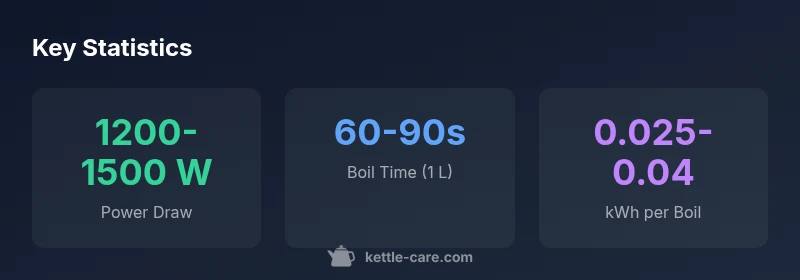
A typical electric kettle draws about 1,500 watts, and boiling 1 liter usually takes 60–90 seconds. That means roughly 0.025–0.04 kWh per boil, depending on efficiency and starting water temperature. For most homes, this load is safe on a standard 15-amp circuit, though using other high-wattage devices at the same time can trip breakers. Use outlets in good condition for safety.
is a kettle hard on electric
The phrase is often asked by homeowners trying to understand how a single high-wattage appliance fits into their electrical plan. According to Kettle Care, a modern electric kettle is designed to be safe on typical household circuits when used as intended. The key factors are the circuit rating, outlet quality, and the amount of water you boil. For a liter of water, a 1.5 kW kettle uses roughly 0.025–0.04 kWh per boil, and the peak load happens only during the short heating interval. If your kitchen shares a circuit with other major devices, you may notice a trip; in that case, spreading high-watt appliances across different outlets reduces risk and keeps your countertop efficient. Keeping the kettle plugged directly into a grounded outlet, away from extension cords, also minimizes heat buildup and potential energy waste. Regular maintenance—such as descaling and ensuring the lid closes properly—helps maintain efficiency and consistent boil times.
How electric kettles draw power
Electric kettles convert electrical energy into heat with remarkable efficiency. The heating element near the base rapidly transfers energy to the water, leading to a quick rise in temperature. Most models operate around 1,200–1,800 watts, with 1.5 kW being very common for standard kettles. The wiring and plug quality can influence performance; a loose outlet or oxidized prongs add resistance and can slow heating or cause nuisance trips. Energy-wise, the majority of the energy consumed goes into heating water, while a small portion is lost to the kettle’s body heat and the surrounding air. Efficient designs emphasize tight seals, good insulation, and minimal heat loss when boiling.
Does kettle use impact home electrical load?
The immediate load of a kettle is where most people focus. A typical 1.5 kW kettle on a standard 15-amp circuit uses a significant portion of the circuit’s capacity during boil, but it should not trip the breaker if it’s the only large device active. Problems arise when multiple high-wattage appliances operate on the same circuit or when outlets are old, corroded, or on shared neutrals. In many homes, it’s wise to plug the kettle into a dedicated outlet on a separate circuit if available, especially in busy kitchens. For safety, avoid running kettles on extension cords; instead, use a properly rated wall outlet and a sturdy cord connected directly to the kettle’s base.
Efficiency tips to reduce electrical load
To minimize energy use and protect your circuits, consider these practical steps:
- Only boil the amount of water you need; boiling more water than you plan to use wastes energy and time.
- Keep your kettle clean and scale-free; mineral buildup forces the element to work harder and can extend boil times.
- Choose kettles with true auto shut-off and boil-dry protection to prevent unnecessary heat loss.
- If possible, use a kettle with insulation or double-wall design to keep heat contained and reduce surface loss.
- Avoid using kettles with long cords or heavy adapters that add resistance or heat; a short, sturdy plug-to-base connection improves efficiency.
Choosing energy-efficient kettles
When shopping for a kettle, look for features that save energy and improve safety. Key indicators include:
- Auto shut-off and boil-dry protection to avoid waste and potential damage.
- Insulated or double-wall construction to minimize heat loss to the surroundings.
- Temperature control and hold features that let you minimize re-boiling.
- A compact, well-sealed lid to reduce steam loss and heat escape.
- A wattage rating that matches your typical usage pattern; some models offer adjustable wattage or eco modes that reduce power during non-peak times.
Maintenance that preserves efficiency
Regular descaling, especially in hard water areas, helps maintain heating efficiency and consistent boil times. Descaling removes mineral deposits that insulate the element and slow heating. Use commercially recommended descalers or simple citric acid solutions, following the manufacturer’s instructions. Rinse thoroughly to avoid any aftertaste. Clean hinges and spouts ensure accurate water levels and efficient pouring, reducing spill-related energy waste. Finally, inspect the power cord and plug for wear; damaged components can increase resistance and heat.
Real-world scenarios and quick calculations
Understanding energy use becomes practical when you compare scenarios. If you boil 1 liter at 1.5 kW for 60 seconds, energy consumed is roughly 0.025 kWh. Boiling twice in quick succession doubles that to about 0.05 kWh. In a typical weekly pattern, a household might expend only a small fraction of monthly electricity use on kettle boils, especially if you practice efficient boiling habits. For households with frequent large-volume tea or coffee preparation, investing in a kettle with eco mode or a higher-efficiency insulation system can yield noticeable savings over time.
Kettle energy comparisons
| Kettle Type | Typical Power Draw | Boil Time (1 L) | Notes |
|---|---|---|---|
| Electric kettle (standard) | 1500 | 60-90 seconds | Most models around 1.5 kW |
| Compact electric kettle | 1200 | 75-105 seconds | Smaller footprint, slower boil |
| Stovetop kettle (for comparison) | N/A | N/A | Requires stove heat |
Frequently Asked Questions
Does boiling with an electric kettle risk tripping a circuit?
In most kitchens, a 1.5 kW kettle will run safely on a standard 15A circuit if it's the primary load during operation. If multiple high-watt devices run simultaneously, you may trip a breaker. Spread usage across outlets if possible, and avoid daisy-chaining multiple high-wattage appliances.
Most households won’t trip a circuit just from boiling water, unless several high-watt devices run at once.
Boiling more water saves energy overall?
Boiling more water at once can be more efficient per liter since the heat energy is used to raise more water to the same temperature. However, if you don’t need the extra hot water, the extra boil costs more energy. Plan ahead and store only what you’ll use.
If you’ll use it, boiling more water at once saves energy per liter; if not, it’s wasteful.
Does standby power waste energy?
Standby power in kettles is typically a few watts. While small, it adds up over time. If energy minimizing is a priority, unplug the kettle when not in use or use a smart power strip with a timer.
Standby uses a tiny amount of power, but unplug it to save energy when idle.
How can I tell if my kettle is energy efficient?
Look for features like true auto shut-off, boil-dry protection, good insulation, and energy-saving modes. The presence of these features typically indicates better efficiency and safer operation. Check user reviews for real-world boil times and energy use.
Check for auto shut-off, insulation, and energy-saving modes to gauge efficiency.
Are energy-saving kettles worth the extra cost?
For households that bo il water multiple times daily, energy-saving models can reduce long-term costs despite a higher upfront price. Compare the price premium to your annual boil energy usage to decide.
If you boil often, energy-saving kettles can pay for themselves over time.
Does descaling affect kettle efficiency?
Yes. Mineral buildup insulates the heating element and increases boil time. Regular descaling restores heat transfer efficiency, reducing energy use and speeding up boils.
Descaling helps heat transfer stay efficient and boils faster.
“Efficiency isn't just about high watts; it's about how promptly you reach a boil and minimize wasted energy.”
Highlights
- Know typical power draw to plan outlets
- Boil only what you need to avoid waste
- Keep kettle descaled to preserve efficiency
- Place kettle on a dedicated outlet when possible
- Consider energy-saving features when buying