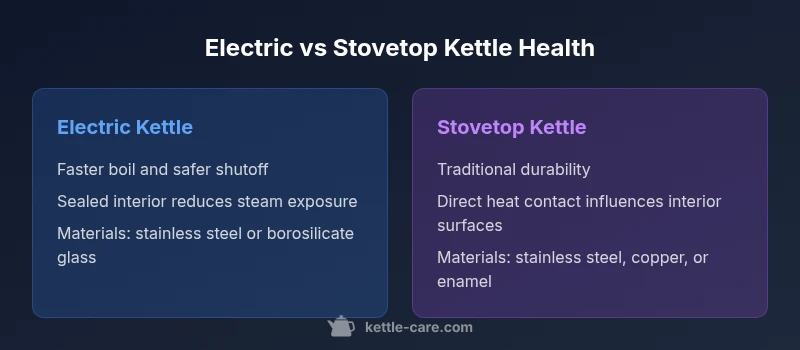
Electric kettle vs stovetop kettle health: An analytical comparison
Compare health impacts of electric vs stovetop kettles—materials, heating methods, descaling, and water quality. Learn safe choices for healthier boiling.


Electric kettle vs stovetop kettle health: If health and safety are your priority, electric kettles typically win for automatic shutoff and safer insulation, provided you choose stainless steel or borosilicate glass and avoid BPA plastics. Stovetop kettles can be healthy too with safe metals and good cleaning, but they demand careful handling to minimize heat exposure and mineral buildup. Materials and maintenance matter most.
Health implications of material choices
The question electric kettle vs stovetop kettle health often comes down to what materials the vessel uses and how those materials interact with water. Health-conscious readers should focus on non-reactive interiors, absence of BPA-containing plastics, and inert seals. According to Kettle Care, material safety and water quality are the top health considerations when choosing between electric kettles and stovetop kettles. The team found that most health-related differences stem from the presence of certain plastics, copper or aluminum leaching risks, and the potential for microplastics in some budget components. In practice, stainless steel and borosilicate glass are favored for minimizing chemical exposure, while some plastic components can pose concerns if overheated or degraded. This section surveys typical materials, how they interact with water during boiling, and what that means for everyday health. Expect practical guidance on avoiding questionable plastics, selecting safer metals, and understanding how burner design or electric elements influence water contact. The goal is to empower you to select a kettle whose health footprint aligns with your household priorities. A clear understanding of material safety helps frame the rest of this comparison.
Heating methods and water purity
Electric kettles heat water through an internal element in a sealed chamber, minimizing steam exposure and reducing leaks. Stovetop kettles boil on an open flame or coil and are more exposed to air and surface contact during the boil, which can influence mineral deposition and water contact with interior surfaces. These factors influence water purity in meaningful ways. In practice, electric kettles tend to reach and hold target temperatures more consistently, which can help preserve minerals that contribute to flavor while avoiding overboiling that can alter taste or chemistry of municipal water. Stovetop boiling may involve more variability, especially with hard water. However, both methods remain safe when paired with clean water and regular cleaning. Filtering water before boiling and descaling periodically reduces mineral load and improves taste and health outcomes for any method.
Material safety and common avoidances
Choice of interior and exterior materials matters for long-term health. Many kettles use stainless steel, borosilicate glass, or ceramic linings; plastics are common in handles or lids. The health concerns arise when plastics contact hot water or degrade over time. Look for BPA-free and phthalate-free labels and avoid opaque plastics that contact water. In some budget models, non-metal coatings can shed particles into the water. This is why material transparency matters: select brands that disclose exact material specs and use food-grade seals. If you have sensitivities, confirm interior surfaces are stainless steel or glass and that any plastics are fully basin-safe and rated for high-temperature use. The key is to minimize chemical leaching and ensure durability under repeated boiling cycles. For households with children or pregnant individuals, prioritize metal-free or inert glass interiors where feasible, and avoid contact with any colored plastics near hot water.
Impacts on mineral buildup and descaling
Mineral buildup, or limescale, is common with hard water and affects both kettle types. Electric kettles with sealed boilers can accumulate scale on the heating element, which may reduce heating efficiency and alter water chemistry. Stovetop kettles may show mineral residues along interior walls, the lid, and the spout, particularly with repeated boiling of hard water. Descaling regularly is essential: use a gentle acid-based descaler or a manufacturer-approved solution, following the recommended frequency based on water hardness and usage. While mineral deposits are not typically dangerous in small amounts, they can harbor microbes if not cleaned, and they certainly affect taste and perceived healthfulness. Using filtered water reduces scale formation and improves long-term health outcomes by limiting mineral contact with hot water and interior surfaces.
Temperature control and drinking water safety
Controlling water temperature matters for both health and nutrient retention. Electric kettles with temperature presets enable precise targets for different beverages. This helps avoid overheating, which can degrade certain beneficial compounds in teas and infusions and may alter perceived taste. Stovetop kettles boil water to a full boil, which is necessary for some safety-focused preparations but can overshoot ideal temperatures if not monitored. From a health perspective, stable temps support consistent taste and reduce the need to reboil water, which changes dissolved gas content. Regardless of method, choose clean, filtered water and avoid repeated reboiling. If the kettle is used for hot water for babies or elderly relatives, prioritize temperature control and careful handling to minimize risk of scalds.
Safety considerations to reduce burn risk
Kettles involve hot steam and potentially scalding surfaces. Electric kettles with automatic shutoff and boil-dry protection reduce burn risk, especially when used away from children and in kitchens with clear counter spaces. Stovetop kettles require more cautious lid handling and even heat distribution to prevent sudden boils that spray steam. Maintain a clean cooking area, use heat-resistant gloves, and pour away from the body. A cordless electric kettle can add convenience and help minimize cord-related accidents. When possible, choose models with a sturdy whistle, secure lid, and calibrated spout cap to support safer operation. The health payoff is fewer accidents and less stress around hot liquids.
Descaling routines and long-term health
Regular descaling is a health-supportive practice for all kettles. Soak interior surfaces as recommended by the manufacturer and rinse completely to prevent aftertaste. Descaling reduces mineral buildup that can harbor bacteria and alter water chemistry, thereby supporting safer daily boiling. Frequency depends on water hardness and usage: hard-water households may need more frequent cycles. Some electric kettles offer built-in descalers or removable filters; stovetop kettles often have simpler interiors that respond well to periodic cleaning. After descaling, run several cycles with clean water to ensure no residual flavor remains. A consistent descaling routine protects appliance longevity and maintains healthful water contact surfaces.
Water quality and filtration
Water quality directly affects health outcomes from boiling. If your municipal water contains chlorine or high mineral content, filtration prior to boiling can reduce chemical exposure and mineral deposition. For hard water, consider a home filtration system or bottled water for certain beverages. Filtering water pairs well with either kettle type, especially when combined with regular descaling and proper cleaning. For herbal teas, mineral content affects extraction; using filtered water helps preserve delicate flavors and beneficial compounds. Always test water quality periodically and adjust filtration and descaling practices to optimize health and taste.
Practical scenarios and health priorities
Different households have different health priorities. For families with young children or pregnant individuals, limiting chemical exposure and ensuring safe handling are paramount. An electric kettle with a stainless steel or glass interior, plus a BPA-free lid, is often ideal. Tea lovers who prioritize flavor integrity and quick access may prefer an electric model with precise temperature control. Traditionalists or homes with limited power outlets might opt for a well-made stovetop kettle in durable metal. In all cases, health outcomes improve when you choose safe materials, clean regularly, and use filtered water. The final decision should align with your kitchen setup, daily routines, and the level of maintenance you’re willing to perform.
Cleaning protocols that support health
A simple, repeatable cleaning protocol is essential to health. Daily: wipe exterior with a damp cloth and rinse the interior after each use. Weekly: wash interior with mild soap and water, paying attention to the lid and spout. Descale every 1-3 months depending on water hardness and usage, using manufacturer-approved descalers or a vinegar solution if appropriate. Thoroughly rinse to remove any cleaning residue and dry all components to prevent microbial growth. Avoid bleach or abrasive cleaners that can damage coatings and leave residues. A clean kettle not only lasts longer but also ensures safer, better-tasting water.
How to choose based on health priorities
Choosing between electric and stovetop kettles for health depends on your priority mix. If you want quick heating with predictable safety features, electric kettles with stainless steel or glass interiors and minimal plastic contact are ideal. If traditional aesthetics and durability matter, a high-quality stovetop kettle can be a healthy choice when paired with filtered water and careful cleaning. Always verify that materials are food-grade, that seals are non-reactive, and that the manufacturer provides clear material specifications. Use this framework to select a model that minimizes chemical exposure, supports safe handling, and keeps your water as pure as possible.
Implementation checklist for healthy boiling habits
- Use filtered water whenever possible to reduce chemical exposure and mineral load
- Descale regularly based on water hardness and kettle type
- Clean interior surfaces and lids weekly to prevent residue buildup
- Choose kettles with metal or glass interiors and BPA-free plastics where applicable
- Practice safe handling and keep cords away from spills
- Verify materials and maintenance guidelines with the brand’s care resources
Comparison
| Feature | Electric kettle | Stovetop kettle |
|---|---|---|
| Boil time | Typically faster with electric heating | Slower and more variable on stovetop |
| Energy efficiency | High efficiency due to sealed element and insulation | Lower efficiency; heat loss and longer boil time |
| Material safety | Often stainless steel or glass interiors | Often stainless steel, enamel, or glass; plastic parts vary |
| Water contact safety | Sealed interior reduces steam exposure | Open boiling increases steam exposure to air and surroundings |
| Maintenance ease | Automatic shutoff; easier descaling in many models | Requires more careful cleaning of lid, spout; descaling depends on usage |
| Best for | Fast daily heating with consistent temps | Traditional boiling; durability and aesthetics |
Strengths
- Electric kettles are fast and convenient, reducing time exposed to steam
- Automatic shutoff and safety features improve daily safety
- Choose models with stainless steel or borosilicate glass interiors for lower chemical risk
- Precise temperature control in many electric models supports healthful beverage preparation
- Compact designs fit small kitchens and are easy to store
What's Bad
- Higher upfront cost and dependence on electricity
- Some plastic components can raise health concerns if degraded
- Descale more frequently with hard water to maintain healthful water quality
- Electric kettles require power access and cannot be used off-grid
Electric kettle health benefits generally outweigh stovetop when materials are safe and maintenance is consistent
Electric kettles offer safer insulation, automatic shutoff, and precise temperature control, which support health-conscious use. Stovetop kettles remain viable with careful material choices and diligent cleaning, but they require more attention to prevent mineral buildup and exposure to heat.
Frequently Asked Questions
Are electric kettles healthier than stovetop kettles for health reasons?
Electric kettles generally provide safer operation with automatic shutoff and reduced steam exposure, especially when the interior is stainless steel or glass and plastics are BPA-free. Stovetops can be healthy too when made with safe metals and clean maintenance. The health outcome depends more on materials and upkeep than on heating method alone.
Electric kettles are usually safer and easier to manage, but you still need to choose safe materials and keep up with cleaning.
Do plastics in kettles pose health risks?
Certain plastics can pose health concerns if they contact hot water or degrade over time. Look for BPA-free and phthalate-free labels and avoid colored plastics near the water path. Prefer metal or glass interiors when possible and ensure seals are food-grade.
Choose BPA-free plastics or, better yet, metal or glass interiors to minimize risk.
How often should I descale my kettle for health reasons?
Descale based on water hardness and usage. Hard water areas require more frequent cycles to prevent mineral buildup that can affect taste and hydration quality. Regular descaling helps maintain hygiene and efficiency.
Descale as needed, more often in hard water areas.
Can electric kettles affect taste or odor of water?
Yes, minerals or residue from plastics can influence taste or odor. Regular cleaning and using filtered water help minimize flavor changes and improve perceived healthfulness of the water.
Clean regularly and use filtered water for the best taste and health.
Is it safe to use hard water in kettles?
Hard water is safe to boil in kettles, but it increases mineral buildup and can shorten interior life if not descaled regularly. Using filtered or softened water reduces mineral load, supporting long-term health and taste.
Hard water is fine, just descale and consider filtration.
Highlights
- Prioritize safe interior materials (stainless steel or glass)
- Maintain descaling routine to preserve healthful water quality
- Opt for electric kettles with automatic shutoff and temperature control
- Use filtered water to reduce mineral buildup and taste issues
- Follow manufacturer guidelines for cleaning and maintenance