Brisket on Weber Kettle: Step-by-Step Guide
Learn to cook a tender, smoky brisket on a Weber kettle using indirect heat, a two-zone setup, and a reliable rub. This Kettle Care guide covers selection, prep, smoking, resting, and serving for best results.


Learn how to produce a tender, smoky brisket on a Weber kettle using indirect heat, a two-zone fire, and a proven rub. You’ll need a Weber kettle, charcoal (lump preferred), wood chips or chunks, a water pan, a digital thermometer, and basic tools. This quick guide outlines selection, prep, smoking, and resting for best results.
Why brisket on weber kettle delivers flavor
The Weber kettle, with its rounded lid and adjustable vents, creates a compact, controllable smoke environment that enhances the brisket on weber kettle's bark and tenderness. When you cook brisket on weber kettle, you rely on indirect heat and a two-zone setup: hot coals on one side and the meat on the other. This configuration reduces direct heat, slows moisture loss, and allows smoke to envelope the meat evenly. According to Kettle Care, the key to success is patience, planning, and precise heat management. With time and discipline, the result is a deeply flavorful brisket with a glossy bark and juicy interior. In this guide, we walk you through every step from selection to slicing.
Essential gear and prep for indirect smoking
To coax great flavor from brisket on a Weber kettle, you’ll need reliable gear and a thoughtful setup:
- Weber kettle grill (22-inch)
- Natural lump charcoal
- Wood chunks or chips (hickory or oak recommended)
- Water pan or drip tray
- Digital thermometer (preferably dual-probe)
- Heavy-duty foil, tongs, and heat-resistant gloves
- Your favorite dry rub and a sharp knife for trimming
Organize your workspace and preheat the grill with the two-zone configuration before you begin. This helps you lock in even temps and predictable smoke right from the start.
Selecting and trimming the brisket
Choose a brisket labeled as whole packer or a two-muscle cut with both flat and point. Look for a bright red color, consistent marbling, and a flexible feel. Trim away loose flaps and excess thick fat, leaving about 1/4 inch of fat on the fat cap to protect moisture during the long cook. Removing silver skin helps the rub penetrate, while leaving enough fat ensures moisture and flavor. Pat the brisket dry with paper towels before applying rub for even adhesion. The goal is a balanced fat cap that renders slowly and adds flavor without overwhelming the bark.
The rub: sugar, salt, and smoke balance
A good brisket rub should strike a balance between salt, sugar, and savory spices. A common starting blend is coarse salt, black pepper, paprika, brown sugar, garlic powder, and onion powder. Apply the rub evenly across all surfaces, then pat it gently to ensure it sticks without pulling moisture from the meat. For deeper bark, apply a light coat of oil or mustard to help the rub adhere. Let the seasoned brisket rest at room temperature for 30–60 minutes before it hits the grill. You can also wrap and refrigerate the rubbed brisket for several hours or overnight for more pronounced flavor.
Fire management: two-zone setup and airflow
Set up the Weber kettle for two-zone cooking: coals on one side, meat on the other, with a water pan between. Maintain steady airflow by adjusting the vents—more open for higher temps, smaller openings for a slower burn. Add wood chunks to the coal bed early to build smoke without scorching. Place the brisket fat-side up so the fat renders into the meat as the bark forms. Close the lid and monitor the ambient temperature with a reliable thermometer.
The cook: timing, temperatures, and wrap method
During the cook, aim for a steady 225–250°F grill temperature and an internal brisket temperature target around 195–205°F for tenderness. Check the temp every 30–60 minutes and add a few wood chunks as needed. After 4–5 hours, consider wrapping the brisket in foil or butcher paper to push through the stall and retain moisture, then return it to the kettle. Continue cooking until the internal temp reaches 195–205°F, then rest the meat for 20–40 minutes before slicing.
Troubleshooting and common pitfalls
Common issues include temperature fluctuations, a dull bark, and mushy texture from over-wrapping or excessive moisture. To minimize these, keep the lid closed as much as possible, maintain a stable 225–250°F, and avoid lifting the lid excessively. If the bark isn’t forming, give the brisket more time on the initial stretch before wrapping and use a light spritz to keep surface moisture balanced. If temps rise too fast, partially close the vents and transfer the brisket to a cooler zone temporarily.
Resting, slicing, and serving brisket on the Weber kettle
Resting is essential; wrap loosely and let the brisket rest for 20–40 minutes to reabsorb juices. Slice against the grain in 1/4-inch slices for tenderness. Serve with simple sides and au jus from the resting juices. A sharp knife and a solid cutting board make the final slicing easier and safer. A little patience at the end yields a cleaner bark and evenly distributed moisture throughout.
Cleaning, storing, and maintenance after a brisket cook
Let the kettle cool before cleaning. Remove ash and excess fat, wipe down grates, and store charcoal in a dry place. Save leftover brisket wrapped tightly in foil in the refrigerator for up to 4 days, or freeze for longer storage. Regular maintenance—checking vents, cleaning drip pans, and reseasoning grates—keeps your Weber kettle ready for the next low-and-slow cook.
Tools & Materials
- Weber 22-inch kettle grill(Two-zone setup is essential for indirect cooking.)
- Natural lump charcoal(Prefer hardwood-based blends for cleaner smoke.)
- Wood chunks or chips (hickory/oak)(Add early to build smoke without choking heat.)
- Water pan or aluminum tray(Helps regulate heat and keep meat moist.)
- Digital thermometer with probe(One probe for ambient grill temp, one for brisket temp.)
- Tongs, spatula, grill gloves(Safely handle hot grates and meat.)
- Heavy-duty foil or butcher paper(For wrapping during the stall.)
- Rub ingredients (salt, pepper, spices)(Custom rub to taste; basic mix works.)
- Sharp knife and cutting board(For trimming and slicing.)
- Spray bottle (water or apple juice, optional)(For moisture during cooks.)
Steps
Estimated time: 8-12 hours total (inclusive of resting)
- 1
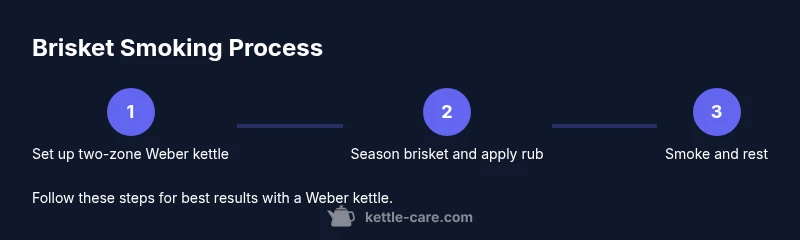
Set up two-zone Weber kettle
Arrange a two-zone fire with coals on one side and the meat on the other. Place the water pan between them and preheat the grill to 225–250°F. Keep the lid closed as you ignite and stabilize the fire.
Tip: Best results come from a calm, steady start; avoid chasing temps in the first 30 minutes. - 2
Trim and prepare the brisket
Trim excess fat to about 1/4 inch and remove any silverskin. Pat dry and apply a balanced rub across all surfaces. Let it rest briefly to set the bark-friendly surface.
Tip: Lightly oil the surface or use mustard as a binder so rub adheres evenly. - 3
Apply rub and rest
Season evenly and let sit for 30–60 minutes to let the rub penetrate. Keep meat cool during this period if possible.
Tip: A slightly damp surface helps rub cling better. - 4
Preheat and start smoking
Light the charcoal and recheck temp; aim for 225–250°F. Add wood chunks to begin smoky flavor and place brisket on the cooler side.
Tip: Keep lid closed to minimize temperature fluctuation. - 5
Monitor and maintain temperature
Check the grill ambient temp every 20–30 minutes; adjust vents to stabilize. Optional spritz can moisten the surface and help form bark.
Tip: Avoid excessive spritzing that can wet the surface and chill the bark. - 6
Wrap during the stall (Texas Crutch)
Around 4–5 hours, wrap the brisket in foil or butcher paper to push through the stall while keeping moisture. Return to kettle and continue cooking.
Tip: If bark risk is high, wrap earlier; if you want a crustier bark, wrap late. - 7
Finish to target internal temp
Cook until the internal temperature reaches 195–205°F. Remove and let rest wrapped for 20–40 minutes to reabsorb juices.
Tip: Check tenderness by probing: a gentle twist should not meet heavy resistance. - 8
Rest and slice
Unwrap, rest briefly, then slice across the grain in 1/4-inch slices. Serve with juices or au jus from the resting pan.
Tip: Slice against the grain for maximum tenderness. - 9
Clean up and maintenance
Cool and clean the kettle; remove ash, wipe grates, and reseal the lid. Store leftovers properly.
Tip: Regular maintenance keeps flavor and temperature stability for future cooks.
Frequently Asked Questions
What is the best temperature for smoking brisket on a Weber kettle?
Aim for a steady grill temp around 225–250°F and an end-game internal temp around 195–205°F for tenderness.
Keep the grill around 225 to 250 degrees and finish when the brisket probes tender around 195 to 205 degrees.
Should I wrap the brisket during cooking?
Wrapping helps push through the stall and retain moisture, but it can soften the bark. Decide based on texture you want.
Wrapping can speed things up and keep moisture, but expect softer bark.
How do I know when the brisket is done?
Use a thermometer and probe tenderness: 195–205°F internal; the probe should slide in with little resistance.
When the probe slides in easily and the temp is about 195 to 205, it's done.
Which wood is best for brisket on a kettle?
Oak, hickory, or fruit woods work well; avoid overpowering blends that mask beef flavors.
Use oak or hickory for balanced smoke flavor.
How long should the brisket rest after cooking?
Rest the brisket 20–40 minutes wrapped loosely to reabsorb juices before slicing.
Rest it for about 20 to 40 minutes to keep it juicy.
Can I do this indoors or without a kettle?
This method is designed for outdoor kettle grilling. If indoors, use an appropriate indoor-safe smoker or oven with low, slow cooking.
This approach works best outdoors on a kettle; indoors use a proper smoker or oven method.
Watch Video
Highlights
- Cook brisket low and slow for optimum tenderness.
- Maintain a steady two-zone setup for consistent smoke.
- Wrap during the stall if needed to finish faster.
- Rest before slicing to retain juices and texture.
- Clean and maintain the kettle after every cook.