Tri-Tip on a Weber Kettle: Two-Zone Grilling Guide
Learn to cook a juicy tri-tip on a Weber kettle using a two-zone setup, precise temps, and proper resting. This Kettle Care guide covers prep, grilling steps, safety, and serving tips for mouthwatering results.


Master a juicy tri-tip on a Weber kettle with a two-zone fire, precise temp control, and a short rest. This method yields a smoky crust and even doneness while keeping the meat tender. Start with a clean kettle, a seasoned rub, and a thermometer to nail the internal target perfectly.
Why cooking tri-tip on a Weber kettle delivers flavor\n\nCooking a tri-tip on a Weber kettle isn’t just about heat; it’s about control, smoke, and timing. The kettle’s lid and vents let you manage airflow, creating a two-zone fire that sears the surface while gently finishing the interior. When done right, you get a crusty bark, a juicy center, and an aroma that reminds you this is backyard greatness. The Kettle Care team recommends this approach for home cooks who want restaurant-worthy results without fancy equipment. The tri-tip’s natural marbling helps deliver tenderness when exposed to high-temperature searing followed by indirect cooking, and the kettle setup minimizes flare-ups through smart vent management and placement of coals. With the right rub and temperature strategy, you’ll see consistent results, even with variable outdoor conditions.
Understanding the Tri-Tip cut, its flavor profile, and trim options\n\nTri-tip is a triangular cut from the bottom sirloin with a relatively uniform thickness and a light fat cap. The fat cap adds flavor during searing but should be kept thin enough to render without blocking heat. When planning your rub, balance salt, pepper, and garlic with optional brown sugar for a touch of caramelization. The most reliable tri-tip finishes around medium-rare to medium (130–140°F internal), producing a juicy bite with a pleasing beefy character that responds well to smoke. If you trim too aggressively, you risk losing moisture; leave a thin fat edge so the meat stays moist while the crust forms. The goal is a flavorful crust with a tender, rosy center.
Tools, equipment, and grill setup for a Weber kettle\n\nA well-prepped Weber kettle shines when you have the right tools and a proper setup. You’ll need a grill that’s clean and level, a chimney starter for easy lighting, long-handled tongs, a digital thermometer or probe, a sharp knife, a cutting board, and a sturdy rub. For the two-zone setup, arrange the hot coals on one side of the grate and leave the other side empty. Place the grate over the heat, and keep a small water bottle nearby to manage flare-ups if you’re cooking in hot, dry weather. A reliable thermometer helps you track internal temperature precisely, ensuring you reach the target range without overshooting.
Preparing the tri-tip: trimming, seasoning, and temperature control\n\nBegin with the tri-tip at room temperature for even cooking. Pat the surface dry, trim any excessive silver skin, and apply a balanced rub 15–30 minutes before cooking. The rub should emphasize salt and pepper with optional garlic and paprika for color. After applying the rub, let the meat rest to permit the surface moisture to re-emerge, which helps form a better crust when it hits the direct heat. If you’re using wood for smoke, choose mild hardwoods like oak or hickory and add a small amount to the hot zone for a subtle flavor. Keep the grill lid closed as you monitor the temperature to maintain a stable two-zone environment.
Building a two-zone fire on the Weber kettle\n\nTwo-zone cooking lets you sear over direct heat and finish indirect to the desired doneness. Start by lighting charcoal in a chimney and transferring it to one side of the grill. Arrange the hot coals in a tight arc to create a strong direct heat zone, leaving the opposite side cooler for indirect cooking. Place a heat-safe grate above both zones, and adjust the vents to sustain roughly 350–450°F at the grate for direct searing and slower indirect cooking. If you notice flare-ups, fan the vents slightly or move the meat to the indirect side while closing the vents a touch to control oxygen flow.
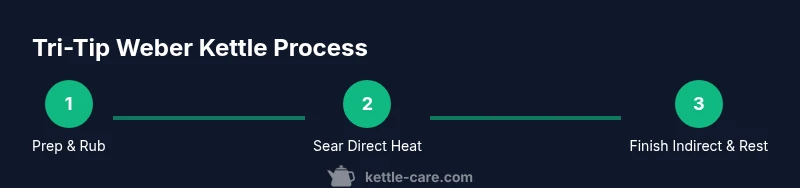
Searing first, then finishing indirect: crust, smoke, and timing\n\nWith the tri-tip on the hot side, sear for 2–3 minutes per side to form a rich crust. Don’t constantly move the meat; let the crust develop before flipping. After searing, transfer the meat to the cooler indirect zone and close the lid to finish cooking. Monitor internal temperature with a probe, aiming for about 5–10°F below the final target to account for carryover heat. The bark should be deep brown with visible pepper specks, and the interior should move toward pink in the center. The timing varies with thickness, but plan for roughly 25–40 minutes indirect cooking for a typical 1–1.5 inch tri-tip.
Monitoring doneness, resting, and slicing for best results\n\nUse an instant-read or probe thermometer to monitor when the tri-tip reaches the target range. A 10–15 minute rest allows juices to reabsorb and the meat to finish cooking evenly from residual heat. Slice against the grain in 1/4-inch to 1/2-inch slices to maximize tenderness. If you’re serving with sauce or au jus, consider a light drizzle to keep the crust intact and avoid sogginess. Even with a good rest, the internal temperature will rise a few degrees; plan accordingly so you don’t overcook.
Flavor variations: rubs, marinades, and wood choices for extra depth\n\nExperiment with rubs that balance salt, pepper, and a touch of sweetness or heat. A brown sugar-garlic rub adds a caramel crust, while a coffee-based rub can deepen the savor. Wood options like oak, hickory, or cherry provide distinct aromatics that pair well with beef. If you want a bolder bite, consider a brief marinade (no more than 4–6 hours) to preserve the beef’s texture while adding flavor layers. Always wipe off excess marinade so it doesn’t burn during direct grilling.
Troubleshooting common issues: flare-ups, uneven cooking, and dry edges\n\nFlare-ups often flare from fat drippings; manage by moving the meat off direct flame and using your vents to regulate oxygen. Uneven cooking happens when the tri-tip isn’t rolled or trimmed evenly; ensure uniform thickness by trimming or tying with butcher’s twine. Dry edges arise if you overcook or deprive the surface of moisture; keep the rub balanced, baste lightly if desired, and resist the urge to peek too often. If temps swing wildly, check your vents and lid seal for leaks and adjust charcoal depth to reestablish a stable temperature.
Serving, slicing, and safety considerations: plating and “rest before slicing”\n\nServe sliced across the grain with a light sprinkle of finishing salt and a fresh herb garnish for contrast. Resting is essential to retain moisture; do not skip it. Slice against the grain to maximize tenderness, and offer a small bowl of au jus or chimichurri for dipping. Always use a meat thermometer and practice safe handling when grilling outdoors, especially if wind shifts or flare-ups occur. Finally, clean the grate while it’s warm to remove burnt-on bits that can affect flavor in future cooks.
Tools & Materials
- Weber kettle grill (22-inch preferred)(Two-zone setup requires a level grill with a clear separation between hot and cool zones.)
- Charcoal briquettes or lump charcoal(Enough to create a substantial hot zone and indirect zone for finishing.)
- Chimney starter or lighter fluid alternative(For quick, even lighting without excessive chemical flavor.)
- Long tongs and grill-safe spatula(Keep hands safe and maintain control over the meat.)
- Instant-read or probe thermometer(Critical for hitting target doneness and carrying over heat.)
- Sharp knife and cutting board(For trimming, scoring, and precise slicing against the grain.)
- Rub or seasoning blend(Balance salt with pepper and optional spices for crust.)
- Wood chunks or chips (optional)(Oak, hickory, or cherry add subtle smoke flavor.)
Steps
Estimated time: 60-90 minutes
- 1
Prepare the tri-tip
Bring the meat to room temperature, pat dry, trim excess fat, and apply a balanced rub. Let the rub sit 15–30 minutes to help flavors adhere. This step ensures even heating and a flavorful crust.
Tip: Pat dry before applying rub to promote even browning. - 2
Set up two-zone grill on Weber kettle
Light the charcoal and create a hot direct-heat zone on one side and a cooler indirect zone on the other. Place the grate so there’s a clear path from direct to indirect heat. This arrangement gives you control over searing and finishing without drying the meat.
Tip: Keep vents wide enough on the hot side to maintain 350–450°F for searing. - 3
Preheat to target temps
Heat the grill and bring the direct zone to high heat while the indirect zone remains cooler. Use the thermometer to confirm approximate grate temps and insure stable conditions before adding the meat.
Tip: Aim for 350–450°F at the hot zone and around 250–300°F indirect for finishing if needed. - 4
Sear the tri-tip over direct heat
Sear 2–3 minutes per side to develop a deep crust. Do not move the meat too often to avoid losing crust formation; a well-seared surface improves texture and flavor.
Tip: Watch for flare-ups and move meat if fat melts quickly to prevent scorching. - 5
Finish indirectly to target doneness
Transfer the meat to the indirect zone, close the lid, and monitor with a thermometer. Remove when 5–10°F below final target to account for carryover heat.
Tip: Carryover heat will finish cooking meat after removing from heat. - 6
Rest, slice, and serve
Tent the tri-tip and rest 10–15 minutes for moisture redistribution. Slice against the grain into 1/4–1/2 inch slices for maximum tenderness.
Tip: Resting is essential; never skip to preserve juiciness.
Frequently Asked Questions
What is the ideal internal temperature for tri-tip on a Weber kettle?
Aim for 130-135°F for medium-rare, or 135-145°F for medium. Use a probe thermometer and account for 5–10°F carryover after resting.
Aim for about 130 to 135 degrees for medium-rare, or 135 to 145 for medium. Check with a probe and rest before slicing.
Can I use a gas grill instead of a charcoal Weber kettle for this method?
Yes, but you won’t get the same smoky flavor from charcoal. You can adapt by using a two-zone setup on a gas grill and adding wood chips or chunks for smoke.
You can use a gas grill, but the smoke flavor will be milder; use wood chips to imitate the charcoal smoke.
Do I need to trim the tri-tip before cooking?
Trim any large fat cap to improve heat penetration but keep a thin layer to maintain moisture. Silver skin should be removed for even browning.
Trim any thick fat cap, but don’t remove all fat; a thin layer helps flavor and moisture.
How long does it take to cook tri-tip on a Weber kettle?
Total time varies with thickness, but expect about 25–40 minutes indirect after searing, plus time for resting. Always rely on internal temperature, not time alone.
Plan for about half an hour to forty minutes after searing, plus resting time.
What rubs or marinades work best for tri-tip on a Weber kettle?
A simple salt-and-pepper base with garlic powder and paprika works beautifully; add brown sugar for caramelization or a smoky rub with chili flakes for heat.
A salt-and-pepper base with garlic works well; add brown sugar or paprika for color and depth.
Watch Video
Highlights
- Two-zone setup = even doneness and crust
- Rest 10–15 minutes before slicing
- Slice against the grain for tenderness
- Monitor temps with a probe for precision
- Control vents to prevent flare-ups and maintain stability