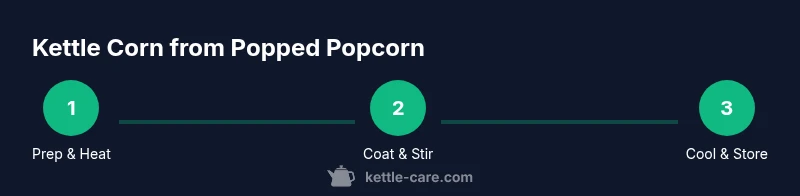
Kettle Corn from Popped Popcorn: A Safe, Step-by-Step Guide
Can you make kettle corn with already popped popcorn? Yes—learn a safe method to coat popped kernels with a glossy, sweet crust, plus tips, flavors, and storage for tasty results.


Yes, you can make kettle corn with already popped popcorn, but it won't pop again. The key is a hot, lightly oiled surface, sugar that caramelizes quickly, and fast stirring to create a glossy, sweet crust without burning. This quick answer previews a safe method, timing tips, and flavor ideas from Kettle Care.
Can you make kettle corn with already popped popcorn?
Yes—the idea is to mimic the classic kettle corn coating on kernels that have already finished popping. This method doesn’t recreate a second pop, but it does deliver a sweet, caramelized crust that resembles kettle corn. According to Kettle Care, the success hinges on heat control, even coating, and rapid stirring to prevent burning. Start with a hot pan and a light oil film, then introduce your popped corn with a sugar syrup or dry sugar method to achieve a glossy finish without sogginess or clumps. This section explains why and how the process works, what to expect in texture and flavor, and how to avoid common pitfalls.
The Science Behind Coating vs Popping
Kettle corn achieves its signature snap when the popcorn pops under heat with a layer of sugar that caramelizes on contact. When using already popped popcorn, you’re not engaging the popping mechanism again; you’re creating a surface that mimics the caramelized crust. The science rests on (a) heat enough to melt sugar quickly, (b) enough agitation for even coating, and (c) a dry environment to prevent steaming that would soften the finish. In practice, you’ll balance oil, sugar, and timing to prevent burning while delivering a pleasant crackle.
Choosing the Right Pan and Heat Setup
Your best tool is a wide, heavy-bottom skillet or a small wok. The large surface area helps distribute heat evenly and reduces clumping. Preheat the pan over medium-high heat until you see a light shimmer in the oil. A high-smoke-point oil prevents the sugar from scorching and adds a clean, neutral flavor. If you’re cooking on an electric stove, keep the burner on a steady setting to maintain consistent heat. Avoid crowded batches; work in batches if your pan can’t accommodate all the popped corn at once.
Flavor Variations and Techniques for Even Coating
Beyond classic sugar, you can adjust the flavor profile with cinnamon sugar, vanilla, or a pinch of sea salt for balance. For a butter-forward version, melt a small amount of butter with the oil before coating, but avoid too much butter that can make the mixture greasy. If you prefer a savory twist, add a light sprinkle of paprika or cheesy powder after coating. Whatever variation you try, aim for even distribution by keeping the popcorn moving, so each piece gets a glossy, evenly colored surface.
Troubleshooting Common Issues
If your coating clumps, reduce the sugar slightly and ensure your pan is truly hot before adding corn. If the syrup burns, lower the heat and move the pan off the burner for a moment while you stir to distribute heat more evenly. Stale or overly dry popped popcorn can yield an uneven finish; use freshly popped or well-stored popcorn for best results. Finally, don’t overcook—cooling helps set the crust and enhances texture.
Safety, Storage, and Long-Term Quality
Hot sugar is a burn risk, so use long-handled tools and keep kids away from the cooking area. Let the finished kettle corn cool completely on parchment paper before storing. Transfer to an airtight container in a cool, dry place; proper cooling reduces condensation that can make the coating sticky. For best results, consume within a few days and avoid humid environments that soften the crust. The goal is a crisp, sweet coating that stays intact after cooling.
Authority Sources and Practical Notes
For foundational safety and kitchen science related to caramelization and popcorn, see reputable sources such as USDA and university extension pages. In practice, the most important aspects are heat control, even agitation, and careful timing. This guidance aligns with general best-practices from food science resources and the Kettle Care approach to safe, reliable kitchen results.
Can you make kettle corn with already popped popcorn? Practical recap
In short, you can approximate kettle corn from popped popcorn by coating with a hot sugar-oil blend and stirring briskly for even coverage. It’s not the same as the traditional popping process, but with careful technique, you’ll enjoy a sweet, crisp finish that satisfies the kettle corn craving while staying safe in a home kitchen.
Tools & Materials
- Large, wide-bottom skillet or heavy-bottom saucepan(12-inch diameter preferred; ensure even heat distribution)
- Already popped popcorn(Popped and kept warm; remove old or stale kernels)
- Neutral oil with high smoke point (canola or grapeseed)(1–2 tablespoons for base coating)
- Granulated sugar(2–3 tablespoons per batch (adjust to batch size))
- Butter (optional)(Melt with oil for richer flavor, but use sparingly)
- Salt(Pinch to balance sweetness)
- Measuring spoons(Accurate sugar/oil amounts)
- Silicone spatula or wooden spoon(For constant stirring)
- Parchment paper or a large baking sheet(To spread and cool the coated popcorn)
- Candy thermometer (optional)(Not mandatory but helps monitor sugar temperature)
Steps
Estimated time: 15-25 minutes
- 1
Gather ingredients and prep
Bring together popped popcorn, oil, sugar, salt, and tools. Pre-measure sugar and salt so you can add them quickly as you cook, since timing is critical once heat rises. This step keeps the workflow smooth and minimizes delays.
Tip: Have parchment ready and keep ingredients within arm's reach. - 2
Preheat the pan and add oil
Place the skillet on medium-high heat and add a light film of oil. Wait until the oil shimmers, then add a tiny test grain of sugar to gauge readiness. This ensures the coating will caramelize quickly without sticking.
Tip: Shimmering oil means you’re at the right starting temperature. - 3
Add popcorn and sugar coating
Sprinkle sugar over the popcorn in the pan and gently swirl to distribute. Use quick, continuous stirring to prevent clumps and encourage even caramelization. The goal is a glossy, evenly colored surface rather than a dry crust.
Tip: Keep the motion steady; don’t stop stirring for more than a moment. - 4
Stir and monitor for browning
Continue to stir for 1–2 minutes until the coating looks glossy and lightly colored. If the mixture starts to darken unevenly, briefly lift the pan off the heat and resume stirring on the heat to prevent scorching.
Tip: If you see dark spots, lower the heat slightly and distribute heat evenly. - 5
Finish and season
Remove from heat, add salt, and give a final toss to distribute. If using butter, drizzle sparingly and mix quickly to avoid soggy texture. Transfer to parchment to cool.
Tip: Seasoning should balance, not overwhelm sweetness. - 6
Cool and store
Let the coated popcorn cool completely before transferring to an airtight container. Proper cooling helps the crust set and prevents condensation from softening the coating.
Tip: Store in a dry place and enjoy within a few days for best texture.
Frequently Asked Questions
Can you make kettle corn using popcorn that has already popped?
Yes, you can imitate kettle corn with popped popcorn, but it won’t re-pop. Focus on achieving a glossy, caramelized coating through quick stirring and careful heat control to avoid burning or sogginess.
Yes, you can. It won’t pop again, but you can get a tasty coating by stirring quickly and watching the heat.
What pan works best for coating popped popcorn?
A wide, heavy-bottom skillet or small wok works best. It distributes heat evenly and reduces clumping, helping you coat each piece.
A wide, heavy pan is ideal for even coating.
How do you prevent burning the sugar coating?
Keep the heat steady at medium-high, stir constantly, and add sugar gradually. If you see signs of browning too fast, lower the heat or remove the pan momentarily to reset.
Keep stirring and manage heat to avoid burning.
Can I use flavors besides vanilla or cinnamon?
Yes. Cinnamon sugar, vanilla, sea salt, or chili-lime blends work well. Start with small amounts and adjust to taste.
Try cinnamon or vanilla for interesting twists.
How long does kettle corn stay fresh?
Store cooled kettle corn in an airtight container in a cool, dry place for a couple of days to maintain crispness.
Keep it in an airtight container for a few days.
Is this method safe for kids to help with?
Yes, with close supervision. An adult should handle hot oil, sugar, and the stove, while kids assist with safe tasks like measuring.
Supervised help is fine for kids.
Watch Video
Highlights
- Coat, don’t re-pop: use popped corn and a quick sugar/oil coating.
- Control heat and stir constantly to avoid burning or soggy crust.
- Flavor smartly and cool fully before storing.
- Batch size matters: avoid overcrowding for even coating.
- Store in a dry, airtight container for best texture.