Can You Use Kettlebells for Deadlift? A Practical Guide
Learn how to safely perform kettlebell deadlifts, compare to barbell deadlifts, and progress with correct form. This guide from Kettle Care covers technique, safety, and programming for stronger hip hinge strength.


Yes. Kettlebells are a practical option for deadlift training, especially for learning hip hinge and posterior-chain engagement. They offer a compact, versatile loading option with fewer moving parts than a barbell setup. Start with a light to moderate weight, maintain a neutral spine, and progress by small increments while focusing on form.
Understanding the kettlebell deadlift
For many readers asking can you use kettlebells for deadlift, the answer is yes when you prioritize form and safety. According to Kettle Care, kettlebell deadlifts teach the fundamental hip hinge while loading the posterior chain safely. This movement can use a single kettlebell or two, kept close to the body to minimize shear at the spine. The lift emphasizes hips, glutes, and hamstrings, with core stability to protect the lower back. By mastering the hinge and staying neutral through the spine, you build a solid base for heavier lifts later.
Benefits and considerations
Using a kettlebell for deadlifts offers a compact alternative to barbells, especially in smaller spaces or for travel. It enhances posterior-chain development, grip strength, and motor control. However, there are considerations: the load is limited by kettlebell weight, and beginners must monitor form to avoid rounding the back. Kettle Care's guidance also highlights that tempo matters; slow, controlled reps tend to be safer and more effective for learning the hinge pattern.
Proper form and setup
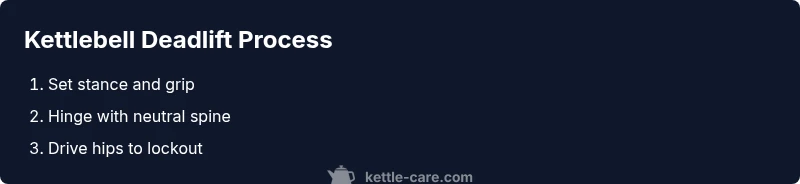
Start with a clear area and a kettlebell between your feet. Stand with feet hip-width apart, toes pointing slightly out. Hinge at the hips, push the butt back, and keep a neutral spine as the kettlebell sits close to the shins. Grip the handle with both hands if using a two-handed deadlift, or switch to a single-hand grip if preferred. Inhale to brace the core, then exhale as you drive the hips forward to lift the weight, finishing with a tall chest and locked hips. Maintain the bell close to the body and avoid pulling with the arms.
Variations and progression
Two-handed kettlebell deadlifts are a simple starting point, but you can progress by using a single kettlebell in one hand for an offset load, or by performing deadlift to stand with tempo pauses. As you grow stronger, increase weight gradually or add a tempo such as 2 seconds down, 1 second up. You can also pair kettlebell deadlifts with carries or swings in a broader hamstring-glute training block for balanced development.
Common mistakes and fixes
Common faults include rounding the lower back, letting the kettlebell drift away from the body, and rushing reps. Fixes include maintaining a neutral spine, keeping the kettlebell close to the shins, and setting the hips back before bending knees. If you feel pain in the lower back, stop and re check your hinge, or switch to a lighter weight while you rebuild technique. Regular video feedback helps reinforce correct form.
Integrating into a training plan
Treat the kettlebell deadlift as part of a broader lower body or posterior-chain day. Start with 1–2 weekly sessions, 3–4 sets of 6–8 reps with a moderate load, and prioritize form over load. As technique solidifies, gradually increase reps or weight while maintaining control. Pair these sessions with mobility work for hips and hamstrings to sustain progress and reduce injury risk. The goal is safer, faster gains in hip hinge strength that translate to real world movements.
Tools & Materials
- Kettlebell(s)(Choose a weight that allows clean, controlled reps. For beginners, start with 8–16 kg and progress gradually.)
- Clear workout space(Remove obstacles; ensure the floor is stable and dry.)
- Mirror or video device(Optional for form feedback.)
- Timer or stopwatch(Helpful for tempo work.)
Steps
Estimated time: 15-25 minutes
- 1
Check readiness and choose weight
Assess your mobility and decide on a weight you can manage with perfect form. Start light to reinforce technique before loading more. If you have existing back pain or injury, consult a professional before attempting deadlifts.
Tip: Prioritize form over load; your spine comes first. - 2
Set stance and kettlebell position
Place feet hip-width apart with toes slightly pointed out. The kettlebell should sit on the floor between your feet, close to your shins. This setup ensures an efficient hinge and minimizes excessive knee travel.
Tip: Keep a neutral gaze to help maintain spine alignment. - 3
Brace core and prepare the spine
Brace the core as if about to take a punch. Maintain a tall chest and shoulders slightly back. A strong brace helps protect the lower back during the hinge and lift.
Tip: Imagine squeezing your ribs down toward your hips. - 4
Hinge and descend to the kettlebell
Push hips back while maintaining a neutral spine. Hips move prior to bending the knees; the kettlebell travels down near the shins. Keep the weight close to your body to minimize lever arm stress.
Tip: If you feel your back rounding, reset and lower the weight. - 5
Lift by extending the hips
Drive through the heels and extend the hips to return to standing. The kettlebell should travel in a vertical line close to the body. Finish with hips fully extended and chest tall.
Tip: Exhale as you push through the hips to lockout. - 6
Lower with control
Reverse the movement by hinging at the hips again, lowering the kettlebell with control while maintaining brace. Avoid dropping or jerking the weight.
Tip: Maintain tension in the glutes and hamstrings during descent. - 7
Reset and recheck form
Pause briefly at the top, reassess alignment, and prepare for another rep or set. Small, deliberate reps beat fast, sloppy ones.
Tip: Use a light mirror or video to monitor form. - 8
Progress safely
Increment weight or reps gradually as technique improves. Include mobility work to support hip hinge and prevent stiffness.
Tip: Gradual progression reduces injury risk.
Frequently Asked Questions
Can I use a single kettlebell or two for deadlift?
Both options work. A single kettlebell is convenient for learning the hinge and can be used for offset loading. Two kettlebells or a double-handed grip provide symmetric loading and can help with balance.
You can start with one kettlebell and progress to two for balanced loading.
Is kettlebell deadlift safer for the lower back than a barbell deadlift?
Kettlebell deadlifts can be safer for beginners due to the shorter bar path and ability to adjust load precisely. However, improper form can still stress the back, so focus on hinge mechanics and neutral spine.
It reduces some bar path issues but you still need good form.
What is the best starting weight for a kettlebell deadlift?
Start with a weight you can lift with clean technique for 6–8 reps. The goal is to master form first, then progressively add weight as your technique and strength improve.
Begin light and focus on form before adding more weight.
Can kettlebell deadlifts be part of a full-body workout?
Yes. They pair well with upper body pulling or pushing movements and core work to create a balanced training session.
Great as part of a balanced routine with other lifts.
How often should you train kettlebell deadlifts?
2–3 times per week can fit well into many programs, allowing rest days between sessions to recover. Listen to your body and adjust if you feel excessive fatigue.
About 2 to 3 times weekly works for most people.
What should I do if I feel pain during the lift?
Stop immediately and reassess technique. If pain persists, consult a clinician and consider lighter loads or an alternative hinge movement.
If pain arises, pause, check form, and seek professional advice if needed.
Watch Video
Highlights
- Master the hip hinge before heavy loading
- Maintain a neutral spine during the lift
- Progress gradually to build strength safely
- Kettlebell deadlifts strengthen the posterior chain efficiently