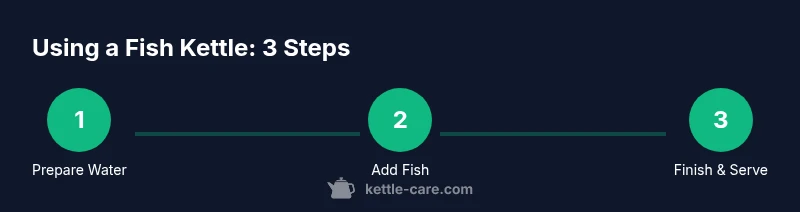
How to Use a Fish Kettle: A Practical Guide
Learn how to use a fish kettle safely for boiling or steaming fish. This step-by-step guide covers prep, timing, and cleaning, with practical tips from the Kettle Care team.


How do you use a fish kettle? You will learn to safely prepare, fill, boil or steam fish using a fish kettle, plus timing, temperature, and cleaning steps. Before you start, ensure your kettle is clean, the heat source is suitable, and you have a proper steamer rack if included. According to Kettle Care, using the right water height and careful monitoring reduces overboiling and preserves flavor.
What is a fish kettle and when to use it
A fish kettle is a stovetop vessel designed to boil or steam fish with features that protect delicate flesh and control aromas. It's typically a wide, deep pot with a fitted lid and, in many models, a built-in rack or steamer basket. The idea is simple: you surround the fish with hot water or steam and cook evenly. When you search for how to use a fish kettle, you’ll want to consider whether you’re poaching fillets, steaming whole fish, or cooking in a flavorful court bouillon. Different fish kettle designs accommodate these methods, from shallow pour-over styles for fillets to deeper pots with a perforated basket for whole fish. The bottom line: a fish kettle helps maintain moisture, reduces cooking time compared to conventional methods, and minimizes splatter. As you read on, you’ll learn how to choose the right model for your kitchen, what to stock in the pot, and safe heating practices. In this guide, we’ll emphasize practical steps, safety, and flavor preservation, so you can enjoy tender, evenly cooked fish without a mess.
Safety and sanitation basics before you start
Before you heat a fish kettle, cleanliness is non-negotiable. Wash the kettle, lid, and any racks with hot, soapy water, rinse thoroughly, and dry completely to prevent rust or contamination. Keep raw fish separate from other ingredients; use a clean cutting board and utensils. If you’re descaling or adding aromatics (like lemon, bay leaf, or peppercorns), ensure they are fresh and not spoiled. The Kettle Care team found that starting with a clean kettle and dry surfaces reduces bacteria transfer and helps you gauge heat more accurately. Always check for cracks or loose lids, and replace any damaged parts before cooking. Use a heat source appropriate for your kettle type; if you’re using a stovetop kettle, ensure the burner size matches the base diameter to avoid heat loss around the pot. When cooking with a fish kettle, keep a watchful eye on steam, avoid overfilling, and never leave cooking unattended. For safer handling, use oven mitts and keep a splash zone buffer around the stove.
Preparing your fish kettle and water
Fill water to the recommended level indicated by your kettle’s manufacturer. If there’s no mark, aim for about 1 to 2 inches (2.5 to 5 cm) below the rim, depending on the size of the fish and whether you plan to poach or steam. Add aromatics if desired: lemon slices, peppercorns, bay leaves, and a pinch of salt can flavor the cooking liquid. If your kettle includes a steamer basket or rack, place it above the water so the fish is not sitting directly in the water; this helps with gentler heat transfer when steaming. Bring the water to a simmer (not a rolling boil) for delicate fish, or reach a gentle boil for a sturdier fillet. The goal is a stable heat that cooks through without breaking apart the flesh. Keep the kettle lid on to trap heat and steam, but vent slightly if you see heavy foam.
How to boil vs steam with a fish kettle
Boiling: Submerge fish in simmering liquid, adjusting heat to maintain gentle bubbles. This method is good for firm fish like cod, haddock, or salmon steaks. Steam: Use a rack and steam basket; water boils beneath while steam circulates, cooking gently and preserving moisture. For whole fish, steamer racks prevent overcooking and help evenly distribute heat. Each method requires different timing; refer to fish thickness and species to estimate doneness. Always check for opaque flesh and flaked texture with a fork. If your kettle lacks a dedicated steam basket, you can improvise with a heat-safe plate on a wire rack, but make sure it sits above the water and doesn’t touch the lid.
Timing, doneness, and flavor preservation
Timing depends on fish type and thickness. Thin fillets may take 4-6 minutes; thicker steaks 8-12 minutes; whole fish 10-15 minutes depending on size. The visual cue is opaque flesh and flakiness; a thermometer should read about 125-130°F (52-54°C) for many white fish, though fatty fish may run hotter. If using a flavorful broth or court bouillon, note that flavors may intensify; adjust seasoning after cooking. Rest fish briefly before serving to allow juices to redistribute. For steam, test with a fork to check tenderness rather than relying solely on color, which can be deceiving in steam environments.
Cleaning and maintenance after use
Let the kettle cool before cleaning. Remove the rack or basket and rinse with warm water; wash with mild detergent. If mineral deposits or limescale appear, descale with diluted vinegar or a gentle descaler, following manufacturer directions. Dry thoroughly to prevent rust. Store with lid ajar if possible to allow air circulation; if a metal lid is tight-fitting, store with a damp cloth to prevent moisture buildup. Routine maintenance includes inspecting seals and gaskets, replacing any worn parts, and following manufacturer guidance on seasoning or oiling interior if recommended. Regular checks help extend the life of your fish kettle and ensure safer cooking sessions.
Common mistakes and quick fixes
Common mistakes include overfilling the kettle, which leads to boiling over; using water that’s too hard or too soft; not preheating properly; not using a rack for steaming; and not pre-planning fish thickness. Quick fixes: reduce water level, lower heat, add more aromatic or seasoning, and use a steam basket. If the fish sticks to the basket, oil the rack lightly or line with parchment. Avoid using metal utensils that can scratch nonstick coatings; use silicone or wood as needed. After a mistake, pause, re-check water level, and adjust settings before continuing. If foam persists, reduce heat and briefly lift the lid to vent steam.
Quick tips and safety reminders
- Always start with a clean kettle and dry surfaces.
- Use a rack or basket to keep fish above water for steaming.
- Do not overfill; water can foam and splash.
- Use aromatics that complement the fish flavor.
- Preheat water to the recommended level before adding fish.
- Wear heat-resistant gloves when lifting the lid.
- Descale regularly to maintain performance.
- If in doubt, consult the manufacturer’s instructions for your specific kettle model.
- For best results, pat fish dry and avoid overcrowding the steaming basket to ensure even heat distribution.
- Keep a timer handy and check doneness promptly to avoid overcooking.
How to choose your fish and prep before cooking
Choosing the right fish and prepping it properly set the stage for a successful fish kettle cook. Favor fresh or well-thawed fillets and whole fish of uniform thickness to prevent uneven cooking. Pat dry to reduce surface moisture that can cause splatter, and trim any excess skin or bones to simplify handling. Lightly salt and season just before cooking to avoid drawing moisture. When you’re using aromatics, select ones that complement the fish, such as lemon, dill, or parsley. Finally, confirm your kettle’s rack clearance so fish sits above water and steams or poaches evenly.
Tools & Materials
- Fish kettle with lid(Choose a model with a wide mouth and flat base for stability)
- Steamer rack or basket(If built-in, ensure it fits and clears the kettle sides)
- Tongs or fish spatula(Non-slip grip recommended for turning and lifting fish)
- Heat-resistant gloves(For safe lid handling and moving hot racks)
- Thermometer (optional)(Check doneness precisely for thick fillets or whole fish)
- Aromatics (lemon, bay leaves, peppercorns)(Enhance flavor of the cooking liquid)
- Mild detergent and scrubber(For routine cleaning after use)
- Descaler or vinegar solution(Use as needed to remove mineral buildup)
Steps
Estimated time: 20-40 minutes
- 1
Inspect and prepare the kettle
Check for cracks, clean surfaces, and ensure the lid seals well. Remove any old residue from the rack or basket and dry everything completely before use.
Tip: A clean starting point reduces sticking and helps heat distribute evenly. - 2
Add water and aromatics
Pour water to the recommended level and add aromatics if desired. Place the rack above the water so fish sits above the liquid for steaming.
Tip: Avoid overfilling the kettle to prevent splashing. - 3
Bring to a gentle simmer or boil
Heat until you reach a steady simmer for poaching or a light boil for steaming. Keep the lid on to trap heat and maintain consistent temperatures.
Tip: Avoid a vigorous boil for delicate fish to prevent breaking apart. - 4
Add fish and monitor
Gently place fish on the rack or in the basket. Start timing as soon as the fish is in the kettle, and monitor for doneness.
Tip: Do not overcrowd; cook in batches if needed. - 5
Test doneness and finish
Check flesh with a fork or thermometer. Remove when opaque and flakes easily. Rest briefly before serving to redistribute juices.
Tip: Consider a quick rest period of 2–3 minutes for juicier results. - 6
Clean up promptly
Cool the kettle, wash with mild detergent, and descale if mineral buildup appears. Dry thoroughly to prevent rust.
Tip: Store with the lid ajar to prevent moisture buildup.
Frequently Asked Questions
Do I need a steamer basket or can I improvise?
A steamer basket or rack is ideal to keep fish above water and ensure even heat, but you can improvise with a plate and a metal rack if necessary. Ensure the setup is stable and does not touch the lid.
A steamer basket is best, but you can improvise with care if needed.
Can I cook frozen fish in a fish kettle?
For best results, thaw fillets or whole fish before cooking. Frozen fish may cook unevenly and stick to surfaces, leading to a less desirable texture.
Thaw the fish first for even cooking.
Is it safe to reuse the cooking liquid?
Reusing the cooking liquid is generally not recommended for fish due to potential microbe growth and off flavors. If you do reuse, bring it to a vigorous boil for several minutes before using.
Better to use fresh liquid, or boil thoroughly if reusing.
What should I do if foam overflows?
Reduce heat, slightly open the lid to vent, and remove some of the liquid if needed. This helps prevent splatter and keeps your stove clean.
Lower heat and vent the kettle to stop overflow.
How do I know when the fish is done?
Look for opaque flesh and flakes that separate easily with a fork. A thermometer reading around 125-130°F (52-54°C) works for many white fish; adjust for species.
Check for opacity and flakiness; use a thermometer if unsure.
Watch Video
Highlights
- Begin with a clean, dry kettle to ensure safe cooking.
- Use a rack to separate fish from water when steaming.
- Choose boil vs steam based on fish type and thickness.
- Monitor doneness and rest before serving.