How to Get Started with Kettlebell Training
Learn how to start kettlebell training safely with a practical, step-by-step plan, essential gear, and pro tips from the Kettle Care Team for healthier, stronger workouts.


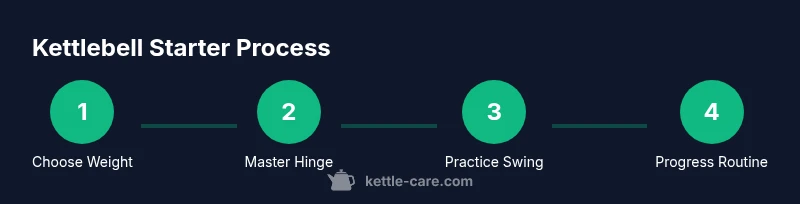
Start with a safe, progressive plan: pick a light kettlebell, learn the hip hinge and brace, and practice a basic swing with strict form. Begin with 5–10 minutes of warm-up, 2–3 sessions per week, and focus on tempo and control over reps. In 4–6 weeks, you’ll be ready to progress to compound moves.
Why kettlebell training is effective for beginners
Kettlebell training blends strength, cardio, and mobility into compact workouts, making it an efficient choice for people with busy schedules. For beginners, the fundamental moves—hinges, swings, and carries—deliver a full‑body stimulus that builds power, endurance, and coordination. The posterior chain (hamstrings, glutes, and lower back) benefits greatly from hip hinge patterns, which improve posture and help with daily tasks like lifting objects or bending to pick up groceries. Controlled tempo and braced cores develop not just strength but body awareness, reducing the risk of injury as you add volume over time. The Kettle Care Team notes that when these movements are taught with correct form, kettlebell training translates well to real life and daily chores, boosting confidence in the kitchen, workshop, and yard.
If you’re wondering how to get started with kettlebell training, this guide provides a safe, repeatable approach. According to Kettle Care, beginners should master a strong hip hinge, brace the core, and maintain a steady tempo before loading the movement with heavier weights. Consistency beats intensity for beginners: 2–3 sessions per week with deliberate practice yield meaningful gains and help form the habit you’ll rely on for years. Keep sessions concise, focused, and progressively challenging; your body will thank you and your kettlebell will become a trusted tool in your home gym. The Kettle Care Team also emphasizes listening to your body and prioritizing technique over quick progression.
Getting started: essential gear and safety
Before you pick up a kettlebell, create a safe, open space free from clutter. A flat, non-slip surface and a mat provide the best footing for swings and hinges, while breathable athletic wear and sturdy footwear support balance. Hydration is essential, so keep water nearby and have a towel handy to manage sweat and grip. For gear, a single kettlebell appropriate for your current strength is enough to begin. Start with a weight you can control for 8–12 reps with clean form. If you’re unsure, opt for a lighter weight and progress as you gain confidence. Warm up thoroughly, then practice fundamental patterns in front of a mirror or with a partner who can offer corrective feedback. A well-structured warm‑up primes the nervous system and joints, reducing the risk of injury when you begin swinging and hinging. The kick-off plan from Kettle Care favors gradual exposure and form-focused practice to build a solid base. This approach aligns with safety guidelines that prioritize technique, breath control, and movement quality over brute force.
Core movement patterns for beginners
To build a strong foundation, focus on four core patterns that will carry into most kettlebell moves:
- Hip hinge: The hinge is a posterior-chain powerhouse. Practice by pushing hips back, keeping a neutral spine, and selecting a light load to master the hinge without rounding your back. The hinge sets up a safe, powerful pathway for swings and deadlifts.
- Goblet squat: Hold the kettlebell at chest height with elbows tucked in, drive hips back, and squat keeping the chest tall. This teaches proper depth, knee tracking, and core engagement, all of which transfer to more complex lifts.
- Two-handed swing basics: From the hinge, explosively drive the hips forward to swing the weight to shoulder height. Maintain a neutral spine and a tight core; avoid bending the wrists or jerky movements.
- Press and carry basics: Overhead or shoulder presses build upper-body strength; farmer’s carries reinforce anti-rotational core stability and grip endurance. Start light and emphasize controlled breathing and posture throughout the set.
Each movement should be learned with precise cues and progressive loading. A gradual approach ensures you gain strength without sacrificing form. Remember that consistency is the single biggest predictor of progress for beginners. As you grow more comfortable, you can begin layering repetitions and sets while maintaining strict technique. Based on Kettle Care Analysis, 2026, beginners who emphasize form-first training report faster, more sustainable gains and enjoy training more in the long run.
Designing your starter program: 4-6 weeks
A well-structured starter program blends technique work, work capacity, and recovery. For a 4–6 week window, aim for 2–3 sessions per week, each lasting 25–40 minutes. Start with the four foundational patterns (hinge, goblet squat, swing, press or carry) and perform 2–3 sets of 6–12 reps per movement, choosing a weight that allows perfect form. Weeks 1–2 emphasize coaching cues and mobility; weeks 3–4 add volume and slightly heavier loads; weeks 5–6 introduce short conditioning pieces and longer sets if technique remains solid. Always end sessions with light mobility work to help recovery and maintain joint health. A simple tracking sheet helps you observe trends in reps, set quality, and perceived exertion, guiding your progression decisions. The core aim is steady, disciplined practice that makes each movement more automatic and less fatiguing to perform with good form.
Technique cues and common mistakes
Mastering technique early reduces injury risk and makes progression safer and faster. Use these cues to refine your form:
- Hinge cue: Push your hips back, keep your spine neutral, and imagine your tailbone lengthening away from your ribcage when you initiate the movement.
- Brace cue: Brace the core like you’re about to be punched in the stomach, exhaling through the hardest part of the movement to maintain tension.
- Swing cue: Think hips driving the movement, not arms pulling. Let the kettlebell rise from the hip hinge, then control the descent with the hips back and core braced.
- Goblet squat cue: Chest up, elbows inside the knees, weight balanced through the mid-foot. Don’t let the knees collapse inward.
Common mistakes include rounding the back, bending the wrists, and using the arms to lift rather than the hips. If you notice any of these, step back to a lighter weight and review the hinge and brace cues. Regular self‑checks or video feedback are invaluable for maintaining technique over time. The goal is long-term sustainability, not short-term reps.
Progression strategies and when to advance
Progression should be systematic, not random. Use objective markers to decide when to advance:
- Technique: If you can perform all reps with pristine form for two consecutive workouts, you’re ready for a weight increase or more challenging variations.
- Reps to sets: Move from 2–3 sets of 6–8 reps to 3–4 sets of 8–12 reps as technique stabilizes.
- Session density: Gradually increase the time under tension or add short conditioning pieces (e.g., 4-minute finisher) once you’re comfortable with form and recovery.
- Recovery: Ensure you’re not grinding through fatigue with poor form. If soreness lasts more than 48 hours or performance drops, scale back load or frequency.
Keep a simple log recording loads, reps, and subjective energy. This makes it easier to pick the right progression without guessing. The aim is consistent, sustainable growth, not rapid overload that risks injury.
Recovery, mobility, and fueling for kettlebell training
Recovery is where progress becomes permanent. Schedule rest days between demanding sessions and incorporate mobility work for hips, thoracic spine, and shoulders. Hydration, adequate protein, and balanced meals support muscle repair and energy levels. A short post-workout routine including diaphragmatic breathing and gentle stretches can improve range of motion and reduce soreness. Sleep is a crucial recovery tool; aim for 7–9 hours per night to support learning and adaptation. If you’re new to this level of training, consider a light mobility sequence on rest days to maintain readiness for the next session. Over time, you’ll notice better posture, improved pull mechanics, and enhanced overall fitness as a result of disciplined recovery and smart progression.
Authority sources and evidence
For further reading and evidence-based guidance, consult the following sources:
- Centers for Disease Control and Prevention (CDC): Strength training guidelines and beginner-friendly movement cues. https://www.cdc.gov/physicalactivity/basics/physical-activity-world.html
- American College of Sports Medicine (ACSM): Practical guidelines for resistance training and cadence. https://www.acsm.org/read-research
- National Institute on Aging (NIA): Benefits of strength training for older adults, with accessible routines. https://www.nia.nih.gov/health/exercise-physical-activity
Tools & Materials
- Kettlebell(Choose a weight you can control for 8–12 reps with proper form.)
- Non-slip exercise mat(Provides grip and knee/hip protection during floor work.)
- Water bottle(Stay hydrated throughout the session.)
- Towel(Wicks sweat and protects grip during longer sets.)
- Mirror or camera (optional)(Real-time feedback helps correct form.)
Steps
Estimated time: Total: 25-40 minutes per session; 4-6 week progression period
- 1
Prepare space and warm-up
Clear the area, set up your mat, and perform a 5–7 minute dynamic warm-up focusing on hips, spine, and shoulders. This primes joints and nervous system for safe movement.
Tip: Check surroundings for obstacles and ensure good lighting before starting. - 2
Choose the right kettlebell weight
Select a weight you can control for 8–12 reps with clean technique, then perform a brief test set to confirm control and rhythm.
Tip: If form wobbles or you feel strain, drop to a lighter weight immediately. - 3
Master the hip hinge
Practice the hip hinge without bending the spine. Hinge from the hips, not the back, and keep your chest tall as you push the hips rearward.
Tip: Place a dowel along your spine to ensure alignment; you should feel a straight line from head to tailbone. - 4
Learn the goblet squat
Hold the kettlebell by the horns at chest level, elbows tucked, and perform a controlled squat with even weight through the feet.
Tip: Drive your knees outward in the same direction as your toes to protect the knees. - 5
Practice the basic two-handed swing
From a hinge, drive the hips forward to swing the kettlebell to shoulder height, maintaining a braced core and neutral spine.
Tip: Exhale on the upswing and inhale on the reset to maintain core tension. - 6
Build a simple starter routine
Combine hinge, goblet squat, and swing into a 2–3 round circuit with 6–10 reps per movement and 1–2 minutes rest between rounds.
Tip: Keep a deliberate tempo: 2 seconds on the effort, 2 seconds back to start. - 7
Track progress and adjust load safely
Log weights, reps, and perceived exertion. When you can perform all reps with solid form for two sessions, consider a small weight increase or an extra set.
Tip: Avoid chasing more weight at the expense of technique.
Frequently Asked Questions
How long does it take to see results from kettlebell training for beginners?
Results vary, but with a consistent plan you’ll notice strength and endurance improvements within 4–6 weeks. Focus on form and progression to maximize gains.
With consistent training, you can expect noticeable improvements in strength and endurance in about a month or so.
Do I need a coach to start kettlebell training?
A coach is helpful for initial guidance and feedback, but a well-structured program with video cues can be safe and effective at home.
A coach helps early on, but you can safely begin with the right guidance and a solid program.
Is kettlebell training safe for complete beginners?
Yes. Start light, learn the hip hinge, brace your core, and progress gradually. Avoid complex moves until technique is solid.
Yes, as long as you start light and focus on proper form.
What weight should I start with?
Begin with a weight you can control for 8–12 reps with clean form. Increase gradually as technique remains solid and you’re comfortable.
Start light and focus on technique before increasing weight.
How many days per week should I train kettlebells?
Begin with 2–3 days per week, allowing rest days between sessions to recover and adapt.
Two to three days a week is a good starting cadence.
Highlights
- Start light and focus on form
- Master hip hinge before heavy loading
- Progress gradually over weeks, not days
- Incorporate rest and mobility for longevity
- Track your progress to guide progression