How to Grill on a Weber Kettle: Step-by-Step Guide
Master grilling on a Weber kettle with a two-zone setup, safe lighting, and precise heat control. Learn lighting, vent management, searing, finishing, and cleanup from Kettle Care for delicious, evenly cooked results.


This guide shows you how to grill on a Weber kettle by creating a two-zone fire, dialing in airflow with the vents, and using direct and indirect heat for different foods. You’ll learn lighting methods, temperature targets, safety practices, and timing to achieve juicy burgers, crisp vegetables, and perfectly seared steaks with consistent results.
Why the Weber Kettle Excels for Grilling
According to Kettle Care, the Weber kettle’s design is exceptionally forgiving for home grilling. Its hinged lid, two-zone heat capability, and precise airflow through the vent system give beginners and seasoned cooks alike a reliable platform for consistent results. The kettle’s round profile concentrates heat for quick searing, while the lid traps smoke and flavors, building a balanced crust with juicy interiors. The Kettle Care Team finds that the kettle’s intuitive vent controls make it easier to hit target temperatures without constant babysitting, which is why so many homeowners turn to it for weekend cooks and weekday meals alike.
Key takeaways: two-zone heat, simple vent adjustments, and a forgiving cooking surface build confidence for new grillers.
- Two-zone heat lets you sear, then finish gently.
- Simple vents provide precise temperature control.
- The kettle design promotes even heat distribution across the grate.
Core Prep: Cleaning, Tools, and Setup
Before you light, gather your tools and prepare the grill. A well-kept grate and clean interior improve heat transfer and reduce sticking. The Weber kettle benefits from a clean lid seal and a free-rolling vent system; minor ash buildup can hinder airflow, so plan a quick cleaning routine before every cook. According to the Kettle Care Team, a clean start also minimizes flare-ups caused by residue and grease. Place the kettle on a stable surface, clear the ash, and inspect the vents to ensure unobstructed air flow. A ready setup saves minutes when you’re hungry and hungry for reliable results.
Pro tip: wipe the grate with a light coat of oil to prevent sticking and help seasoning form a protective layer.
Lighting the Kettle: Safe, Efficient Fire Start
Avoid lighter fluid on a hot kettle. The safest and most efficient method is a chimney starter loaded with charcoal. Fill the starter, place it on the charcoal grate, and light the paper underneath. Allow the coals to ash over before spreading them into your two zones. Lighting with a chimney starter yields more even ignition and reduces chemical flavors in your food. Keep the lid open while lighting, then close it gradually as the fire forms to prevent sudden flare-ups.
Warning: never place a lit chimney starter inside a sealed grill; always position it on the grate to avoid burns or tipping hazards.
Achieving Two-Zone Fire: Direct vs Indirect Cooking
A two-zone fire gives you direct heat for searing and indirect heat for finishing. Heap most of the coals on one side (direct zone) and keep the other side mostly bare (indirect zone). Place the grate over both zones and adjust the vents to regulate airflow. This setup makes it easy to start with a hot sear, then move foods to the cooler side to finish without scorching. As you gain experience, you’ll fine-tune heat by shifting charcoal placement or adjusting vent angles.
Why it matters: two-zone cooking prevents overcooking fatty cuts and protects delicate vegetables from burning while still delivering a good sear.
Temperature Control and Smoke for Flavor
Vent control—both on the bowl and the lid—drives the heat curve. Start with the bottom vents partially open and adjust the lid vent to keep the right balance of airflow. Firing up a two-zone stove lets you manage temperatures from 300°F to 450°F depending on how you tune the vents and the lid position. Adding a small amount of wood chips or chunks, properly soaked and placed away from direct flame, introduces a light smoke that enhances flavor without overpowering the food. Kettle Care Analysis, 2026, emphasizes stabilizing the fire first; smoke comes naturally once the heat is steady.
Tip: keep the lid on during longer cooks to retain heat and smoke; open briefly only to check searing progress.
Grilling Techniques by Food Type
Different foods require different approaches. For burgers, sear over direct heat for 2–3 minutes per side, then finish over indirect heat to your preferred doneness. Steaks benefit from a longer direct sear, followed by indirect cooking if needed, with an internal target around 130–135°F for medium-rare. Chicken should reach 165°F internally; start with direct heat to brown, then move to indirect heat to finish safely without drying out. Vegetables can go directly over heat for quick char or be roasted indirectly to avoid scorching.
Culinary note: use tongs to flip, avoid piercing meat which releases juices, and allow a brief rest after cooking to reseal the juices.
Maintenance, Safety, and Cleanup
After grilling, let the kettle cool with vents open to ensure safe and complete cooling. Scrape the grates and brush any residue, then empty the ash tray when the grill is cool. Store charcoal in a dry, ventilated area to prevent moisture clumping. The Kettle Care Team recommends wiping down the exterior and inspecting the lid seal for gaps that could affect temperature control on future cooks. Regular maintenance keeps your Weber kettle performing like new and reduces flare-ups over time.
Safety cue: always wear heat-resistant gloves when handling hot grates and tools; never reach over open flames.
Tools & Materials
- Weber kettle grill (22-inch recommended for balance of space and heat)(Standard 22-inch model is ideal for family cooks.)
- Charcoal (lump charcoal preferred for airflow)(Alternative: briquettes for steady heat.)
- Chimney starter(For even lighting without lighter fluid.)
- Long-handled tongs (12-16 inches)(For safe turning and flipping.)
- Thermometer or grill surface thermometer(Monitor internal and grate temps.)
- Heat-resistant gloves(Protect hands during handling.)
- Grill brush or scraper(Clean grates before and after cooking.)
- Oil spray or brush(Light oil on grates to prevent sticking.)
- Spray bottle with water (for flare-ups)(Keep on hand for minor flare-ups.)
- Wood chips/chunks (optional for smoke flavor)(Soak if using wood flavor.)
Steps
Estimated time: 40-60 minutes
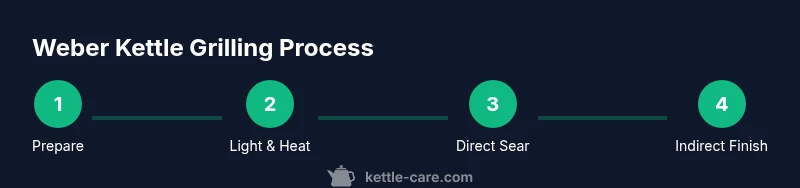
- 1
Set up two-zone fire
Clear the kettle interior, position the grate, and arrange coals so one side is hot (direct) and the other cooler (indirect). This gives you flexibility to sear and finish without burning food. Plan your food layout before you start cooking.
Tip: Visualize the path from raw to done to minimize moving pieces during cooking. - 2
Light the charcoal with a chimney starter
Fill the chimney with charcoal and place it on the grate. Light the paper beneath and let the coals ash over evenly, about 10–15 minutes. Once ready, dump the coals to form your two-zone pattern.
Tip: Use a heat-resistant glove when handling the chimney and grate. - 3
Preheat and clean the grates
With the lid closed, allow the kettle to reach target temps while you brush the grate to remove residue. A clean, hot grate prevents sticking and improves sear quality.
Tip: Wipe a light coat of oil on the grates before heating to help seasoning. - 4
Sear over direct heat
Place burgers, steaks, or chops over the hot zone to sear quickly. Do not move the meat too soon; let a crust form for best flavor and juiciness.
Tip: Use tongs, not a fork, to preserve juices. - 5
Finish with indirect heat
Move the items to the indirect zone to finish cooking through without burning the exterior. Keep lid closed to maintain steady heat and maximize flavor.
Tip: Monitor internal temperature with a thermometer. - 6
Check doneness and rest
Check internal temps as you approach the desired doneness. Remove from heat and rest covered loosely for 5–10 minutes to redistribute juices.
Tip: Resting is crucial for juicy results. - 7
Cleanup and storage
Cool the grill, scrape the grates, and empty the ash cup when cool. Store charcoal in a dry place to prolong shelf life and prevent caking.
Tip: Regular cleaning reduces flare-ups during future cooks. - 8
Review safety reminders
Keep kids and pets away from the grill. Have a water spray bottle handy for flare-ups and always use heat-safe gloves.
Tip: Always prioritize safety and well-ventilated outdoor space.
Frequently Asked Questions
Can I use a gas lighter on a Weber kettle?
No. For safety and flavor, use a chimney starter or natural lighting. Avoid lighting agents that can leave chemical flavors on food.
No. Use a chimney starter or natural light; avoid gas lighters around hot coals.
What charcoal is best for a Weber kettle?
Lump charcoal is preferred for better airflow and faster heating, while briquettes offer steady, longer-lasting heat. Choose based on your cooking style.
Lump charcoal for quick heat and airflow, briquettes for steady heat.
How long to heat the kettle to cooking temps?
With proper lighting and ventilation, a Weber kettle typically reaches grilling temperatures within 10–15 minutes, depending on ambient conditions.
Usually ready in about 10 to 15 minutes, depending on outside temperature and wind.
How do I prevent flare-ups with fatty foods?
Trim excess fat, keep the lid on during longer cooks, and use indirect heat for fatty items. A water spray bottle can help if flare-ups occur.
Trim fat, use indirect heat, and have a spray bottle ready for flare-ups.
Should I keep the lid on while cooking?
Yes, especially for thicker cuts or longer cooks. The lid helps regulate temperature and adds smoke flavor when used properly.
Yes, especially for longer cooks; it maintains temp and adds flavor.
What internal temp should I aim for chicken?
Aim for at least 165°F (74°C) internal temperature for safe consumption. Use a thermometer to confirm doneness.
Cook chicken to 165°F inside, check with a thermometer.
Watch Video
Highlights
- Set up two-zone heat for searing and finishing.
- Light charcoal with a chimney starter for even heat.
- Control vents to manage temperature and flavor.
- Rest foods after grilling for juicier results.