How to Know When Your Kettle Is Done
Learn reliable signs to know when your kettle has finished boiling, with practical tips for electric and stovetop models, safety reminders, and maintenance from Kettle Care.


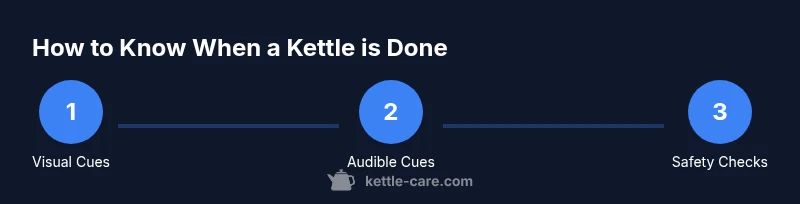
Knowing when your kettle is done hinges on three core cues: steam, bubbles, and sound. Electric kettles often auto-off once boiling is reached, while stovetop models whistle to signal completion. By reading these cues accurately, you can boil safely, conserve energy, and prevent messy overboiling. This quick guide explains the signals for both kettle types and how to apply them in daily use.
Understanding When Your Kettle Is Done
Knowing when a kettle is done is a practical skill that saves time, energy, and potential burns. At its core, a kettle is considered done when the water has reached its intended state—typically a rolling boil for most uses—without unnecessary evaporation or spillage. According to Kettle Care, recognizing the standard cues helps you adapt to both electric and stovetop designs. This section breaks down what “done” means in everyday kitchens, and why it matters for safety and flavor. You will learn to align cues with your purpose—tea, coffee, or simple hot water—so you can pour confidently. We also highlight how ambient conditions like altitude and humidity can influence how quickly a kettle appears to be done, and how to adjust your expectations accordingly. The goal is to empower you to read your kettle’s signals accurately, rather than relying on guesswork or timer settings alone.
Visual Cues You Can Count On
Visual cues are the most universal indicators of a done kettle. For most kettles, you should observe a cascade of vigorous bubbles and a consistent, rolling boil. On electric models with a transparent window or indicator light, a steady boil is often accompanied by a clear indication that the auto-off feature has engaged. For stovetop kettles, you’ll typically see steady steam and a few moments of a rising lid as pressure builds. If your kettle has measurement marks, you’ll notice the water level staying within the safe range during the boil. The key is consistency: if the water stays at a rolling boil for an extended period or shows signs of excessive bubbling, your kettle may be boiling longer than needed or the heat source may be too high. From a safety standpoint, avoid leaving a kettle unattended during boil and always use heat-safe handling when lifting.
Audible Signals: Whistles, Hisses, and Tones
Sound is a powerful signal that many people rely on. Electric kettles often use a chime or click to announce that boiling has occurred and the auto-off has activated. Stovetop models rely on a whistle—a sharp, rising tone that indicates the water has reached a boil. If your kettle produces a faint whistle that gradually increases in pitch, this is typically a sign that the interior is pressurized and water is actively boiling. If the whistle is absent, but steam continues to come off heavily, re-check the water level and heat setting. Listening closely helps you differentiate a legitimate boil from a simmering state, which could suggest the water isn’t fully boiling yet.
Electric vs. Stovetop: Why Auto-Off and Whistles Matter
Electric kettles combine convenience with safety through auto-off and boil-dry protection. When boiling is achieved, most models automatically cut power, eliminating the guesswork. This makes it easier to know when you’re done without watching the pot continually. Stovetop kettles rely on a whistle and lid movement to signal completion. Understanding these design differences helps you manage expectations: an electric kettle is finished the moment its switch clicks off, while a stovetop kettle finishes when you hear the whistle fade and steam subsides.
Temperature Cues and Brewing Targets
Temperature matters for brewing quality, especially when preparing tea or coffee. While most home uses boil water for immediate pours, some recipes benefit from slightly cooler water. If you’re making green tea or delicate oolongs, you may want to pull the water off the heat just as the first vigorous boil begins, to preserve nuanced flavors. For black tea or coffee that benefits from higher extraction, you’ll want to reach a near-boiling state and maintain it briefly for proper brewing. The goal is to match the cue you’re relying on with your desired outcome, rather than forcing a single universal rule across all beverages.
Safety First: Timing, Handling, and Pouring
Boiling water can cause severe burns, so always handle kettles with care. If you’re unsure whether a kettle is done, use the small amount of steam or a quick visual check rather than lifting the kettle before switching off. Always set a safe distance for your hands and consider using an oven mitt when lifting a hot kettle. If you share a kitchen with children or pets, establish a clear zone around the stove or electric base while boiling.
Maintenance to Keep Indicators Accurate
Limescale buildup can obscure indicators and reduce efficiency. Regular descaling helps your kettle perform closer to its original signals. Use a vinegar-water solution or a commercial descaler according to manufacturer guidelines. After descaling, rinse thoroughly and boil a small amount of clean water to confirm the indicators behave as expected. Cleanliness supports accurate visual cues, reduces odor transfer, and extends the kettle’s lifespan. As noted by the Kettle Care team, routine maintenance is a simple, high-value habit for any frequent user.
Practical Scenarios: Tea, Coffee, and Quick Heats
Different beverages demand different signals. For tea, especially green or white, you may want to remove the kettle from heat just as the water begins to actively bubble to avoid over-extraction. For coffee, a near-boiling is often acceptable, followed by a quick cooldown before steeping to preserve aroma. If you’re in a hurry, a rolling boil with a direct pour into your mug can save time, but consider the potential impact on flavor. By understanding how your kettle’s cues correlate with your beverage choice, you can optimize both taste and efficiency.
Quick Troubleshooting If Signals Fail
If your kettle isn’t signaling correctly, first check the basics: ensure it’s connected to power, the switch is functioning, and there are no visible damages. For stovetops, verify the lid seal and steam vent aren’t clogged. If the whistle has stopped, test by boiling a small amount of water on a walker’s setting to confirm the whistle’s presence. If you suspect an electronics or mechanical fault, consult the manufacturer’s warranty or a certified technician. Regular maintenance reduces the likelihood of malfunctions and keeps cues reliable.
Creating a Simple Routine for Busy Kitchens
Develop a consistent boiling routine that matches your daily workflow. For example, always fill to the same level, start the kettle on a dedicated burner, and use a timer or smart home routine to remind you when the water is likely done. Having a routine reduces guesswork and makes boiling predictable, enabling you to plan your steps around your tea or coffee prep. A calm, repeatable process minimizes mistakes and increases safety in busy kitchens.
Tools & Materials
- Kettle (electric or stovetop)(Essential for the task; ensure it is in good working order and within manufacturer guidelines.)
- Timer or smartphone with timer(Helpful for timing near-boil or steeping notes; not strictly necessary for electric auto-off kettles.)
- Heat-safe surface or trivet(Place kettle on a stable, heat-resistant surface when ready to pour.)
- Soft cloth or sponge(For wiping the exterior after boiling; keeps surfaces clean and safe.)
- Descaling solution or white vinegar(Use as needed to remove mineral buildup and maintain indicator accuracy.)
- Measuring cup (optional)(Useful for exact water volumes when following recipes or tea instructions.)
Steps
Estimated time: 15-25 minutes
- 1
Check kettle readiness
Inspect the kettle and base for any damage, and ensure the area is dry. If using a stovetop model, set it on a stable burner. This step minimizes accidents and helps you read signals correctly during the boil.
Tip: Always start with a clean kettle; mineral buildup can obscure cues. - 2
Fill to an appropriate level
Fill with the amount of water you need, keeping within the kettle’s max fill line. Overfilling can cause spillage and underfilling can lead to an incomplete boil, making cues harder to read.
Tip: Use a measuring cup to standardize water amounts for recipes and brewing. - 3
Start heating and set expectations
Turn on the kettle or place it on the stove and monitor the initial signs. Electric kettles will often shut off automatically; stovetop models will begin to whistle as steam builds.
Tip: Don’t rush; allow a moment for the first cues to appear before judging done. - 4
Read visual and audio cues together
Look for vigorous bubbles and steady steam; listen for the whistle or a distinct tone. Correlate these cues with your intended use (tea, coffee, hot water) to decide when to stop heating.
Tip: If you’re unsure, pause and re-check after a few seconds to confirm the signal. - 5
Turn off heat and pour safely
Power off or remove the kettle from the heat source once cues indicate completion. Use a heat-safe handle and pour slowly to prevent splashes.
Tip: Keep a safe distance from the spout during the pour to avoid steam burns. - 6
Cool, clean, and maintain
Allow the kettle to cool briefly, then rinse and wipe. If mineral deposits appear, descale according to manufacturer instructions to keep signals accurate.
Tip: Regular maintenance improves cue clarity and kettle longevity.
Frequently Asked Questions
What does a kettle whistle mean, and does it apply to all kettles?
A kettle whistle typically signals that water has reached a boil. Electric kettles often use an auto-off mechanism instead of a whistle, so check the design of your model to know which signal applies.
A whistle usually means the water is boiling; electric kettles may auto-off instead, so know your model's signal.
Can I rely on the whistle if the water is hard or mineral-rich?
Hard water doesn’t usually prevent a whistle, but mineral buildup can affect cue clarity. Regular descaling helps maintain accurate signals and consistent boils.
Hard water alone won't stop the whistle, but deposits can hide it. Descale regularly.
What should I do if my electric kettle doesn’t shut off automatically?
If your electric kettle fails to auto-off, stop using it and unplug it immediately. Check for a fault in the switch or thermostat, and consult the manufacturer or a technician.
If it doesn’t auto-off, turn it off manually, unplug, and get it checked.
Is it safe to keep boiling water for long pulls while making tea?
Prolonged boiling can over-contract flavors and increase mineral buildup. Stop heat as soon as your cues indicate completion and proceed to brewing or cooling.
Boiling too long can alter flavor and cause mineral buildup; stop at cue.
How often should I descale my kettle?
Descale based on mineral content and usage; typical guidance suggests every few weeks to months for frequent use. Follow the manufacturer’s recommendations for best results.
Descale as needed based on mineral buildup and usage, following the manual.
Can I use a thermometer to know when water is done?
A thermometer can help if you need precise water temperatures, but for most daily uses, visual and auditory cues are sufficient and simpler.
A thermometer is helpful for exact temps, but cues are easier for everyday boiling.
Watch Video
Highlights
- Read visual cues: rolling boil signals done.
- Listen for the whistle or auto-off cue to confirm completion.
- Different beverages may require slight adjustments to timing.
- Regular cleaning maintains accurate indicators.
- Prioritize safety: never touch hot surfaces during or after boiling.