How to Use a Kettle When Camping: Safe, Efficient Boiling Outdoors
Learn how to use a kettle when camping with a safe, efficient routine. This guide covers gear, heat sources, boiling times, and cleanup for reliable outdoor tea and coffee.


Learn how to safely boil water and make hot drinks while camping by selecting the right kettle, choosing a heat source, and following a simple step-by-step routine. You will pre-check safety, gather gear, boil water, and clean up. This guide covers stability, wind, and efficiency for safer camping tea, even at night.
Why this matters for campers
If you are wondering how to use a kettle when camping, you want hot drinks and safe water without hassle. A kettle provides rapid, controlled heating for tea, coffee, or soups, while reducing fuel waste in the wild. According to Kettle Care, using a dedicated camping kettle improves safety, speed, and consistency compared with improvised pots. This makes a simple morning ritual reliable, even when your campsite faces wind, rain, or uneven ground. With the right kettle and a stable stove setup, you can boil water quickly, rehearse a consistent pour, and minimize the risk of spills. The goal is straightforward: warm beverages and hot water without drama so you can focus on enjoying the outdoors. This section also previews the practical steps you will follow later in the guide, so you are ready to get boiling without delay.
Choosing the right camping kettle
The best camping kettles strike a balance between light weight, durability, and heat transfer. Look for a capacity around 0.8 to 1.5 liters, a sturdy base, and a well sealed lid. Materials such as stainless steel or aluminum work well in the field. A comfortable stay-cool handle and a spout that pours cleanly are essential for one handed use at a campsite. The Kettle Care analysis shows that lightweight metal kettles with a practical pour spout and heat resistant handles perform best outdoors, especially when you are dealing with wind and uneven surfaces. Consider whether you prefer a gooseneck spout for pour-over style beverages or a standard kettle for general hot water needs. Whichever you choose, ensure compatibility with your heat source and your pack weight budget.
Safety and water source considerations
Water quality matters when you camp. Use filtered or treated water whenever possible and do not skip boiling to reduce pathogens. Bring water to a rolling boil and maintain heat to ensure the water is safe for tea or coffee. If you do not have a filter, boil water from streams with caution and let it settle before pouring. The kettle should be placed away from the cooking fuel and flammable materials, and never left unattended while on heat. A kettle is a simple tool, but it needs careful handling to avoid splashes and burns. The goal is to produce clean hot water without compromising safety, even when you are miles from civilization. The Kettle Care team recommends following standard outdoors safety practices and keeping children and pets away from the heat.
Heat sources and wind protection
Your heat source shapes how you use a kettle. A compact camp stove is reliable and adjustable, while a campfire introduces more variables. If wind gusts are common, a portable windscreen helps maintain a steady flame and reduces boil time. Place the windscreen around the stove but leave space for air and avoid overheating the kettle handle. Always set the kettle on a stable, level surface and keep hands away from the steam. If you cannot shield the flame, consider using a kettle with a wide base and heat resistant handles to prevent tipping. The combination of a stable base, wind protection, and mindful heat control makes the process more predictable and safer.
Step by step overview
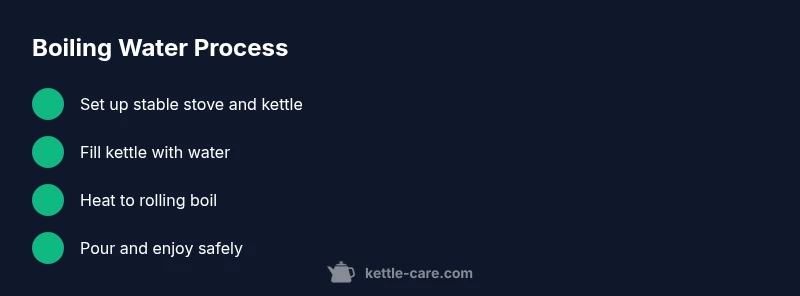
Here is a high level outline of how to approach the task of how to use a kettle when camping. You will perform a sequence of setup, fill, heat, pour, and cool steps. For the full detailed actions, refer to the step-by-step section below.
Troubleshooting common issues
If your kettle does not seem to heat evenly or boils over, reassess the setup. Check that the kettle base is stable, the windscreen does not trap heat too aggressively, and the flame is not too high for the kettle size. Steam should be controlled and directed away from your hands and gear. If the lid seals poorly or the handle overheats, switch to a different kettle model with better insulation or reduce heat and shorten boiling times to prevent scorching.
Cleaning and maintenance after use
After boiling, let the kettle cool on a safe surface. Rinse with clean water and dry thoroughly to prevent rust or mineral buildup. If you notice scale, descale with a gentle solution and rinse again before storage. Store the kettle in a dry place and inspect for damage on return from the trip to ensure it remains safe for future camping use. Regular maintenance keeps the kettle performing reliably in varied outdoor conditions.
Tools & Materials
- Camping kettle (with lid)(1–1.5 L capacity; stainless steel or aluminum; sturdy handle)
- Heat source (camp stove or campfire)(Stable platform; keep fuel source available)
- Windshield or windscreen(Helpful in gusty conditions to maintain heat)
- Heat-safe gloves(For handling hot kettle and pots)
- Water container(Filtered if possible; fill before heating)
- Timer or watch(To time boiling and avoid overboil)
- Towel or pot holder(Dry cloth to protect hands during handling)
- Tea or coffee accessories(Optional for drinks while camping)
Steps
Estimated time: 15-25 minutes
- 1
Position kettle on stable surface
Choose a flat, clear area and place the kettle and stove on a stable base. Check for loose items and ensure the flame cannot reach tents or gear. This setup reduces the risk of spills and tipping.
Tip: Use a wide, level rock or a dedicated camping stove platform for best stability. - 2
Fill the kettle with water
Open the lid and fill the kettle to just below the max line to allow boiling expansion. Avoid overfilling to prevent boil overs and messy spills. Rinse the kettle if it is new before first use.
Tip: Use clean water and do not fill from muddy sources. - 3
Set up heat source and wind protection
Place the stove on a stable surface and position a windscreen if needed. Center the kettle over the flame and ensure good air flow under the base. This helps heat transfer and reduces boil time.
Tip: Keep the handle away from the flame and place the windscreen at a safe distance. - 4
Heat until boiling
Turn on the heat and monitor until the water reaches a vigorous boil. Adjust flame as needed to maintain a steady boil without splashing. Do not leave the kettle unattended while heating.
Tip: If you notice excessive steam or noise, reduce heat slightly to control the boil. - 5
Pour safely into cup
Turn off the heat, put on gloves or a cloth, and pour slowly into your cup. Tilt the kettle gradually to avoid splashing hot water toward skin or gear. Keep the lid nearby for quick control.
Tip: Pour with a steady hand and aim toward the center of the cup for best accuracy. - 6
Cool and store
Place the kettle on a heat-safe surface to cool. Dry thoroughly before storage to prevent rust or mineral buildup. Inspect the lid and handle for wear before your next trip.
Tip: Wipe down with a clean cloth and store in a dry bag away from moisture. - 7
Clean after use
Rinse with clean water, remove any scale if present, and dry completely. Regular maintenance improves performance and extends the kettle life for future camping trips.
Tip: If you notice scale, descale with a mild solution and rinse well before storage.
Frequently Asked Questions
Is it safe to boil water in a kettle over a campfire or stove?
Yes, with proper setup. Keep the kettle away from direct flames, use a windscreen, and monitor the boil. Do not leave it unattended while heating.
Boiling water over a kettle outdoors is safe if you keep a stable setup and watch the flame closely.
What kind of kettle is best for camping?
Look for a lightweight metal kettle in the 0.8 to 1.5 liter range, with a sturdy base, sealed lid, and heat resistant handle. Stainless steel or aluminum works well.
A lightweight stainless steel or aluminum kettle with a sturdy handle is a good choice for camping.
How do I prevent scale buildup when camping?
Boil water with a clean kettle, rinse after use, and descale periodically with a mild solution if mineral buildup appears. Dry thoroughly to prevent rust.
Rinse after use and descale if you notice buildup, then dry completely.
Can I use a kettle on a camp stove or directly on a fire?
Yes. Use a stable surface and keep heat moderate to avoid tipping or scorching. A windscreen helps on open fires.
Yes, but stabilize the kettle and avoid direct flame on the handle.
How long should I boil water to be safe?
Boil until you reach a rolling boil and maintain heat briefly. At altitude, adjust as needed to compensate for lower boiling temperatures.
Boil until it boils vigorously, then keep it going a little longer if you are high up.
What safety gear is recommended for kettle use outdoors?
Wear heat resistant gloves or use a cloth, keep a towel handy, and keep children and pets away from the cooking area.
Use heat resistant gear and keep the area clear of kids and pets.
How should I clean a kettle after camping?
Rinse with clean water, dry thoroughly, and inspect for scale or damage. Store in a dry place to prevent corrosion.
Rinse, dry thoroughly, and store in a dry place.
Watch Video
Highlights
- Choose a kettle with stable base and heat resistant handle.
- Use wind protection and a flat surface to improve boil efficiency.
- Boil water safely and pour with care to avoid spills.
- Clean and dry your kettle after use to prevent scale and rust.