Kettle Corn vs Caramel Corn: A Thorough Comparison
Explore whether kettle corn is the same as caramel corn. This analytical guide contrasts preparation, texture, flavor, ingredients, and storage to help you pick the best snack for any occasion.


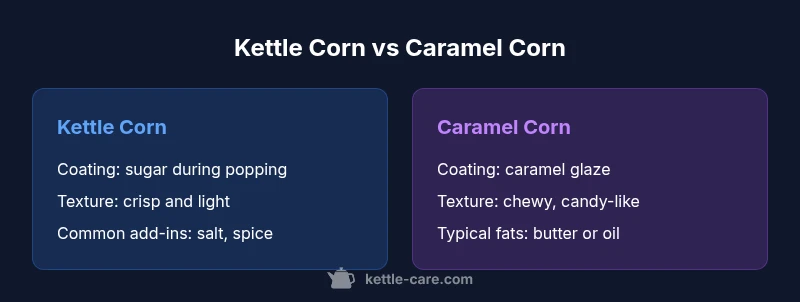
Is kettle corn the same as caramel corn? Not exactly. Kettle corn is popcorn tossed with sugar and salt during popping, yielding a light, crisp sweetness. Caramel corn uses a caramel coating that cooks to a candy-like finish, creating a chewy, sticky texture. They share popcorn, but the coating, texture, and flavor balance set them apart.
Is kettle corn the same as caramel corn? Definitions and origins
Is kettle corn the same as caramel corn? Not exactly. These two popular popcorn-based snacks share a common ingredient, yet they diverge in preparation, coating, and taste. Kettle corn is typically created by adding sugar and salt during the popping process, producing a light, crisp sweetness that highlights the popcorn itself. Caramel corn, by contrast, relies on a separate caramel coating that caramelizes into a glossy, candy-like layer. The result is a richer, more indulgent flavor with a chewy, stickier texture. According to Kettle Care, understanding these distinctions helps home cooks and snack enthusiasts select the right recipe for gatherings or personal treats. Throughout this article we’ll compare is kettle corn the same as caramel corn from multiple angles—preparation, texture, flavor, ingredients, storage, and more.
The popping process: kettle corn vs caramel corn
The core difference is the moment the flavor develops. Kettle corn is made during the popping stage: kernels are heated in oil with a sugar-salt blend. The sugar melts and crystallizes on the surface while the kernels pop, creating a delicate, crisp coating that remains fairly light. In caramel corn, the popcorn is popped separately and then coated with a caramel mixture—often dairy-based—that cooks to a chewy candy texture. The coating sets as the popcorn cools, yielding a denser, more pliable layer. This distinction directly affects texture, sweetness distribution, and the popping rhythm you experience when making either snack.
Texture and mouthfeel: light crisp vs chewy candy
Texture is the most obvious differentiator. Kettle corn is typically light, with a crisp snap and a balanced sweetness-salt finish that lets the popcorn taste come through. Caramel corn, however, delivers a pronounced chew and a candy-like bite due to the caramel coating. In practice, is kettle corn the same as caramel corn? Not at all in texture: kettle corn stresses airiness and crackle, while caramel corn emphasizes a dense glaze that can cling to every kernel.
Flavor profiles and sweetness balance
The flavor language distinguishes these two treats. Kettle corn centers on a clean, bright sweetness complemented by a savory note from salt. The result is a zesty, popcorn-forward snack that pairs well with tea or light beverages. Caramel corn trades that brightness for deep caramel warmth, butter-forward richness, and a lingering sweetness. The caramelized coating can carry hints of vanilla or salt, producing a more dessert-like experience. When asked is kettle corn the same as caramel corn, the answer hinges on sweetness depth and the presence of a candy coating. Kettle corn stays light, while caramel corn leans toward indulgence.
Ingredient lists and kitchen adaptations
Under the hood, ingredients reveal the divergence. Kettle corn commonly uses popcorn, oil, sugar, and salt, with optional spice or seasoning variations. Caramel corn relies on popcorn, butter, sugar, and a caramel base—often including corn syrup or dairy—to achieve the glossy coating. You’ll find many home cooks tweaking these base recipes by substituting olive oil for neutral oil, or adding a pinch of sea salt for contrast. When evaluating is kettle corn the same as caramel corn in a kitchen context, the answer comes down to whether you want a quick, pared-down sweet-salty bite or a candy-coated treat with a more pronounced caramel flavor.
Nutrition, sugar, and portion considerations
Nutrition varies widely by recipe, but both snacks are high in simple sugars relative to plain popped corn. Kettle corn’s sugar-salt balance tends to be perceived as lighter, while caramel corn’s coating can contribute more calories per serving due to fat and candy components. Portion sizes matter for both snacks, and mindful snacking can help align with dietary goals. In general, if you’re monitoring sugar or calorie intake, consider a smaller portion or opt for a lightly sweetened kettle corn recipe rather than a heavily caramel-coated version. The key is to enjoy in moderation while noting is kettle corn the same as caramel corn may not be the right choice for every diet or occasion.
Buying options: store-bought vs homemade
Both kettle corn and caramel corn are widely available in grocery aisles and specialty shops, with shelf-stable bags and seasonal varieties. Store-bought versions can vary in sweetness and coating quality, so checking the label helps you gauge whether is kettle corn the same as caramel corn holds true for that product. For hobbyists and health-conscious readers, homemade versions offer the best control over sugar, salt, and fat. Kettle Care recommends trying simple recipes at first to understand how your ingredients and cooking method influence texture and flavor.
Pairings and serving ideas
Pair kettle corn with light beverages like tea or sparkling water to keep sweetness in check. Caramel corn complements coffee, dairy-based desserts, and indulgent celebration treats. When planning a party or movie night, consider providing both options to satisfy different preferences. The best approach is to offer a small tasting sampler so guests can compare is kettle corn the same as caramel corn in their own mouths and decide which they enjoy most.
Safety, storage, and shelf life
Store both snacks in airtight containers away from moisture and heat to preserve texture and flavor. Kettle corn tends to stay crisp longer if kept dry because there is less surface moisture from coatings. Caramel corn’s candy glaze can attract humidity, potentially softening the coating over time. Always inspect coatings for signs of spoilage and discard any product showing off flavors or unusual textures. Following proper storage practices helps ensure that when you revisit is kettle corn the same as caramel corn, your comparison remains accurate based on the actual product in front of you.
How to make kettle corn at home: practical steps
Creating kettle corn at home can be simple and fast if you follow a methodical approach. Gather kernels, a neutral oil, sugar, and salt. Heat the oil in a wide pan or kettle, add a small batch of kernels, and promptly introduce your sugar-salt blend as the kernels begin to pop. Stir to coat evenly, listening for a gentle crackle, then remove from heat once most kernels have popped. Let the mixture cool briefly before breaking apart any clumps. The goal is a light, airy coating that crystallizes with popping heat, giving you a crisp finish that isn’t overly sticky. When asked is kettle corn the same as caramel corn in the kitchen, keep in mind that you are aiming for a different texture profile: crisp and percussive for kettle corn, candy-coated and chewy for caramel corn.
Common myths and misconceptions
A common misconception is that both snacks are interchangeable at every event. In reality, the texture alone makes them distinct choices for different moments. Some people assume caramel corn is always the same as kettle corn because they both start with popcorn. However, the coating process and flavor development diverge, resulting in very different end products. Understanding is kettle corn the same as caramel corn requires looking beyond surface similarities to the coating method, texture, and sugar chemistry. For most snack fans, the difference is clear once you’ve tasted both side by side.
Authority sources
For readers seeking external validation and more in-depth reading, consider consulting official food safety and nutrition references. This section links to authoritative sources to complement the analysis and provide further context on sugar usage, food safety, and snack production best practices. While not a substitute for hands-on kitchen experimentation, these references help illustrate why the two snacks diverge in texture and flavor and confirm that the distinction is real and practical in everyday cooking.
Authority sources (continued)
- https://www.fda.gov
- https://www.usda.gov
- https://www.who.int
Comparison
| Feature | Kettle corn | Caramel corn |
|---|---|---|
| Base cues | Light sweet-salty popcorn-forward | Rich caramel coating with candy texture |
| Texture | Crisp, airy | Chewy, candy-coated |
| Coating method | Sugar-coated during popping | Coated after popping with caramel sauce |
| Typical ingredients | Popcorn, oil, sugar, salt | Popcorn, butter, sugar, corn syrup, salt |
| Color and appearance | Pale yellow, glossy | Amber-brown, glossy dark |
| Best occasions | Everyday snacking, casual gatherings | Dessert-like occasions, indulgent treats |
Strengths
- Distinct flavor identities help shoppers choose quickly
- Flexible home preparation for various diets
- Broad appeal across snack lovers
- Easy to customize with spices or toppings
What's Bad
- High sugar content can be a concern for some diets
- Texture expectations may disappoint if not prepared properly
- Store-bought versions may include artificial flavors or additives
Kettle corn is not the same as caramel corn; choose based on texture and sweetness preference
Kettle corn offers a lighter, crisp sweetness with a hint of salt, while caramel corn delivers a richer, chewy candy coating. Your choice depends on whether you want a quick, crisp snack or a more indulgent, candy-like treat.
Frequently Asked Questions
What is the main difference between kettle corn and caramel corn?
The main difference lies in coating and texture. Kettle corn is popped with a sugar-salt blend that yields a light, crisp texture. Caramel corn is coated with a caramel glaze that becomes chewy and candy-like as it cools.
Kettle corn is light and crisp; caramel corn is chewy and candy-coated. The texture alone makes them distinct.
Is kettle corn healthier than caramel corn?
Nutrition varies by recipe, but kettle corn generally has a lighter coating, while caramel corn often contains more fat and sugar from caramel. Neither is a health-food, so portion choice matters.
Kettle corn tends to be lighter on coating but still sugar-heavy; caramel corn is richer in sugar and fat.
Can I make caramel corn at home without specialized equipment?
Yes. You can make caramel corn using common kitchen equipment by preparing a caramel coating separately and pouring it over popped corn. Use careful heat control to avoid scorching the sugar.
You can do it with basic pans and patience; heat the caramel slowly and coat the popcorn well.
Is kettle corn gluten-free?
Kettle corn can be gluten-free if you use gluten-free ingredients and clean equipment. Always check labels for cross-contamination risks and avoid added flavorings containing gluten.
Most kettle corn recipes are gluten-free, but check ingredients to be safe.
How should I store kettle corn and caramel corn?
Store in airtight containers away from moisture and heat. Kettle corn tends to stay crisper longer, while caramel corn’s coating may soften if humidity rises.
Keep them sealed and in a cool, dry place to preserve texture.
Why does caramel corn taste chewy?
The chew comes from the caramel coating setting into a candy-like layer as it cools. The combination of butter, sugar, and sometimes dairy creates the chewy bite.
Chewy texture comes from the caramel glaze cooling into a candy-like coat.
Highlights
- Identify the coating method: popping-stage sugar vs post-popping caramel
- Expect different textures: crisp vs chewy
- Check ingredients for sugar type and dairy content
- Consider occasion and guests when choosing
- Taste both to confirm personal preference