Is kettle corn the same as popcorn? A detailed comparison
Explore whether kettle corn and popcorn are the same snack. This analytical guide covers ingredients, preparation, texture, nutrition, and practical tips for home popping, with a balanced verdict and actionable takeaways.


The short answer: kettle corn is not the same as popcorn. Kettle corn is a sugar-coated, oil-popped snack, distinguished by a sweet glaze and a crunchy finish, whereas plain popcorn is typically popped with less sugar or fat. In this comparison, we examine ingredients, methods, flavor, and practical use cases to help you choose.
Is kettle corn the same as popcorn? A quick distinction
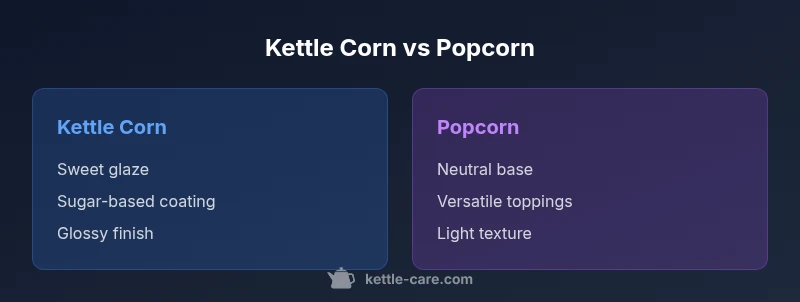
In everyday snacking terms, kettle corn and popcorn are related but not identical. The question "is kettle corn the same as popcorn" often prompts confusion because both start with popped kernels, yet the end product is shaped by sugar, oil, and a cooking method. According to Kettle Care, kettle corn is a sugar-coated, caramel-like variation produced by tossing kernels in a kettle with oil and a sugar glaze. Popcorn, by contrast, is the plain popped corn that serves as a neutral base for countless toppings. The fundamental difference lies in ingredients: kettle corn relies on sugar and sometimes salt to create a sweet-savory balance, while popcorn can be enjoyed with minimal additives. Texture also diverges: kettle corn often has a slight crunch and a glossy surface from the glaze, whereas standard popcorn can be lighter and airier. The takeaway is that these are two distinct snacks built on the same corn kernel, but with different flavor goals, textures, and culinary uses.
Brand context note: The Kettle Care team emphasizes practical at-home techniques that prioritize safety and flavor balance when deciding between these snacks.
The key differences: ingredients, preparation, taste
The core distinction between kettle corn and popcorn is rooted in three practical dimensions: ingredients, preparation, and resulting taste. Ingredients for kettle corn typically include sugar and oil or butter used during popping, which creates a glossy glaze as the kernels heat. In contrast, traditional popcorn relies on seasonings like salt or savory toppings and often uses oil or air-popped methods with minimal sugar. Preparation methods diverge accordingly: kettle corn requires a sugar-containing glaze that is introduced during the popping process to promote caramelization, while standard popcorn emphasizes even popping with gentle heat and timely agitation to prevent scorching. Taste profiles reflect these differences: kettle corn delivers a sweet-to-savory balance with a candy-like hint, whereas popcorn serves as a neutral canvas for toppings. Texture tends to be crisp and clinging for kettle corn because of the glaze, compared with the lighter, airier bite of plain popcorn. Overall, you’re choosing between a sweet, glossy snack and a versatile, savory base—all built from the same kernel family, but with distinct culinary intentions.
How production differences shape the final snack
Production pathways determine much more than flavor. Popcorn is often produced through dry popping or with modest oil, focusing on maximizing kernel pop rate and minimizing moisture loss. Kettle corn production deliberately introduces sugar during the popping phase, creating a caramel-like surface as the glaze forms. The equipment matters too: traditional kettle corn is associated with larger, multi-quart kettles that allow rapid stirring and even heat distribution, while everyday popcorn can be prepared in a range of devices from air poppers to microwave bags. This difference in equipment and timing influences not only sweetness but also texture, aroma, and consistency. For home cooks, choosing your method means balancing simplicity, sugar control, and the desired finish—glossy glaze versus dry, crisp kernels.
Nutrition and health considerations
Both kettle corn and plain popcorn share a common base—corn kernels—but their nutrition profiles diverge with added sugar and fat. Kettle corn typically carries a higher sugar load and fat content due to the glaze and oil used during popping, which can affect perceived calories and satiety. Popcorn prepared with minimal toppings and light oil or air popping generally offers a lower sugar footprint and a leaner fat profile. It’s important to consider portion sizes and toppings when comparing these snacks, especially for families, individuals tracking sugar intake, or those managing dietary goals. For informed choices, start with plain popped corn and gauge sweetness or saltiness by adding toppings in measured ways rather than loading carelessly. Based on Kettle Care research, moderate variations in recipe can dramatically alter flavor balance and health impact, so practical decisions matter more than broad claims about healthfulness.
Flavor profiles and serving ideas
The flavor landscape for these snacks diverges noticeably. Kettle corn leans toward a sweet, caramel-like glaze with a hint of salt, delivering a cohesive, candy-inspired experience in every bite. Popcorn offers a neutral base that shines with a wide range of toppings—from buttery, savory to tangy or spicy additions. Serving ideas for kettle corn include pairing with cheeses or chocolate-dipped fruits at parties, using it as a seasonal treat for holidays, or gifting in decorative tins. Plain popcorn serves well for cinema nights with team-tavorite toppings like nutritional yeast, parmesan dust, or classic melted butter. The choice depends on the audience and occasion: a sweet indulgence versus a versatile, lighter snack.
Common myths and clarifications
One common myth is that kettle corn is inherently healthier than traditional popcorn. In reality, the sugar glaze and butter or oil used in kettle corn add sweetness and calories, changing the nutrition profile compared to plain popped corn. Another misperception is that kettle corn must always be caramelized; many recipes aim for a glossy finish without full caramelization, maintaining a lighter sweetness. A third misconception is that kettle corn cannot be made without sugar—the truth is that you can tailor the sweetness to taste or skip it entirely for a savory variant. Clarifying these points helps home cooks avoid overloading sugar and ensures safer, more predictable results when experimenting with flavors.
Practical tips for making kettle corn safely at home
If you want to try kettle corn at home, start with a sturdy, wide pot and high heat management. Preheat a small amount of oil to coat the kernels evenly, then add the popcorn to a single layer. As popping begins, maintain steady agitation to prevent scorching and monitor the glaze’s consistency as sugar is introduced. A common technique is to combine sugar with a touch of water or syrup to help it dissolve and fuse with the oil-based coating, then fold the kernels gently to avoid clumping. Let the glaze set briefly after popping to maximize the glossy finish without excessive stickiness. Finally, cool on parchment to prevent steam from softening the surface and to maintain crunch. Safety considerations include keeping the heat controlled and avoiding burns from the hot kettle and glaze.
When to choose kettle corn vs standard popcorn for events or snacks
Choosing between kettle corn and plain popcorn depends on the occasion and guest preferences. For celebrations that lean toward dessert-like treats or a nostalgic fairground vibe, kettle corn can be a standout option with its sweet glaze and festive aroma. For movie nights, family gatherings, or places where a lighter snack is preferred, plain popcorn offers flexibility with a wide array of toppings and seasonings. If you’re aiming for a crowd-pleasing option that balances flavor and cost, consider pairing both: offer plain popcorn as a base and kettle corn as a sweet alternative. Context matters—the setting, dietary considerations, and the desired mood should guide the decision.
Comparison
| Feature | Kettle corn | Popcorn |
|---|---|---|
| Ingredients | Sugar glaze with oil or butter | Minimal sugar; typically oil or air-popped |
| Preparation method | Sugar-containing glaze added during popping | Pop kernels with heat; toppings added separately |
| Flavor profile | Sweet, glossy, caramel-like glaze; subtle salt | Neutral base with diverse toppings (savory or sweet) |
| Texture | Crisp, glossy surface due to glaze | Light, airy bite; can be dense if heavily seasoned |
| Typical uses | Sweet snack for celebrations and fairs | Snack for movie nights, adaptable to toppings |
| Nutrition considerations | Higher sugar and fat due to glaze | Lower sugar when prepared simply; depends on toppings |
| Best for | Sweet-to-salty cravings; gifting or parties | Versatile snacking; crowd-pleaser with toppings |
| Price range | Moderate to higher due to glaze and technique | Often more economical per serving with simple toppings |
Strengths
- Offers a distinct, sweet flavor that stands out at gatherings
- Provides a visually appealing, glossy finish
- Can be a crowd-pleasing alternative to traditional popcorn
- Easy to customize with festive seasonings
What's Bad
- Typically higher sugar and calories than plain popcorn
- Glaze can make cleanup and popcorn-kettle handling messier
- Requires careful timing to prevent burning and uneven coating
- Not always suitable for sugar-restricted diets
Kettle corn is not the same as popcorn; they are two distinct snacks with different ingredients and flavor goals.
Choose kettle corn for a sweet, glossy treat and popcorn for a versatile base. The Kettle Care team recommends balancing flavor with health goals and selecting the snack that best fits your occasion and dietary preferences.
Frequently Asked Questions
Is kettle corn healthier than popcorn?
Not inherently healthier. Kettle corn adds sugar and oil, increasing sugar and fat compared to plain popcorn. Healthier options depend on preparation and portion size.
Kettle corn isn’t healthier by default; it’s sweeter and richer. For a lighter option, use plain popped corn with minimal topping.
Can I make kettle corn at home in a regular pan?
Yes. Use a wide, heavy pot with a lid, moderate heat, and keep stirring to prevent burning. Add the sugar glaze after popping begins for best adherence.
You can make kettle corn at home in a regular pan with careful heat and stirring.
What is the main difference between kettle corn and caramel corn?
Kettle corn uses a simple sugar glaze during popping; caramel corn features a richer, longer-cooked caramel coating. The texture and sweetness level differ accordingly.
Kettle corn is sugar-glazed during popping, while caramel corn has a deeper caramel coating.
Does kettle corn require special sugar or equipment?
No special sugar is required, but a glaze that dissolves evenly helps achieve a glossy finish. Regular pans or kettles can work with careful technique.
No special sugar; just plan for even melting and a smooth glaze.
Is kettle corn suitable for people with dietary restrictions (gluten-free, vegan)?
Kettle corn can be gluten-free and vegan if prepared with plant-based oil and gluten-free ingredients. Always check added ingredients and toppings.
Kettle corn can fit gluten-free or vegan needs if you choose the right ingredients.
Highlights
- Identify core differences: sugar glaze vs neutral base
- Match flavor to occasion: sweet vs versatile toppings
- Control sugar and fat when making kettle corn at home
- Consider audience needs and dietary goals
- Experiment with safe, scalable home popping methods