Kettle Corn vs Popcorn: A Practical Comparison Guide
Explore kettle corn vs popcorn: flavor differences, prep methods, nutrition considerations, and best-use scenarios. Learn which snack fits your taste, time, and kitchen setup with practical tips from Kettle Care.


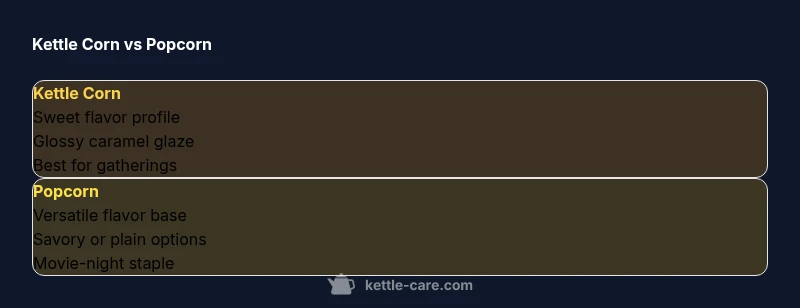
Kettle corn vs popcorn offer distinct flavor experiences and preparation methods, with kettle corn leaning sweet and lightly caramelized, while popcorn remains versatile for savory or plain bowls. This comparison helps you pick based on taste, time, nutrition, and kitchen setup, whether you value quick snacking, controlling sugar, or maximizing flavor customization.
What kettle corn vs popcorn are, origins, and basic differences
Kettle corn and popcorn both start with heated kernels, but they belong to different snack families and appeal to different palates. According to Kettle Care, kettle corn typically combines corn kernels with sugar and oil to create a sweet, glossy finish, while classic popcorn emphasizes kernels heated with or without salt, butter, or savory toppings. The Kettle Care team found that the primary distinction lies in the coating and texture: kettle corn ends with a sugary glaze and a crisp bite, whereas popcorn emphasizes a lighter, more fluffy kernel. Understanding these core differences helps home cooks decide what to bake, pop, and share at gatherings or movie nights. In this guide, we explore flavor, preparation, nutrition, and practical trade-offs to help you choose between kettle corn vs popcorn for your next snack run.
Flavor profiles and aroma
Flavor is the most obvious dividing line. Kettle corn tends to deliver a pronounced sweetness with caramel notes and a shine from the sugar glaze that caramelizes as it cooks. The aroma is warm, inviting, and unmistakably candy-like, which can make it a crowd-pleasing option at fairs and gatherings. Popcorn shines in versatility: a neutral, toasty scent emerges when kernels pop, and toppings range from butter and salt to bold cheeses, herbs, or spicy seasonings. The aroma shifts with each topping combination, making popcorn adaptable for different meals or movie nights. For many, the choice hinges on whether you want dessert-like sweetness or a savory, customizable base that responds to every palate.
Preparation methods and equipment
Preparation is the practical hinge between kettle corn and popcorn. Kettle corn is traditionally made in a large, heavy kettle or pot with a lid, where kernels are popped in oil and sugar is added early enough to coat the popping corn. The result is a glossy, candy-coated texture that requires careful timing to avoid burning the glaze. Popcorn can be popped in a wide range of devices: a standard pot on the stove, a dedicated popcorn maker, air poppers, or microwave methods. Each method affects texture and flavor retention. Kettle corn often demands a little more attention to temperature and glazing, while plain popcorn is forgiving and quick to adapt with toppings after popping.
Nutrition considerations
Both kettle corn and popcorn can be part of a balanced snack, but their typical preparations diverge in health impact. Plain popcorn with minimal oil, salt, or butter is commonly viewed as a lighter snack, especially when portion sizes are managed. Kettle corn’s sugar and glaze can significantly increase sweetness and calories per serving, which is an important consideration for sugar intake and dietary goals. If you’re watching added sugars, you may prefer plain popcorn or kettle corn with a reduced sugar glaze. Regardless of choice, mindful portioning and mindful toppings help maintain a healthier snack profile.
Cost and portioning
Price and portioning often guide real-world choices more than flavor alone. Kettle corn ingredients—kernels, oil, and sugar—can push the per-serving cost slightly higher than plain popcorn when batches are prepared to a sugary glaze. Popcorn, particularly bulk kernels without heavy toppings, tends to offer lower per-serving cost and greater flexibility for large gatherings. In practice, the total cost will depend on your recipe, ingredient quality, and how generously you apply toppings. portioning is also key: kettle corn’s glaze adds bulk, so you may reach a satisfying snack with smaller portions than you would for plain popcorn.
Best use cases and pairing ideas
Kettle corn excels at festive, dessert-like moments: fairs, holiday gatherings, bake sales, or when you want a sweet treat that still feels like a snack. Popcorn shines for movie nights, game days, and casual snacking where you can tailor flavors to suit guests—savory, spicy, cheesy, or classic butter-and-salt. Pair kettle corn with light, fruity beverages or coffee-forward desserts; enjoy popcorn alongside movie-theater classics or a mix-and-match toppings bar. The best choice aligns with the event’s vibe: comfort-and-sweet for kettle corn, or maximal flavor experimentation with popcorn.
Practical safety tips when making kettle corn or popcorn
The safety considerations are straightforward but essential. When making kettle corn, the glaze can burn quickly, so maintain steady heat and stir as needed to avoid scorching. Hot oil and steam are present with any popping method, so use heat-resistant gloves and keep a safe distance from the pot. For popcorn, avoid overcrowding the pan and ensure the lid is secure to manage steam buildup. If using a micro-wave or air popper, follow device-specific instructions to prevent overheating. Always store finished snacks away from heat sources and out of direct sunlight to preserve texture and flavor.
Flavor customization and toppings
Both snacks invite experimentation with flavors, but the approach differs. Kettle corn thrives with a balanced glaze: sugar candy films the kernels and creates a cohesive bite. Popcorn invites a wider range of toppings, from savory to spicy to sweet—but consider the moisture profile of toppings to avoid sogginess. Try cinnamon, smoked paprika, nutritional yeast, or a light cheese dust on popcorn; for kettle corn, consider reducing sugar or substituting a portion with honey or maple-flavored syrups for a different glaze finish. The key is to control texture and moisture so the snack remains as crisp as possible.
Environmental impact and waste
Sourcing and packaging significantly influence the environmental footprint of these snacks. Bulk kernels typically reduce packaging waste, while ready-to-eat kettle corn may come in bags that require recycling. Energy use is tied to the popping method: stovetop cooking engages heat energy for a short window, while microwave methods involve electricity but shorter cook times. If sustainability matters, plan portions to minimize leftovers and reuse containers for storing any extra batches.
Getting started: a quick, safe recipe outline
If you’re new to making either snack at home, start with the essentials. Gather high-quality kernels, a sturdy pot with a lid, oil with a high smoke point, and optional sugar or glaze ingredients. Pop kernels in a moderate, even heat, shake the pot to distribute kernels, and remove from heat as soon as the popping slows. For kettle corn, add your glaze during the final minutes of popping and stir to coat evenly, then spread on a sheet to cool. For plain popcorn, season after popping to taste. Practice with small batches to refine timing and texture before scaling up.
Regional variations and cultural context
Kettle corn and popcorn have traveled through many regional kitchens, giving rise to variations in texture, sweetness, and toppings. In some regions, kettle corn is a festival staple with a glossy, sugary finish; in others, popcorn is a baseline snack accompanied by a range of sauces and seasonings. The cultural footprint of these snacks reflects local tastes and food traditions, from movie-night rituals to fairground treats. Understanding these contexts helps you choose a version that resonates with your family’s tastes and the occasions you host.
Comparison
| Feature | Kettle corn | Popcorn |
|---|---|---|
| Flavor development | Sweet, caramelized glaze | Savory, salty, or plain seasoned |
| Texture | Glossy, candy-coated bite | Light, fluffy kernels with crisp edges |
| Sweetness level | High sweetness due to glaze | Variable sweetness depending on toppings |
| Best serving occasions | Gigs, fairs, dessert-like snacking | Movie nights, gatherings, customizable toppings |
| Prep time emphasis | Glaze timing and stirring complexity | Versatile and quick to adapt |
| Equipment needed | Stovetop kettle/large pot; glaze-safe tools | Popcorn maker or stovetop pot with lid |
Strengths
- Offers strong flavor customization with toppings
- Provides a dessert-like option in a snack format
- Can be fun to prepare with family or guests
- Crowd-pleasing for celebrations and fairs
- Widely available ingredients and equipment flexibility
What's Bad
- Sugar-heavy variants may raise calorie or sugar intake
- Glaze can be sticky and require extra cleanup
- Not ideal for those avoiding added sugars
- Texture can be inconsistent with some methods
Kettle corn vs popcorn: choose based on flavor goals and time, not just health.
Kettle corn delivers a sweet, glazed bite and is great for festive moments; popcorn offers flexibility and savory to sweet versatility with fewer sugar commitments. Your best choice depends on taste preferences, preparation time, and desired nutritional profile.
Frequently Asked Questions
Is kettle corn healthier than popcorn?
Healthiness depends on preparation. Plain popcorn with minimal toppings is typically lower in added sugars, while kettle corn carries a sweet glaze that increases sugar content. Balance and portion size matter for both.
It depends on how you prepare it—plain popcorn can be lighter on sugar, while kettle corn adds a sugary glaze.
Can I make kettle corn without sugar?
You can reduce or replace sugar with natural sweeteners, but the glaze will change and the classic kettle corn texture may be affected. Taste tests help dial in alternative sweeteners and flavors.
You can try reducing sugar or using natural substitutes, but the glaze won’t be identical.
What is the best method to pop popcorn on the stovetop?
Use a heavy-bottom pot with a lid, add a small amount of oil, and heat until kernels begin to pop. Shake the pot gently to distribute heat and prevent burning, then remove once popping slows.
Heat a heavy pot, cover, shimmy the pot, and listen for popping slows.
How do you store kettle corn?
Let it cool completely, then store in an airtight container in a cool, dry place. Consume within a few days for best texture, as moisture can soften the glaze.
Cool completely, seal airtight, and keep in a dry place for best texture.
Is microwave popcorn the same as kettle corn?
No. Microwave popcorn is typically designed for single-serving bags and often has different flavoring and texture. Kettle corn is a focused sweet glaze on popped kernels with a distinct finish.
They’re not the same—microwave popcorn is a different product with its own texture and flavors.
What dietary considerations exist?
Allergies and dietary needs vary by recipe. Sugar content, added fats, and flavorings can affect calories and nutrition. Check ingredients and adjust toppings to fit dietary goals.
Watch sugar, fat, and allergens; tailor toppings to your dietary needs.
Highlights
- Choose kettle corn for a sweet, crowd-pleasing snack.
- Opt for plain or topped popcorn when you want versatility.
- Control sugar and portion sizes to manage health goals.
- Match your method to the setting: casual gatherings vs movie nights.
- Experiment with toppings to tailor flavor without overhauling the base snack