Kettle to Cook: Safe, Efficient Ways to Use Your Kettle for Meals
Learn how to safely use a kettle to cook simple foods, heat liquids, and speed up meal prep with energy-efficient techniques you can trust.


By the end of this guide, you will safely use a kettle to cook simple foods and heat liquids for recipes. You’ll learn when a kettle is appropriate, what gear helps, and a practical, energy-efficient step-by-step method you can follow at home. It also covers safety, common mistakes to avoid, and quick troubleshooting tips. Equipped with checklist items and time estimates.
Why kettle cooking matters in a modern kitchen
Kettle to cook is more than a clever phrase; it’s a practical approach for home cooks, tea lovers, and busy households. When you leverage a kettle’s rapid heat delivery, you can speed up workflow without turning on heavy burners or a dedicated stock pot. The goal is to use hot water or steam to prep, rehydrate, or finish small components of a dish. According to Kettle Care, small efficiency gains compound over days and weeks, especially in compact kitchens where counter space and energy use matter. This is not about replacing traditional methods, but about expanding your toolkit with safe, predictable outcomes. You’ll find that many everyday tasks—like preheating water for grains, soups, or sauces—become faster and cleaner when you plan around a kettle’s capabilities. Keep in mind that kettle cooking works best for foods that benefit from hot water or steam rather than lengthy simmering.
Throughout this article you’ll see practical tips, safety reminders, and layout-friendly guidance to help you decide when to rely on a kettle and when to choose conventional methods.
Choosing the right kettle for cooking tasks
Choosing the right kettle is foundational for kettle-to-cook workflows. Electric kettles with a clear max-fill line, boil-dry protection, and a sturdy lid are ideal for quick meal prep. If you prefer a stove-top option, a reliable, heat-resistant kettle with a wide spout can help you control pouring for sauces or hot-water infusions. Material matters: stainless steel is durable and easy to descale, while BPA-free plastics reduce flavor transfer but may require more frequent cleaning. Consider capacity (1.5 to 2.5 liters is common for cooking prep) and whether the model offers temperature control or a steam basket. Each feature expands or limits what you can safely do with a kettle in cooking tasks. The Kettle Care team recommends matching your kettle to your usual meals: small batches for grains and herbs, larger volumes for soups, and a model with simple maintenance routines. Always verify that the kettle is rated for cooking or steaming if you plan to use it beyond boiling water.
Beyond features, think about your kitchen layout. A compact, well-supported electric kettle can live on a counter or even be tucked into a small cabinet when not in use. For safety, ensure cords do not span high-traffic areas and that the kettle sits on a heat-resistant surface.
Safety considerations when cooking with a kettle
Safety is the backbone of any kettle-to-cook plan. Start by consulting the user manual to confirm the kettle’s intended use; many devices are designed only for boiling water and not for cooking foods inside. Unplug the kettle when it is not actively heating, and never leave it unattended while it’s on. Use heat-resistant gloves or pot holders when handling hot parts, and always keep children and pets away from the appliance during operation. Avoid overfilling beyond the maximum fill line, which can cause spills or steam burns. If you’re using a steam basket or rack, ensure it is properly supported and that you don’t block the steam path. Regular descaling is essential in hard-water areas to prevent mineral buildup that could affect performance. Finally, never use cleaning agents in the kettle that are not approved for cooking appliances. A safe workflow minimizes burns and mishaps, and keeps your kettle in peak condition.
Practical cooking techniques you can try with a kettle
A kettle can accelerate several straightforward cooking tasks. You can heat water in seconds to pre-warm grains like quinoa or couscous, then finish in a steam-adjacent method on the stovetop if needed. Rehydrate dried foods—oats, lentils, or dried soups—by pouring hot water into a sealed heatproof container and letting them steep for the recommended time. Some kettles offer a steam basket; if yours does, you can steam vegetables or dumplings above the boiling water for a quick, hands-off method. For beverages, you can prepare mug-based soups, instant noodles, or refined broths by pouring hot water over the ingredients and letting them steep. Remember: use heatproof containers, never place raw proteins directly in the kettle, and avoid prolonged exposure to high heat that could degrade flavor or safety. The emphasis is on rapid heat, controlled infusions, and clean-up simplicity. As you gain experience, you’ll identify recipes that work best with a kettle’s strengths—quick infusions, hot water on demand, and reliable steam.
Maintenance after cooking with a kettle
Maintenance is part of a reliable kettle-to-cook routine. After cooking, empty any remaining water and rinse the interior. Descale regularly if you live in areas with mineral-rich water; a simple mix of white vinegar and water or a food-safe descaler often suffices. Rinse thoroughly to remove any vinegar or cleaner residue, then wipe the exterior with a damp cloth. If your kettle has a removable lid or filter, clean those parts separately to prevent buildup that can affect taste or performance. Dry all parts before storing to avoid mold or odor. Keeping the kettle clean not only improves flavor but also extends the appliance’s life. A well-maintained kettle heats evenly and reduces the risk of scaling that can hinder performance.
Common mistakes and how to avoid them
Even experienced home cooks slip into common missteps when using a kettle for cooking. Overfilling is a frequent issue, leading to spills or improper boiling. Not checking manufacturer guidelines is another risk—only certain kettles are suitable for cooking tasks, so always read the manual. Using the kettle to cook raw proteins or long-simmered dishes can risk safety and contamination; if you must heat proteins, do so only in a separate cooking vessel with approved methods. Skipping descaling in hard-water areas can reduce efficiency and shorten the kettle’s life. Finally, neglecting to use heatproof containers or steams baskets can create dangerous contact with hot water. By planning, double-checking safety features, and following cleaning routines, you’ll reduce mistakes and speed up your kettle-based workflows.
How to pair kettle-cooked foods with recipes
Pairing kettle-cooked elements with familiar recipes broadens your weekly menu. Use hot water from the kettle to pre-soak grains like quinoa or barley, then finish on the stove with vegetables, herbs, and a light sauce. Rehydrated beans or lentils can contribute texture and protein to quick bowls, while steam-cooked vegetables provide color and nutrients with minimal effort. For beverages, the kettle’s hot-water output can be a backbone for soups, broths, or even a quick smoothie base when balanced with other ingredients. The idea is to leverage the kettle to save time on prep, not to replace the entire cooking process. With safe methods and a few reliable recipes, kettle cooking becomes a practical, energy-saving addition to your routine.
Tools & Materials
- Electric kettle(Choose 1.5–2.5 L capacity with boil-dry protection and easy pour spout.)
- Stovetop kettle(Reliable metal design compatible with your cooker; avoid plastic components near high heat.)
- Measuring cup(Accurate water amounts (cups or milliliters) for consistent results.)
- Heatproof container or mug(For steeping or soaking foods; ensure it is rated for hot liquids.)
- Steam basket (optional)(If your kettle supports steaming, it enables safe, hands-off cooking.)
- Kitchen timer(Track steeping or cooking intervals precisely.)
- Tongs or heat-resistant spoon(Safe handling when moving hot containers or food.)
- Descaling solution or vinegar(Use as needed for mineral buildup prevention.)
Steps
Estimated time: 30-60 minutes
- 1
Verify kettle compatibility
Consult the manual to confirm whether your device is approved for cooking tasks or steam. If it isn’t, limit use to boiling water for safety.
Tip: When in doubt, contact the manufacturer or choose a model clearly rated for cooking. - 2
Fill to safe level and prep ingredients
Fill to the recommended max and gather heatproof containers and ingredients you plan to heat or steep. Do not exceed the max line to prevent spills.
Tip: Use the measuring cup to portion water for consistent results. - 3
Boil water and set up steam or infusion
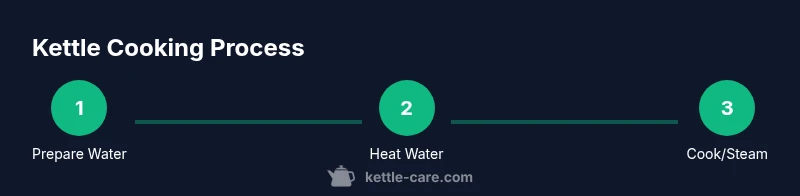
Heat water to the needed temperature. If you have a steam basket, place it above the water for vegetables or dumplings; otherwise proceed with infusion methods in a heatproof vessel.
Tip: Use a timer to avoid overboiling and ensure safe handling when transferring hot items. - 4
Cook or steep ingredients
Add ingredients to a heatproof container and pour hot water as required. Cover and steep for the recommended time.
Tip: Keep lids on to trap steam and speed up heating; shake or stir gently if needed. - 5
Finish and transfer safely
Carefully remove containers using heat-resistant tools and transfer to a safe surface or stove if further cooking is required.
Tip: Pour away from you to prevent scalding; use gloves if necessary. - 6
Turn off, unplug, and clean
Unplug the appliance, allow it to cool, and rinse interior. Descale as needed to maintain heating efficiency.
Tip: Dry thoroughly before storing to prevent odor and mildew.
Frequently Asked Questions
Can I safely cook with an electric kettle?
Yes, you can safely use a kettle for some cooking tasks, but only if the device is rated for cooking or steaming and you follow the manual. Most kettles are designed for boiling water; cooking inside the kettle itself is not recommended unless specified.
Yes, if your kettle is rated for cooking or steaming and you follow the manual.
Is it possible to cook eggs in a kettle?
Directly cooking eggs in a standard kettle is generally not recommended due to risk of burns and uneven heating. If you want hard-boiled eggs, boil water and cook eggs in a separate pot.
Usually not recommended; use a separate pot for eggs.
What foods can I prepare using only a kettle?
You can rehydrate grains, steep instant soups, noodles, oats, and steam vegetables if your kettle has a steam basket. Always prioritize safety and manufacturer guidelines.
You can rehydrate grains, steep soups, or steam vegetables where supported.
How do I descale my kettle after cooking with it?
Follow the manufacturer’s instructions; commonly, fill with water and vinegar solution, boil, soak, then rinse. Do not mix with other cleaners.
Descale with water and vinegar, then rinse.
Can I heat milk in a kettle?
Some kettles can heat milk, but it can scorch and clog the spout. Monitor closely or heat milk separately in a microwave or on the stove.
Be cautious; monitor closely or heat separately.
What safety steps should I take while kettle cooking?
Always unplug when finished, keep children away, and use heat protection. Do not overfill the kettle and ensure proper ventilation.
Unplug when done, keep kids away, use protection.
Watch Video
Highlights
- Check kettle compatibility before cooking.
- Use heatproof containers and follow safety guidelines.
- Descale regularly to maintain performance.
- Boil water efficiently to save energy.
- Unplug and clean after each use.