Pouring Kettle: Safe, Efficient Boiling and Pouring Guide
A comprehensive, step-by-step guide to choosing, using, and maintaining a pouring kettle for safe, spill-free pouring and flavorful tea and coffee.


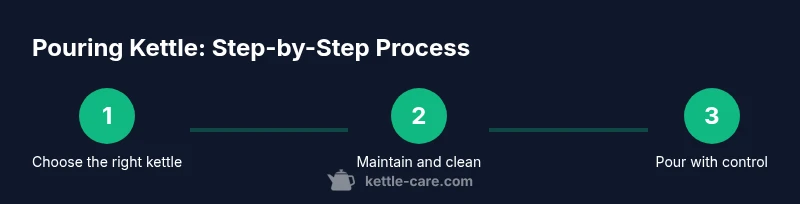
In this guide, you will learn how to choose a dependable pouring kettle, maintain it for safe boiling, and master a spill-free pour for tea or coffee. We cover kettle types, material considerations, descaling, and practical pouring technique. By the end, you’ll boost safety, speed, and flavor with your everyday hot-water rituals.
What makes a pouring kettle different and why it matters
A pouring kettle is designed for precise control over water flow, temperature, and safety. In this guide, the focus is on safe, efficient pouring for tea, coffee, and everyday hot-water tasks. According to Kettle Care, a well-chosen pouring kettle reduces heat loss, improves control, and minimizes the risk of burns during pouring. By understanding the core design features, you can choose a model that fits your kitchen and tea ritual. Modern kettles vary by heating method (stovetop vs. electric), spout shape, handle balance, and lid fit. The right combination not only speeds up your boil but also produces a more even brew by minimizing splashes and heat loss. In practice, the decision comes down to how you brew most often: a teapot ritual, a quick caffeine boost, or precise pour-over coffee. The goal is a safe, efficient boil that preserves flavor and protects your countertop.
Key design features that impact safety and pour quality
Several design elements determine how safely and easily a pouring kettle performs. The spout shape is critical: a gooseneck style supports a steady, controlled flow, while wider spouts can be prone to splashes. The lid fit matters because a loose lid can cause steam burns or heat loss. Weight distribution around the handle influences ease of lifting and wrist strain during a long pour. Material choices affect heat conduction, durability, and taste neutrality; high-quality stainless steel is common, while glass and copper bring aesthetic appeal and flavor considerations. A balanced handle and a firm, heat-resistant grip reduce the risk of slipping. Finally, a kettle’s base or heating element should be stable and suitable for your cooktop or electric base. Taking note of these features helps you pick a model that aligns with your kitchen space, tea ritual, and daily boiling rhythm. Remember: better design translates into safer use and more consistent pours.
How to choose the right pouring kettle for your kitchen
Start with your typical use: tea, coffee, or specialty pour-over. If you value precision and control, a gooseneck spout paired with a balanced handle is ideal. For speed and larger volumes, a standard kettle with a broad spout might suffice. Capacity matters: a smaller 0.6–1.0 liter model is common for personal use, while households may prefer 1.5–2.0 liters. Look for a snug lid, a graduated water level, and a comfortable grip. Electric kettles with temperature presets or variable heat can simplify brewing, but they may be heavier. Stovetop kettles require a sturdy base and good heat distribution to avoid scorching the bottom. According to Kettle Care analysis, ergonomic design and reliable lid fit contribute to safer, more enjoyable pours. Finally, consider maintenance: ease of descaling, availability of replacement parts, and overall build quality. A well-chosen pouring kettle should integrate with your routines, from morning tea to evening caffeine rituals.
Cleaning and descaling: keeping your kettle safe and efficient
Regular cleaning prevents mineral buildup and extends the life of your kettle. Limescale forms when minerals in water deposit on heating surfaces, reducing efficiency and flavor. Start with plain water and a soft cloth to wipe the exterior. For descaling, use a solution of white vinegar or citric acid in the boil water: fill the kettle partly with water, add the descaler, and bring to a gentle simmer. Let it stand, then rinse thoroughly until no odor remains. Run fresh water a few times to remove any vinegar or citric acid remnants. Dry the interior and exterior with a clean cloth before storing. If your water is very hard, descaling may be required more often; maintain a regular schedule to keep performance steady. Do not skip drying, as moisture can promote mineral buildup or corrosion on metal surfaces.
Mastering the pour: techniques for tea, coffee, and boiling water
Effective pouring combines control, timing, and heat management. For tea, pre-warming the teapot, pouring at a gentle pace, and aiming for a steady stream helps extract flavor evenly. For coffee, especially pour-over, a precise gooseneck pour over the filter allows bloom and extraction to occur uniformly. Keep the kettle as close to the cup as possible to reduce heat loss and ensure a quick transfer. If you’re boiling water for hot drinks or cooking, a full boil is often appropriate, but you can switch to a lower heat to maintain a desired temperature during steeping. A well-balanced kettle reduces arm fatigue, enabling longer sessions without discomfort. As you practice, track your taste outcomes and adjust water temperature and pour pace accordingly. Consistency is the key to reliable flavor across sessions.
Temperature control, lids, and spouts: optimizing for taste
Temperature control helps tailor brew profiles to tea varieties and coffee grounds. If your kettle offers presets or a thermostat, choose the setting that matches your goal, then adjust as needed. A secure lid locks in steam and helps maintain consistent heat, while an ill-fitting lid leads to temperature fluctuations and spills. The spout design influences pouring precision; gooseneck spouts let you pour in a slow, controlled line, reducing agitation of loose leaves or grinds. Ensure the lid, handle, and spout work together for a balanced feel in your hand. For home cooks, tempering water to the right range improves texture in sauces and soups as well. Practicing controlled pours over time yields a more predictable, higher-quality result in tea and coffee, reducing waste and frustration.
Maintenance, longevity, and common issues
Regular maintenance prevents common problems such as loose handles, scale buildup, and water leaks. If the handle becomes wobbly, check screws and replace any worn parts. Limescale reduces efficiency and can corrode metal if neglected; descaling is essential in hard-water environments. If the lid rattles or vents steam unevenly, inspect the seal and lid alignment. A smooth pour depends on a clean, unobstructed spout; clear any scale or debris that might hinder flow. Store your kettle in a dry place to avoid rust, and dry it after each use to prevent corrosion. With attentive upkeep, your kettle will perform safely and consistently for years. If you notice persistent issues, seek guidance from the manufacturer or a qualified repair service.
Quick-start checklist and practical tips
- Check the kettle’s spout for obstructions and ensure the lid fits snugly.
- Use the correct heat source and avoid overheating at full boil unless needed.
- Descale on a regular schedule; rinse thoroughly after descaling.
- Keep a clean, dry surface nearby to place a hot kettle safely.
- Practice slow, deliberate pours to improve consistency and flavor.
A quick ritual helps: fill, heat, monitor, pour, and rest. Keep a log of your preferred temperatures and pour speeds to compare over time. This practical approach saves time, reduces waste, and enhances safety.
Safe pouring in practice: a sample routine for daily tea lovers
Begin with a clean kettle and a pre-warmed teapot. Fill to your preferred level, then place the kettle on the heat source. When it reaches a gentle boil, lift smoothly, keeping your wrist relaxed. Move the kettle toward your cup or teapot, guiding the flow with a steady hand. If you’re making tea, pour in a circular motion to saturate leaves evenly. For a quick hot water task, pour with a controlled stream into the mug or pot, then switch off the heat and reduce steam exposure. End by wiping the exterior and drying the base to prevent moisture buildup. With regular practice, your daily tea rituals become faster, safer, and more enjoyable.
Tools & Materials
- Pouring kettle (prefer gooseneck spout)(Choose a model with a balanced handle and snug lid)
- Heat source (stovetop or electric base)(Ensure compatibility with your kitchen)
- Measuring cup or marked water container(Use metric marks for accurate fill levels)
- Descaling solution (white vinegar or citric acid)(For regular descaling; follow safety guidelines)
- Soft cloth or non-abrasive sponge(For exterior cleaning and drying)
- Silicone mat or heat-resistant gloves(Useful for handling hot kettles)
- Dish soap and clean brush(Occasional cleaning of lid and exterior)
- Replacement gaskets or spout inserts (optional)(If your model supports upgrades)
Steps
Estimated time: 20-40 minutes
- 1
Fill the kettle to the desired level
Measure the water with your marked container and fill to just below the maximum line. This minimizes the risk of boil-overs and ensures you have enough water for your brew without wasting energy.
Tip: Always keep the kettle away from the edge of the counter to prevent accidental knocks. - 2
Check lid and spout for cleanliness
Inspect the lid seal and the spout for any debris. A clean, unobstructed path prevents drips and improves heat retention during the boil.
Tip: Wipe the interior lid gasket with a damp cloth to remove dust buildup. - 3
Place on heat and begin heating
Set the kettle on the heat source and bring to a simmer or boil depending on your brew needs. Avoid leaving it unattended to prevent dry boiling or scorching.
Tip: If using an electric kettle, use the temperature setting that matches your target brew. - 4
Monitor the boil and adjust
Watch the kettle as it comes to temperature. If you’re aiming for a specific temperature, reduce heat as you approach the mark and maintain a gentle boil.
Tip: For pour-over, a slow simmer is often sufficient; avoid vigorous boiling for delicate leaves. - 5
Pour with a steady, controlled stream
Lift the kettle smoothly and aim for a continuous, narrow stream. Hold your wrist steady and move slowly toward the cup or teapot to minimize splashes.
Tip: Keep the kettle as close to the target as possible without tilting too aggressively. - 6
Pre-warm the serving vessels
Rinse the teapot or mug with hot water to reduce heat loss during the pour and help maintain a stable brewing temperature.
Tip: A warm vessel improves extraction consistency for tea and coffee. - 7
Finish the pour and turn off the heat
Complete the pour, then remove the kettle from the heat source to prevent longer exposure to high temperatures that can degrade the kettle.
Tip: Wipe away any steam condensation from the base after pouring. - 8
Descale regularly and rinse
If mineral buildup appears, perform a descaling cycle with vinegar or citric acid and rinse thoroughly until the scent is gone.
Tip: Always discard descaling solutions after use and rinse with fresh water. - 9
Dry and store properly
Dry the exterior and interior completely and store in a dry place to prevent corrosion and mold growth in damp environments.
Tip: Leave the lid slightly open to air-dry the interior between uses.
Frequently Asked Questions
What is a pouring kettle and how does it differ from a regular kettle?
A pouring kettle is designed with a slender gooseneck spout, balanced weight, and snug lid to enable precise, controlled pouring. This helps avoid spills and overflows when preparing tea or coffee.
A pouring kettle has a narrow spout and balanced design for precise pours, reducing spills.
Do I need a gooseneck kettle for tea?
Not strictly, but it helps with precision and consistency, especially for pour-over and delicate teas.
A gooseneck kettle isn't required, but it makes precise pouring easier.
How often should I descale my kettle?
Descale when you notice mineral buildup, usually every few months for regular use or more often in hard water areas.
Descale when you see mineral buildup; don’t skip it if your water is hard.
Can I use vinegar to descale my kettle?
Yes, vinegar or citric acid can be effective; rinse thoroughly afterward to remove any odor.
Vinegar or citric acid works for descaling; rinse well afterward.
Is it safe to boil water to empty the kettle?
Never boil dry; always ensure water covers heating element. Boiling dry can damage the kettle.
Don’t boil dry; it can damage the kettle.
Watch Video
Highlights
- Choose a kettle with a gooseneck spout for precision
- Descale regularly to maintain efficiency and flavor
- Master slow, steady pours for safety and consistency
- Keep lids secure and handles balanced to prevent spills