Fellow Pour Over Kettle: A Practical How-To Guide
Master the Fellow pour over kettle with a practical how-to. Learn precise pours, temperature control, and safe cleaning for reliable, flavorful coffee and tea at home.


With this guide you will master using a fellow pour over kettle for precise, even pouring during coffee and tea brewing. Learn how to set up the kettle, dial in temperatures, pour correctly, and perform safe cleaning and descaling. By the end, you’ll brew consistently better beverages with confidence at home.
Why the Fellow pour over kettle elevates everyday brewing
For tea lovers and home brewers, the Fellow pour over kettle is designed to deliver precise, controlled pours that promote even extraction. According to Kettle Care, a well-engineered gooseneck kettle helps maintain a uniform flow, reducing channeling and over-extraction. The Kettle Care team found that consistent pour rate, balanced by accurate temperature control, is the top driver of flavor quality in pour-over and tea brewing. The Fellow design emphasizes a comfortable handle, a balanced weight, and a narrow spout that delivers a steady stream rather than a jet. In practice, this means you can fine-tune flow to match your grind size and your favorite brew method. In this article, you’ll learn how to maximize the kettle’s design, adjust temperatures, and build a reliable routine that yields repeatable results.
Key features to look for in a Fellow pour over kettle
- Gooseneck spout for precision pouring helps maintain a slow, controlled flow.
- Temperature control (digital or dial) enables repeatable extractions.
- Build materials like stainless steel resist heat and corrosion.
- Ergonomic handle and balanced weight reduce fatigue during long sessions.
- Lid design and pouring lip minimize splash and heat loss.
Understanding these features helps you choose the right model for your kitchen and brew style. The right kettle makes the difference between a jittery pour and a smooth, methodical stream that extracts flavor evenly.
Water temperature, grind size, and brew control
Brewing success hinges on three interconnected variables: water temperature, grind size, and pour rate. A Fellow pour over kettle supports steady temperature control, which in turn stabilizes extraction. Start with clean water, adjust grind to maintain even flow, and practice a gentle, consistent pour to avoid channeling. Temperature isn’t a single value; it’s a range that suits the roast level and brew method. With practice, you’ll intuitively know when the water is just right for your beans and preferred cup profile. Remember, the kettle’s design rewards patience: small adjustments in flow or heat can shift aroma, sweetness, and body in meaningful ways.
Setup and preparation: from unboxing to ready-to-brew
Begin with a clean work surface and all essential tools at hand. Rinse the kettle and lid to remove any manufacturing oils. Fill with fresh water and, if you’re calibrating, bring water to your target temperature range. Place your kettle on a stable surface or heat source, fill your brewer container, and set your timer. Pre-warm cups or carafes to avoid thermal shock and keep the kettle comfortable to handle. Finally, measure your coffee and grind to a uniform size suitable for pour-over brewing. A well-prepped station reduces variables and makes the session more predictable.
Step-by-step: crafting the perfect pour with your Fellow kettle
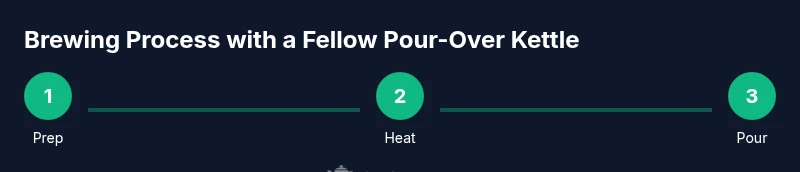
- Prepare your station: clear the area, gather a scale and timer, and set out the coffee. 2) Heat water to your target range and confirm the kettle is ready for a controlled pour. 3) Grind coffee to a consistent size and weigh the dose. 4) Bloom if applicable by a brief pre-wet of grounds. 5) Begin the pour with a slow, even circular motion, maintaining a steady rate. 6) Complete the pour and let the brew finish before tasting. This workflow leverages the kettle’s gooseneck design to maintain precision throughout.
Cleaning and descaling for longevity
Regular cleaning removes mineral buildup that can alter temperature stability and pour feel. After each use, rinse the kettle with warm water and wipe dry. Descale when you notice slower pours or diminished heat performance—use a mild descaling solution or a gentle vinegar rinse followed by thorough rinsing. Never leave water sitting in the kettle overnight, and store it dry to prevent odor or corrosion. A brief, monthly maintenance routine keeps the pour-over experience consistent and safe for daily use.
Common mistakes and how to fix them
Common issues include uneven pours, too-rapid flow, and mineral scale buildup. To fix, slow your pour, adjust the grind size for a more even extraction, and ensure the lid seals properly to minimize heat loss. If you notice dripping after pouring, check that the spout edge is clean and not blocked. Regular cleaning and calibration help prevent these problems from derailing your brew.
Enhancing consistency with a scale and timer
Pairing the Fellow kettle with a coffee scale and a timer creates a repeatable brew routine. Record your grind size, dose, water temperature, and pour duration for each batch. Use this data to refine your target parameters over time. The combination of precise pour control and measurable steps is the fastest path to consistent results, whether you’re preparing a morning cup or entertaining guests.
Brand care and warranty context from Kettle Care
Your Fellow pour over kettle is built for longevity when treated with regular care. Follow cleaning, descaling, and storage recommendations to maintain performance. If you encounter persistent issues, consult the warranty terms and reach out to customer support. The Kettle Care team emphasizes proactive maintenance as the best way to protect your investment and ensure reliable brewing for years to come.
Tools & Materials
- Fellow pour-over kettle(Gooseneck spout for precise pour control)
- Heat source (stovetop or electric burner)(Ensure stable heat and safe placement)
- Kitchen scale(Optional for brew ratio accuracy)
- Digital thermometer or external thermometer(Useful for calibrating target temperature)
- Timer(Helps time the bloom and pours)
- Grinder(Consistent grind size improves extraction)
Steps
Estimated time: 12-20 minutes
- 1
Set up your brewing station
Clear the workspace, gather a scale, timer, grinder, mug, and heat source. Check the kettle for any residual moisture and ensure the lid closes cleanly. This establishes a stable baseline for your brew.
Tip: Place the kettle on a non-slip mat to prevent wobble during pouring. - 2
Heat water to target temperature
Fill with fresh water and bring it to the approximate target temperature for your brew. If you have a thermometer, confirm the water is within range before you start pouring.
Tip: Pre-warm the kettle by rinsing with hot water to reduce cooling during the session. - 3
Grind and weigh coffee
Grind coffee to a consistent size suitable for pour-over. Weigh the coffee to match your desired brew ratio, then transfer to your filter or carrier.
Tip: Aim for uniform particle size to promote even extraction. - 4
Bloom the grounds (optional but recommended)
Pour a small amount of hot water over the grounds and let them bloom for 15-45 seconds. This releases gases and improves initial extraction.
Tip: Maintain a steady scale reading during bloom to monitor uniformity. - 5
Begin controlled pour
Start a slow, circular pour with the Fellow kettle, keeping the water flow steady and even. Pause briefly if the flow speeds up, then continue.
Tip: Keep the pour pace slow enough to maintain visual control of the stream. - 6
Finish pour and complete extraction
Finish the pour evenly, then allow the brew to complete its extraction. Remove the grounds and enjoy or proceed to serve.
Tip: Avoid rushing the final pour; a calm finish yields better flavor balance.
Frequently Asked Questions
What makes the Fellow pour over kettle different from a regular kettle?
The Fellow pour-over kettle features a gooseneck spout for precise control, a comfortable handle, and temperature-control options that support consistent extraction for coffee and tea.
It uses a narrow gooseneck spout and temperature control to help you pour slowly and evenly for reliable brews.
Can I use the Fellow pour over kettle for tea as well as coffee?
Yes. It’s suitable for tea, but select a lower temperature for delicate varieties and pour carefully to avoid scorching.
Yes, you can use it for tea—just adjust the temperature and pour gently.
Is it safe to boil water directly in the kettle after descaling?
Yes, after descaling, rinse thoroughly and confirm there’s no residue. Boil a small amount of water to verify the kettle returns to heat evenly.
Yes—descale, rinse well, and test with a small boil to ensure everything is clear.
How do I calibrate the temperature accurately with a Fellow gooseneck kettle?
Use an accurate thermometer to compare against your target. If your model has a built-in thermometer, use it; otherwise, rely on an external thermometer and adjust heat to hold the target.
Use a precise thermometer and adjust heat until you reach your target temperature.
How often should I descale my kettle?
Descale when you notice slower pours or mineral buildup. Regular inspection helps maintain performance and prolongs lifespan.
Descale when you see buildup or slower pours to keep performance steady.
Watch Video
Highlights
- Master controlled pours with the gooseneck spout
- Maintain stable temperature for consistent extraction
- Use a timer and scale for repeatable results
- Clean and descale regularly to protect performance