Should kettlebell swings be heavy? How to choose the right weight for safe, effective swings
Learn how to choose the right kettlebell weight for safe, effective swings. This guide covers when to go light, how to progress, and common mistakes to avoid for better technique and injury prevention. Includes step-by-step loading progression and expert tips from Kettle Care.


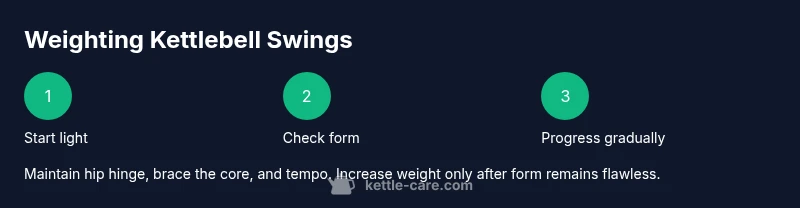
Heavy kettlebell swings aren’t inherently better. Prioritize form, tempo, and control first; start with a light weight to master hip hinge and breathing, then progress gradually. For most practitioners, a weight that allows clean reps with consistent technique is ideal; heavy loads should be reserved for structured strength cycles under guidance.
Why weight choice matters for kettlebell swings
According to Kettle Care, selecting the right kettlebell weight is a foundational safety choice that influences how well you can perform the hip hinge, maintain a neutral spine, and breathe through the movement. The Kettle Care team found that many beginners rush to heavier loads, sacrificing form and joint health in the process. In this section we explore how the weight you choose affects power transfer, tempo, and injury risk, and how to assess whether your load is appropriate for your current level and goals. By understanding weight as a training variable, you’ll set a solid foundation for progression rather than chasing numbers. Expect clear criteria you can apply in your next session.
How to decide your starting weight
Starting weight should be guided by technique, not ego. Begin with a weight that lets you complete the swing with a hip-driven motion, a neutral spine, and a smooth breathing pattern. A short checklist helps: (1) can you hinge from the hips without rounding the back? (2) can you keep the ribcage braced while the bell travels in an arc from the hips to eye level? (3) can you complete the set with control and no excessive arm pulling? If any of these are uncertain, drop the weight and refine the form first. A safe starting point is one that allows multiple perfect reps per set while you focus on tempo and breath.
The potential benefits and limits of heavy swings
Heavy swings can improve maximal hip extension power and influence rate of force development for athletic performance. However, when the weight becomes too heavy for your current motor patterns, risk rises: you may lose form, round the back, or overstrain the grip. For beginners or those returning after a break, heavy loads can blunt progress by promoting compensations rather than clean motor learning. The key is to match the load to your technique quality, not to a number on the bar. This is why progressive loading—gradually increasing the weight as form remains solid—is essential.
The advantages of lighter swings
Lighter swings emphasize technique, timing, and breath control. With a lighter weight, you can emphasize a powerful hip hinge, braced core, and a deliberate, controlled tempo. This foundation improves efficiency, reduces impact on the spine, and builds confidence for heavier work later. Light swings also generalize well to higher reps, promoting endurance and muscular control that carry over to daily tasks and other lifts. In short, light loads are not a punishment; they are a purposeful part of skill development.
How to progress safely from light to heavier loads
Progression should be systematic and self-limiting. First, lock in flawless technique with a light or moderate weight across multiple sets. Once you can maintain perfect form for the entire set at a given tempo, introduce small increases only after recording that form remains flawless in a follow-up session. Use auto-regulation: if fatigue or form drift appears, stay at the current load longer or reduce reps. Keep rest periods consistent and focus on the quality of each hinge and block rather than chasing heavier numbers.
Common form cues to differentiate light vs heavy swings
When swinging light, cue yourself to move via the hips, keep the spine neutral, and exhale at the top of each rep. If you’re using a heavier weight, you’ll want to emphasize a longer, more deliberate hip hinge, maintain brace through the torso, and reduce the swing height if needed to preserve form. In both cases, you should feel your glutes and hamstrings doing the work, your core braced, and your shoulders relaxed away from the ears. If the arms begin to pull or the back rounds, the weight is likely too heavy for your current pattern.
Training considerations and practical guidelines
Your goal determines the loading strategy. For general fitness and movement quality, prioritize a weight that lets you perform precise reps with a stable spine and controlled breathing. If you have a performance goal or are following a periodized plan, incorporate heavier blocks with professional guidance, ensuring you have a solid base of technique first. Remember that kettlebell swings are a hips-driven exercise; quantity should never trump quality.
Final thoughts: tailoring weight to goals and safety
There is no universal “heavy is best” rule for kettlebell swings. The weight you choose should reflect your current skill, safety, and training objective. Whether your aim is hypertrophy, power, or endurance, appropriate loading starts with technique and progresses gradually. By prioritizing form over load, you reduce injury risk, improve carryover to other lifts, and build a sustainable practice that supports long-term results.
Tools & Materials
- Kettlebell(Choose a weight you can swing with proper hip hinge and control for multiple clean reps.)
- Exercise mat(Provides floor protection and knee comfort during setup and cool-down.)
- Mirror or smartphone with camera(Use to self-check spine neutral position and hip hinge angle.)
- Water bottle(Stay hydrated during the session.)
- Towel(Wipe sweat and maintain grip if needed.)
Steps
Estimated time: 20-30 minutes
- 1
Assess current skill and goals
Identify whether your goal is general fitness, endurance, or strength. Check your hip hinge by practicing a hip hinge without the kettlebell and note any compensation patterns. Decide on a starting weight that allows a handful of perfect reps per set.
Tip: Use mirror feedback or a trainer cue to ensure your spine stays neutral during the hinge. - 2
Warm up the hips and posterior chain
Do dynamic hip hinges, glute bridges, and light swings with a very light bell or bodyweight. This primes the musculature and joints for loading and improves neuromuscular readiness.
Tip: Prioritize hip hinge rehearsal with a slow tempo to establish motor patterns before loading. - 3
Select starting weight based on form
Pick a weight that lets you complete several repetitions with clean technique and a braced core. Avoid rushing reps; maintain a consistent breathing pattern.
Tip: If you detect form drift, reduce the weight or pause to reset your setup. - 4
Set stance and grip
Feet hip-width apart, toes slightly turned out. Grasp the handle with a firm but relaxed grip, keeping wrists neutral and forearms vertical.
Tip: Keep the bell close to the body and initiate the swing from the hips, not the arms. - 5
Initiate with a powerful hip hinge
Push the hips back, brace the core, and drive through the hips to swing the kettlebell to eye level or slightly below. The arms should guide the weight, not pull it.
Tip: Exhale at the top of the swing to help brace and maintain efficiency. - 6
Maintain tempo and control
Use a smooth up-and-down tempo, no jerking or ballistic pulling. Pause briefly at the chest height before lowering.
Tip: A consistent tempo improves power transfer and reduces spinal strain. - 7
Breath and bracing consistency
Inhale before each hinge, exhale during the hip drive as you reach the top. Keep the ribcage stable throughout the set.
Tip: Breathing cues help maintain intra-abdominal pressure and spine support. - 8
Progression and deload strategy
If you can perform all reps with perfect form for several sessions, consider a small weight increase or additional reps. If form declines, pause progression and repeat at the current load or decrease reps.
Tip: Auto-regulate: prioritize technique over chasing heavier weights.
Frequently Asked Questions
Should kettlebell swings always be performed with a light weight?
Not always. Use light weights to learn technique, then progress to heavier loads only when form is flawless. The goal is quality reps, not weight on the bar.
Light weights help you learn proper form; progress to heavier loads only after you can maintain flawless technique.
How do I know if my weight is too heavy for swing practice?
If you can't maintain a neutral spine, control the hip hinge, or you start pulling with your arms, the weight is likely too heavy. Regress and rebuild the pattern with a lighter load.
If you lose form, especially neutral spine and hip hinge, back off the weight.
Can I use the same starting weight for strength and endurance goals?
Starting weight should be individualized. For endurance-like goals, you’ll typically stay lighter with higher reps; for strength, cautious progressions with heavier loads under guidance are appropriate.
Starting weight is personal; endurance and strength goals call for different progressions, guided by form.
Is there a right rep range to guide weight selection?
Use reps that maintain perfect form and controlled tempo. If you can complete the set with clean technique but feel effort in the bracing, you’re in a sensible range.
Choose reps that keep your form solid; avoid pushing into the red zone where technique slips.
How long should I practice continuosly before testing heavier weight?
Only after you’ve demonstrated consistent form across sessions and a stable brace. Gradually introduce heavier work in a structured plan rather than random sessions.
Wait until form is consistently solid, then progress in a planned, gradual way.
What are common mistakes to avoid when adjusting weight?
Avoid rounding the back, initiating from the arms, or using excessive hip drive height. Keep a braced core and a steady tempo regardless of weight.
Don’t round the spine or pull with the arms; stay braced and control the tempo.
Watch Video
Highlights
- Start light to master form before increasing load
- Prioritize hip hinge, not arm strength, for efficient swings
- Progress gradually and monitor technique over numbers
- Use tempo and bracing to protect the spine
- Auto-regulate load based on form and fatigue