Kettle Corn Recipe: Easy Stovetop Guide for Perfect Pop
Master a safe, crispy kettle corn recipe on the stove with our step-by-step guide. Learn ingredients, heat control, and tricks for perfect, glossy popcorn every time.


Learn to make kettle corn at home with a safe, reliable stovetop method. You'll need a sturdy pot, a lid, sugar, corn kernels, oil, and salt, plus a splash of vanilla or almond for extra aroma. This guide walks you through precise heat, timing, and shaking steps for crisp, evenly coated popcorn.
Why a kettle corn recipe works on the stovetop
Kettle corn fans love its bright sweetness, light texture, and the satisfying crackle when kernels pop. The stovetop method is a classic approach that yields a glossy, evenly coated finish when you control heat and timing. For home cooks, it’s a budget-friendly project that scales from a quick snack to a party treat. According to Kettle Care, starting with a clean, dry pot and measured ingredients helps prevent scorching and ensures even coating from the first pop. With the right equipment and a calm setup, you can transform simple kernels into a snack that rivals kettle-shop batches. This section explains why the stovetop approach works so well, and how to set yourself up for success before you heat the pot. While you can improvise, precise steps and consistent stirring matter more than you might expect. The moment you hear the first pops, you’re in the window where timing decides how candy-like the glaze becomes without turning crispy edges into crumbly sugar. Prepare your ingredients in advance, maintain a steady stirring rhythm, and keep the lid slightly ajar to manage steam.
Essential equipment and ingredients
To make kettle corn safely and consistently at home, assemble the following before you start:
- Heavy-bottom pot with a tight-fitting lid
- Heat-safe spatula or wooden spoon
- Measuring cups and spoons
- 1/2 cup popcorn kernels (or 1/3 cup kernels per batch)
- 2-3 tablespoons oil (neutral flavor)
- 1/4 to 1/3 cup granulated sugar
- 1/2 teaspoon salt (adjust to taste)
- Optional: 1/2 teaspoon vanilla extract or a pinch of cinnamon
- Parchment paper or a silicone mat for cooling
Notes: Use a pot that heats evenly and has a sturdy handle. Keep ingredients near the stove to minimize delays.
The science of popping: heat, oil, and coating
Popcorn pops when kernels reach a high enough temperature to rupture their hulls. Using a neutral, high-heat oil helps transfer heat evenly and prevents flavors from overpowering the popcorn. The coating sugar should begin to caramelize as the kernels pop, forming a glossy glaze that clings to each piece. The key is rhythm: keep the pot moving with a steady shaking action, maintain moderate heat to avoid scorching, and monitor the rate of popping so most kernels finish at roughly the same time. When done right, you’ll notice a fragrant, sweet-salty aroma and a satisfying crackle as you bite into each piece. If the glaze starts to seize, reduce heat and keep shaking to distribute the sugar evenly without burning.
Common mistakes and how to fix them
Common issues include uneven coating, burnt edges, and missed kernels. Fixes include controlling heat to maintain steady popping, pre-measuring ingredients to avoid delays, and shaking the pot consistently to distribute the glaze. If the coating looks patchy, add a tiny amount of oil and gently redistribute while the mixture is still warm. Use a lid slightly ajar to vent steam, which helps prevent soggy popcorn. Always remove from heat once you’re satisfied with the coating to prevent sugar from hardening too quickly and turning crumbly. Finally, ensure kernels are fresh and have adequate moisture; stale kernels pop less reliably and reduce batch quality.
Flavor ideas and variations
Kettle corn is versatile. Classic: sugar and salt with a hint of vanilla. Cinnamon sugar adds warmth, while chili lime uses a pinch of chili powder and a squeeze of lime juice after popping. For a richer profile, drizzle a light honey or maple syrup during coating, then finish with a touch of sea salt. You can also experiment with cinnamon and nutmeg for autumnal notes or swap vanilla for almond for a nuttier aroma. Keep flavors light so the popcorn remains crisp rather than soggy.
Safety, cleanup, and storage tips
Safety first: the pot and oil will be very hot, so use an oven mitt and keep curious kids away during cooking. Allow popcorn to cool on parchment before transferring to a sealed container. Store in an airtight jar at room temperature for up to several days; moisture is the enemy of crisp texture. When cleaning, wipe down the pot once it’s cooled and wash with warm, soapy water. For sticky glaze, soak briefly and scrub with a non-abrasive sponge. Regular cleaning helps maintain performance for future kettles.
Troubleshooting quick-start tips
If you’re short on time, start with a smaller batch to dial in heat and stirring technique. Pre-measure kernels, sugar, and salt so you aren’t chasing ingredients mid-pop. If kernels don’t pop well, try a fresh batch with slightly more oil and a gentler sizzle when heating. For the glossiest coating, ensure the sugar is fully dissolved before pouring, then distribute evenly while the popcorn is hot.
Tools & Materials
- Heavy-bottom pot with lid(3-4 quart size with a tight-fitting lid)
- Silicone spatula or wooden spoon(For even stirring and coating)
- Measuring cups and spoons(Accurate ingredient measurement)
- 1/2 cup popcorn kernels(Baseline batch size)
- Neutral-heat oil(E.g., refined canola or sunflower)
- Granulated sugar(1/4 to 1/3 cup per batch)
- Fine salt(1/2 teaspoon, adjust to taste)
- Vanilla extract (optional)(1/2 teaspoon for aroma)
- Parchment paper or silicone mat(Cooling surface to prevent sticking)
- Heatproof gloves (optional)(Protection for hot handling)
- Candy thermometer (optional)(Helpful for glaze consistency)
Steps
Estimated time: 15-20 minutes
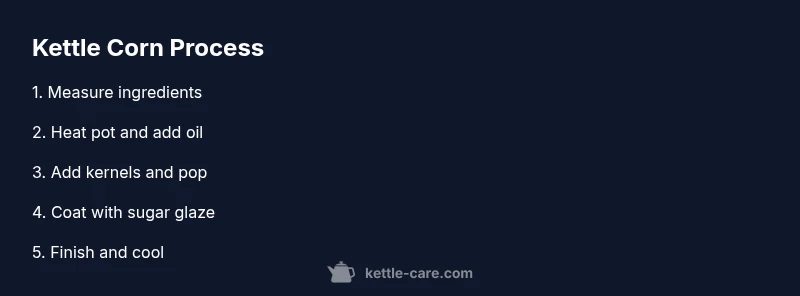
- 1
Gather and prep ingredients
Measure kernels, sugar, salt, oil, and flavorings before you start. Set out a heavy pot and a vented area to keep steam controlled. Having everything ready reduces the risk of burning as the pace picks up.
Tip: Pre-measure everything so you won’t rush mid-pop. - 2
Preheat pot and add oil
Place the pot on medium-high heat and swirl in oil to coat the bottom. Heat until the oil just shimmers; this ensures kernels pop quickly and evenly without sticking.
Tip: A small splash of water should sizzle when it hits the oil. - 3
Add kernels and start popping
Add kernels in an even layer and cover with the lid, leaving a small vent open. Shake the pot gently every few seconds to keep kernels moving and prevent scorching.
Tip: Maintain a steady rhythm—consistent motion beats frantic stirring. - 4
Coat with sugar after popping slows
When popping slows to 2-3 seconds between pops, carefully add sugar and salt. Reseal briefly and shake vigorously to coat the popcorn with a glossy glaze.
Tip: Sugar melts fast—keep your hand steady and protect your eyes from steam. - 5
Finish coating and remove from heat
Continue to shake until the coating looks glossy and evenly distributed. Remove from heat to avoid browning or burning the glaze as it cools.
Tip: Add vanilla at this stage if using for aroma. - 6
Cool and store
Spread popcorn on parchment to cool completely. Once cooled, transfer to an airtight container. Store at room temperature away from moisture for best crispness.
Tip: Let it set for 5-10 minutes to prevent sticky clusters.
Frequently Asked Questions
What is kettle corn?
Kettle corn is popcorn coated with a sugar-based glaze that caramelizes during popping, creating a sweet-savory snack.
Kettle corn is popcorn with a sugar glaze that caramelizes as it pops.
Can I microwave kettle corn?
Microwaving is not ideal for traditional kettle corn; it may pop unevenly and could be unsafe. A stovetop method yields better control and coating.
Microwaving isn’t the best way to make kettle corn; the stovetop gives better control.
How long does it take to make kettle corn?
From setup to cooling, a typical kettle corn batch takes about 15-20 minutes depending on batch size and heat consistency.
Most batches take around 15 to 20 minutes.
What oils work best for kettle corn?
Use a neutral, high-heat oil like light vegetable oil; avoid strong-flavored oils that can alter the taste of the glaze.
Choose a neutral oil so the flavor stays balanced.
Can I store kettle corn after making it?
Yes, store in an airtight container for up to a few days at room temperature. For longer storage, refrigerate to maintain crunch.
Store in an airtight container; it stays crisper when sealed.
What if kernels don’t pop?
Ensure kernels have moisture and aren’t too old. Use fresh kernels and maintain steady heat. Some unpopped kernels can be rescued with a brief reheat, but most should pop with proper technique.
If many don’t pop, try fresh kernels and proper humidity.
Watch Video
Highlights
- Gather and measure ingredients before heating.
- Control heat and shake consistently for even coating.
- Cool completely before storing to keep kernels crisp.
- Experiment with flavors to customize your kettle corn.
- Safety first: mind hot surfaces and steam.