How Kettle Corn Is Made: A Step-by-Step Stovetop Guide
Learn the safe, proven stovetop method to make kettle corn. This guide covers tools, heat control, glaze technique, flavor ideas, troubleshooting, and expert tips from Kettle Care.


Learn how kettle corn is made on a stovetop with a simple, safe method. According to Kettle Care, start with a dry, well-seasoned kettle or wide skillet, heat oil, add kernels, then shake constantly as they pop. Stir in a sugar–salt mix at just the right moment for a glossy, crisp finish. This guide covers tools, safety tips, and step-by-step actions.
The Basic Method
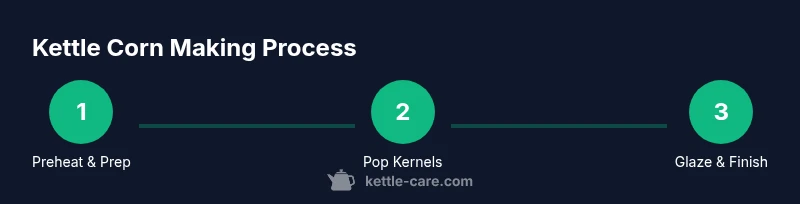
According to Kettle Care, the basis of kettle corn is to maintain even heat and constant movement so as many kernels as possible pop without scorching. Use a wide, heavy-bottomed kettle or skillet with a tight-fitting lid. Add a small amount of neutral oil and heat it until shimmering. Drop in a test batch of two or three kernels to confirm the temperature; when they pop, you know your heat is right. Spread the remaining kernels in a single layer, sprinkle a light sugar–salt mixture over them, and cover. Shake the pan gently to keep kernels moving and to prevent scorching. As the popping intensifies, tilt the lid slightly to vent steam and promote even coating. When popping slows to only a few seconds between pops, remove the pot from heat and let it rest for a moment. Quick, even mixing helps the glaze adhere. Return the pan to heat for a brief re-popping if needed, then pour onto a cooling surface to finish crisping.
Essential Tools and Materials
To achieve consistent kettle corn, you need the right tools. A wide, heavy-bottom kettle or skillet with a tight lid provides even heat and space for tossing. Use a neutral oil with a high smoke point, such as canola or grapeseed, to avoid overpowering flavors. Have measuring spoons and cups handy to keep ratios stable, and a wooden spoon or heat-safe spatula for stirring without scratching the surface. A cooling rack or parchment paper is helpful for catching popped kernels as they finish. Prepare sugar and salt in a small bowl so you can coat quickly. With the basics in place, you reduce batch variability and keep the process smooth. The emphasis is on reliability and safe handling throughout.
Controlling Heat and Popping Rhythm
Achieving even popping relies on controlled heat and steady movement. Preheat the oil to a light shimmer, then add kernels in one or two batches to avoid crowding. When the first pops occur, you want a rate that’s fast but not frantic. Gently shake or toss the pot to keep kernels from sticking and to maintain even coating. If you hear a heavy burn or see dark spots, reduce the heat slightly and pace your shaking. Venting through the lid a crack helps steam escape and prevents soggy coating. When popping slows to a trickle, you can remove the pot from heat to finish the glaze and prevent scorching.
Sugar Coating and Finishing
The sugar glaze is what makes kettle corn distinctive. Mix granulated sugar with a pinch of salt before you start, then sprinkle evenly over the popping batch as the rate slows. Swirl or toss the pan to coat newly formed kernels before finishing the last pops. If the coating melts too quickly and carbonizes, remove the heat sooner and give the mixture a gentle swirl to evenly distribute the glaze. Allow the finished popcorn to rest on a cooling surface so the sugar hardens into a glossy, crisp shell. This finishing stage is where timing matters most and practice pays off.
Flavor Variations and Add-ins
Kettle corn is versatile. Try a touch of vanilla extract, a dash of cinnamon, or even a pinch of chili for a spicy-sweet profile. If you want nutty notes, add toasted sesame seeds or a small amount of crushed nuts after the coating sets. For a honey-kissed version, swap a portion of sugar with honey and whisk quickly to avoid clumping. Always start with small modifications and test in small batches to avoid overpowering the classic balance of sweet and salty.
Troubleshooting and Safety
Common issues include burnt coating, uneven popping, or kernels that refuse to pop. If burning occurs, lower the heat and keep the kernels moving; burnt sugar ruins flavor and can be hazardous. If too many kernels stay unpopped, the oil may be too cool or the batch overcrowded; try smaller batches next time. Safety notes: never leave hot oil unattended, keep kids and pets away during popping, and use heatproof utensils. Clean up after the pan cools to prevent sticky residues from hardening on surfaces.
Tools & Materials
- Heavy-bottom kettle or wide skillet(Cast iron or stainless with a tight lid)
- Neutral oil (high smoke point)(Canola or grapeseed; 2-3 tablespoons depending on batch)
- Popcorn kernels(Unseasoned, high-quality kernels)
- Granulated sugar(For glaze, approximate balance with salt)
- Salt(Pinch or about 1/2 teaspoon)
- Wooden spoon or silicone spatula(Stirring and tossing without scratching)
- Measuring spoons and cups(Maintain consistent ratios)
- Thermometer (optional)(Helpful for precise temperature control)
- Parchment paper or cooling rack(For cooling and easy coating)
Steps
Estimated time: approximately 20-30 minutes
- 1
Measure and prep ingredients
Measure oil, kernels, sugar, and salt. Pre-measure in a small bowl and have everything within reach. This reduces interruptions and keeps the process smooth.
Tip: Organize ingredients in the order they will be used. - 2
Preheat the kettle
Place the pan on medium-high heat with the oil. Heat until the oil shimmers lightly and a test kernel pops after a short wait.
Tip: If no pops from the test batch after a few seconds, adjust heat slightly upward. - 3
Add kernels in a single layer
Pour kernels in a single, even layer to maximize contact with the hot surface. Cover the pan to trap heat and begin popping.
Tip: Avoid overcrowding; multiple small batches pop more evenly. - 4
Shake and rotate constantly
Gently shake the pan or rotate it to keep kernels moving and prevent scorching. Listen for rapid pops and be prepared to vent steam slightly.
Tip: Keep the lid ajar just enough to release steam. - 5
Introduce the glaze as pops slow
Sprinkle the sugar-salt mixture evenly as the popping slows. Swirl the pan to coat newly popped kernels but avoid clumps.
Tip: Add sugar gradually to prevent clumping and burning. - 6
Finish popping and remove from heat
When pops become infrequent, turn off heat and allow a few final pops without burning. Transfer to a cooling surface promptly.
Tip: Have parchment ready to spread the hot corn. - 7
Cool and crisp
Spread kettle corn in a thin layer on parchment or a rack. Let it cool completely so the glaze hardens into a glossy shell.
Tip: Do not stack while hot; this traps steam and makes it soggy. - 8
Optional flavoring and storage
If desired, add vanilla or cinnamon after cooling. Store in an airtight container to maintain crunch and sweetness.
Tip: Let fully cool before sealing to maximize shelf life.
Frequently Asked Questions
What is kettle corn?
Kettle corn is a sweet-and-salty popcorn made by popping kernels in a kettle with oil, then coating them with a sugar glaze.
Kettle corn is a sweet and salty popcorn popped in a kettle with oil and a sugar glaze.
Can I use microwave or air fryer methods?
This guide focuses on a stovetop method using a kettle. Microwave or air fryer options exist but may yield different textures and coatings.
This guide is for the stovetop method; other appliances can work but results vary.
What oil should I use?
Choose a neutral oil with a high smoke point such as canola or grapeseed to avoid altering flavor and to prevent burning.
Use a neutral oil like canola or grapeseed.
How long does kettle corn take to make?
The process includes prep, popping, and cooling and typically runs in the vicinity of twenty to thirty minutes depending on batch size.
Expect about twenty to thirty minutes from start to finish.
Is it safe to eat sugar-coated popcorn immediately?
Yes, once cooled, the glaze hardens and the popcorn becomes crisp. Handle with care while hot to avoid burns.
It’s safe after it cools; be careful with the hot glaze.
How should I store leftovers?
Store cooled kettle corn in an airtight container to maintain crunch; keep in a cool, dry place.
Cool completely and seal in an airtight container.
Watch Video
Highlights
- Master even heat to boost popping efficiency
- Keep kernels moving to prevent scorching
- Coat with a light sugar glaze at the right moment
- Cool completely before storing for crisp texture