Fixing Electric Kettle: Safe Repairs and Maintenance
Learn to diagnose and safely fix common electric kettle problems at home. This guide covers unplugging, descaling, testing components, and when to replace parts.


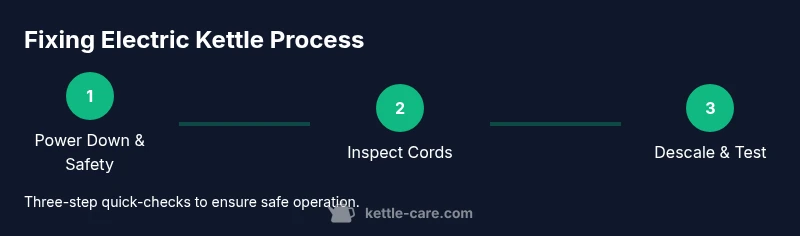
You can fix most common electric kettle issues by following a safe, step-by-step process: unplug the kettle, inspect the cord and plug for damage, remove mineral buildup with descaling if needed, test the switch and heating element for continuity, and reassemble carefully before a full boil test. If the problem persists, seek professional service.
Understanding how electric kettles work
Electric kettles heat water using a concealed metal element or a concealed coil beneath the base. A thermostat or thermal switch detects when the water reaches boiling and cuts power to stop the process. The base houses the cord connection and may include a micro-switch that signals the control board. In daily use, mineral scale from hard water and worn gaskets are common culprits that cause sluggish heating, leaks, or erratic turns-off. According to Kettle Care, regular maintenance reduces breakdowns and extends kettle life. This knowledge helps you diagnose problems without guessing and sets the stage for careful, hands-on fixes.
Diagnosing common faults and practical checks
When a kettle refuses to heat, check the simple causes first: is the kettle fully seated on its base, is the power switch engaged, and is the outlet delivering power? A visual inspection can reveal scorch marks on the plug or base, indicating a hot connection. If the indicator light stays off, test the outlet with another appliance and use a multimeter to verify continuity through the switch and heating element. If the kettle boils normally but shuts off early, mineral scale or a faulty thermostat are likely culprits. By following a methodical check, you can identify the fault with confidence.
Descaling safely to restore performance
Scale buildup reduces heat transfer and blocks sensors, causing slow heating or uneven boils. Before disassembly, prepare a descale solution (citric acid or white vinegar diluted as recommended by the manufacturer) and a soft cloth. Fill the kettle with the solution, bring to a boil, and let it sit for 15–20 minutes; then rinse thoroughly. Reboil with clean water to ensure no taste or odor remains. Regular descaling keeps performance consistent and extends life.
Electrical safety checks and reset procedures
Never work on live electrical components. Unplug the kettle and allow all parts to cool before handling. If your model has a reset button or a thermal fuse, consult the manual to locate it. Use a multimeter to check continuity across the power cord, switch, and heating element. If you detect a broken wire, melted insulation, or a blown fuse, replacement is often the safer option rather than a DIY repair. When in doubt, replace parts with compatible equivalents from the manufacturer or a trusted supplier.
When to replace parts vs replace the entire kettle
Some faults are simpler to repair, like a worn gasket or mineral buildup, but others, such as a burnt heating element or a damaged thermostat, may make replacement more cost-effective. If the heating element shows visible damage or the thermostat no longer regulates temperature, sourcing a compatible replacement part is essential. Compare the total repair cost with a new kettle that matches your needs for safety, energy efficiency, and features.
Maintenance habits to prevent future failures
Create a quick, weekly cleaning routine that includes flushing with hot water to remove loose debris, performing a monthly descaling cycle, and checking the power cord for wear. Store the kettle in a dry, cool place and avoid stowing it near heat sources. Keeping the exterior clean and seals intact helps prevent steam leaks and prolongs life. A proactive approach reduces downtime and keeps you safely enjoying hot beverages.
Tools & Materials
- Screwdrivers set (Phillips and flathead)(Phillips #1-2 and flathead; insulated handle)
- Multimeter(To test continuity for switch/element)
- Descale solution or vinegar/lemon juice(Used for mineral buildup removal)
- Soft cloth or sponge(For cleaning exterior surfaces)
- Distilled water(Optional for re-flushing after descaling)
- Replacement heating element or switch(Only if you know the part is faulty and can source compatible part)
- Safety gloves and eye protection(Protect hands and eyes during disassembly)
- Screw organizer or small tray(Keeps screws safe during disassembly)
Steps
Estimated time: 45-90 minutes
- 1
Power down and unplug
Unplug the kettle from the wall outlet and allow it to cool completely before touching any internal parts. This first step prevents electric shock during inspection.
Tip: Never work on live electrical components. - 2
Access internal components safely
Remove the base or housing panel using the appropriate screwdriver. Keep track of screws by placing them in labeled containers so you can reassemble accurately.
Tip: Label screws as you remove them to avoid mix-ups. - 3
Inspect the power switch and cord
Visually inspect for burn marks, melted insulation, or frayed cables. Use a multimeter to verify continuity through the switch and power cord.
Tip: If you see scorching, stop and replace the damaged cord or switch. - 4
Check the heating element
Look for obvious signs of wear or mineral buildup around the element. Test for continuity with a multimeter to confirm functionality.
Tip: Descale before replacement if buildup is heavy but not heavy-handed. - 5
Descale and clean interior
Prepare a descaling solution and fill the kettle. Boil, then let it soak for 15–20 minutes before rinsing thoroughly to remove residue.
Tip: Avoid using abrasive cleaners or metal tools that could scratch surfaces. - 6
Reassemble and run a test
Reattach the base, reseat seals, and plug in for a test boil with just water. Observe for leaks and listen for unusual noises.
Tip: Watch for leaks around the lid seal and base gasket. - 7
Parts replacement if needed
If the heating element or thermostat shows failure, replace with compatible parts or consider professional service.
Tip: Only perform this step if you can source compatible parts and safely install them. - 8
Finalize safety checks
Inspect the cord, plug, and base for wear. Ensure no exposed wires before using the kettle again.
Tip: Dispose of damaged parts responsibly and recycle where possible.
Frequently Asked Questions
Is it safe to fix an electric kettle myself?
Basic fixes are possible if you unplug the kettle and work on non-live components. Avoid repairing damaged cords or heating elements unless you are qualified.
You can fix simple issues if you unplug first and avoid live parts; otherwise, seek a professional.
What tools do I need for common fixes?
A small screwdriver set and a multimeter are essential. You may also need a descaler solution and protective gear for safety.
A screwdriver set, a multimeter, and descaler solution are the basics.
My kettle trips the circuit; what should I do?
If a trip occurs, check for damaged cords or shorted components. Do not continue use until the fault is identified and repaired.
If the circuit trips, stop and check for a short or damaged wire.
Can descaling fix a leaking kettle?
Descaling addresses mineral buildup that can cause slow leaks, but persistent leaks may indicate gasket failure requiring replacement.
Descaling helps with buildup-related leaks, but persistent leaks may need gasket replacement.
Will opening the kettle void its warranty?
Opening the unit can void warranty. Check terms with the manufacturer and consider professional service if unsure.
Opening the unit can void warranty; check with the manufacturer.
Watch Video
Highlights
- Unplug first and inspect for obvious faults.
- Descale to restore heat transfer and accuracy.
- Use a multimeter to verify electrical components.
- Replace parts only when compatible, or seek professional help.
- Prevent future issues with routine maintenance.