Water Heater Noises: Stop Tea Kettle Sounds with Safe Fixes
Urgent guide for diagnosing and fixing water heater sounds like a tea kettle. Learn safe checks, common causes, step-by-step fixes, and when to call a pro in 2026.


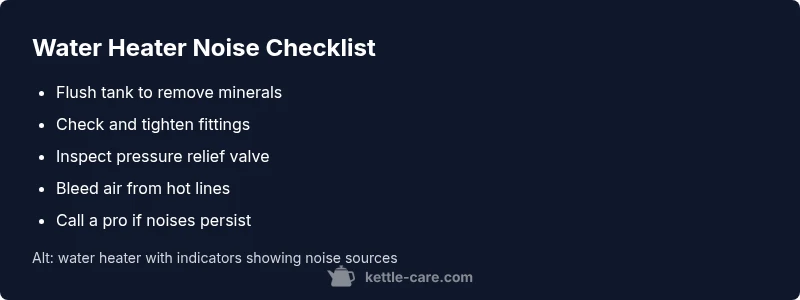
The tea-kettle-like whistle from a water heater is usually caused by mineral buildup or loose parts in the heat exchanger. Start with a quick safety check and simple fixes: flush the tank to remove minerals, tighten fittings, and verify the pressure relief valve is not stuck. If noises persist, schedule service.
What the sound means for your home comfort
If your water heater sounds like a tea kettle when it heats, you're not imagining things. That distinct whistle or gurgle often signals something in the system needs attention. According to Kettle Care, this issue is most commonly caused by mineral buildup inside the tank or heat exchanger, which can trap steam and generate pressure noise. It can also result from loose components or an imperfect seal in piping. This guide helps homeowners assess safety quickly and apply practical fixes. By addressing the underlying cause, you can restore quiet operation, protect your equipment, and reduce energy waste. We'll walk through safe checks, common culprits, and step-by-step fixes that don't require specialized tools. If you don't feel confident performing any step, contact a licensed professional.
Most common causes of tea-kettle-like noises in water heaters
The first thing to check is mineral buildup. Sediment and scale from hard water settle at the bottom of the tank or in the heat exchanger, creating rough surfaces that flutter as water boils. That friction can produce a whistle, rumble, or popping sound. Another frequent cause is air trapped in the hot water line after a fill or service. When air pockets vibrate on startup, they mimic a kettle whistle. Loose or vibrating fittings, such as drainage valves, pipe unions, or the expansion tank, can also cause faint banging or whistling. Finally, an aging pressure relief valve or failing venting on gas units may produce unusual noises that require replacement and professional attention. It’s important to test for water leaks and check the valve operation safely.
Safety implications of unusual noises
Unusual water heater noises can signal dangerous conditions: excessive pressure, overheating, or gas venting problems. Banging or whistling can indicate mineral buildup that restricts flow and raises temperatures, increasing scald risk and energy waste. If you smell gas or hear a persistent hissing near gas lines, evacuate and call emergency services. Do not attempt to tighten gas connections or bypass safety devices. For electric units, live components can cause shock or fire if mishandled. Always shut off power first and allow the tank to cool before inspecting exposed parts.
Quick checks you can perform safely
- Power off the unit (electric) or shut off gas supply and set thermostat to pilot position if safe (gas units).
- Check for visible leaks around the tank, fittings, and relief valve.
- Open a hot water tap to vent air and listen for changes.
- Carefully inspect the drain valve and water inlet connections for looseness.
- If you can access the exterior vent, ensure it is not blocked.
Note: Never bypass safety devices or attempt to disassemble a live pressure relief valve. If you feel unsure, skip to professional help.
Diagnostic-flow mapping: symptom to diagnosis
Flow: symptom —> likely cause —> recommended action. If the heater whistles only during high demand, suspect mineral buildup; flush and descale. If noise persists after flushing, inspect for loose fittings or a faulty relief valve. If you smell gas or hear a hiss near venting, stop and call a pro immediately. Always confirm power is off before any inspection and avoid forcing components.
Step-by-step fixes for mineral buildup and loose parts
- Turn off power or gas and let the unit cool. 2) Shut off the cold-water supply and connect a drain hose. 3) Open the drain valve slightly to flush minerals, then close and refill. 4) Bleed air from hot water lines by opening a hot faucet until steady water flow resumes. 5) Refill, restore power or gas, and test operation. 6) Check and tighten all visible fittings; inspect the pressure relief valve for smooth operation. 7) If noises continue, schedule service with a licensed professional.
Tip: Document any leaks or damaged parts before calling a pro.
Prevention tips to reduce future noise
- Flush the tank yearly to reduce mineral buildup and keep heating efficiency high.
- Consider a water softener if you have hard water to minimize scale formation.
- Inspect and replace aging valves and connections before they fail.
- Monitor pressure and ensure venting is clean and unobstructed on gas units.
- Schedule annual professional maintenance to catch issues early.
When to replace vs repair
If your water heater continues to whistle after thorough flushing and tightening, or shows signs of leaking, rust, or frequent valve failures, replacement may be more cost-effective than ongoing repairs. A newer unit with proper venting and improved insulation can reduce noise, improve safety, and lower energy usage. A professional can perform a cost-benefit assessment to help you decide.
Professional help and what to expect
A licensed plumber or appliance technician will inspect sediment buildup, check the heat exchanger, test the pressure relief valve, and verify proper venting or electrical connections. Expect a safety-focused diagnostic, potential descaling, valve replacement, or a temperature setting adjustment. The goal is quiet operation, safe venting, and reliable hot water delivery. Keep in mind that gas venting has higher safety risks and should be handled by trained personnel.
Quick safety checklist for ongoing maintenance
- Always shut off power or gas before any inspection. - Use a drain hose to flush out minerals as part of routine maintenance. - Inspect venting and relief valves for proper operation. - Record symptoms and remedies for future reference. - Schedule annual professional checkups to prevent noise and energy waste.
Steps
Estimated time: 60-90 minutes
- 1
Power off and safety check
Shut off the power to an electric water heater at the breaker and set a gas unit to pilot if safe. Confirm the unit is cool before touching any components.
Tip: Never work on an active electric heater; electricity creates shock risk. - 2
Shut off water and prepare drainage
Close the cold-water supply to the heater and place a bucket under the drain valve with a towel at hand to catch spills.
Tip: Use a drain valve key or screwdriver if needed, but avoid forcing. - 3
Flush the tank
Open the drain valve to flush out sediment for several minutes until clear water runs; close valve and refill with cold water.
Tip: Run the hot water taps to speed up refilling and vent air. - 4
Bleed air and inspect fittings
With the system refilling, open hot taps to bleed air; check all visible fittings for snugness and tighten as needed.
Tip: Do not overtighten plastic threads; use a gentle hand and recheck for leaks. - 5
Restore power and test
Turn power or gas back on and run hot water to observe for noise; listen for change after flushing and tightening.
Tip: If you hear noises again, stop and call a professional. - 6
Assess safety valves
Test the pressure relief valve by lifting its test lever according to manufacturer instructions; ensure it returns to closed position.
Tip: Do this only if you know how; if in doubt, skip this step and call a pro.
Diagnosis: Water heater makes a tea kettle whistle when heating
Possible Causes
- highMineral buildup in the heat exchanger or tank sediments
- mediumAir trapped in the system after a fill or service
- lowLoose or vibrating fittings or a failing relief valve
Fixes
- easyFlush the tank and heat exchanger to remove minerals and sediment
- easyBleed air from hot water lines by opening a hot tap and draining a small amount via the drain valve
- mediumTighten loose fittings or secure piping and inspect the relief valve for proper operation
- hardIf noises persist, call a licensed plumber or appliance technician for diagnosis and service
Frequently Asked Questions
Why does my water heater sound like a kettle?
A kettle-like noise usually indicates mineral buildup, air in the lines, or loose components. It’s a sign to inspect safety devices and perform basic maintenance.
A kettle-like sound from your water heater usually means mineral buildup, air in the lines, or loose parts. It’s a signal to perform basic maintenance or call a pro if it persists.
Can I fix this myself?
Yes for simple checks like flushing and tightening fittings, but stop if you encounter gas work or uncertain metal components. When in doubt, hire a licensed professional.
Yes, you can try flushing and tightening fittings yourself, but if you’re unsure, it’s safer to hire a licensed professional.
How often should I descale my water heater?
Descaling is recommended annually in areas with hard water or after mineral-rich batches; more frequent maintenance may be needed in very hard water.
Descale once a year if you have hard water, or more often if your area’s mineral content is high.
What tools do I need for basic maintenance?
You’ll typically need a drain hose, bucket, adjustable wrench, and a screwdriver; always follow the unit's manual and safety guidelines.
You’ll usually need a drain hose, bucket, and basic wrenches. Always follow the manual and safety steps.
Should I replace a water heater that keeps whistling?
If repairs don’t resolve the noise or the unit is aging, replacement can be more cost-effective and safer, especially with newer, quieter models.
If repairs fail to fix the noise or the heater is old, replacing it may be the safer and cheaper option in the long run.
Watch Video
Highlights
- Identify the noise source before acting
- Start with flushing and tightening first, not replacement
- Shut off power or gas before any inspection
- Call a pro if noise persists after basic fixes