Why Are Kettles So Noisy? Troubleshooting Guide
Discover why kettles are noisy and how to quiet boils safely. This practical troubleshooting guide covers noise types, quick fixes, descaling, and long-term maintenance from the Kettle Care team.


Kettles tend to be noisy because steam escaping and metal parts expanding during boiling create sound. The most common fixes are descaling mineral buildup, checking seals and lid fit, and using clean water. If the noise continues after these checks, stop using the kettle and seek a professional.
Why kettles are noisy: the science of boiling steam and metal expansion
When you ask why are kettles so noisy, the short answer is that sound emerges as steam builds pressure and pushes past vents, while metal components around the heating element expand and contract with heat. In electric kettles, the heating coil, thermostat, and base plate can create a chorus of pops, clicks, and a rolling hiss as water reaches the boiling point. Many noises are perfectly normal and harmless, especially when they occur briefly at the start of a boil. However, persistent, unusually loud, or changing noises deserve attention. According to Kettle Care, most noise arises from basic physics and mineral buildup rather than a failing device. The aim of this guide is to help you distinguish harmless boiling chatter from signals that require maintenance or replacement. By understanding the sound landscape, you can troubleshoot safely and keep your kettle running smoothly for years.
Common noises and their meanings
Kettles produce a range of sounds, and each can tell you something about the state of the appliance. Here are common noise profiles and what they typically indicate:
- Hiss or whistle during boil: Normal in whistling kettles; in non-whistling designs it can indicate steam vent activity.
- Rolling or banging: Often tied to mineral scale causing irregular boiling; may reflect a loose element or poor seating of the lid.
- Clicks as the kettle heats: Typical as metal expands; usually harmless.
- Slurping or gurgling: Water movement over mineral deposits or air pockets; this is a sign to descale.
- Grinding or buzzing: Less common and may indicate a failing thermostat or electrical issue; stop use if it’s loud and persistent.
Understanding the noise helps you decide whether you can fix it safely at home or need a professional inspection.
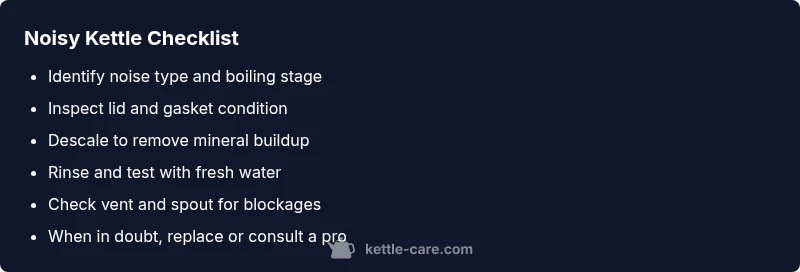
Quick checks you can perform safely (checklist)
Before diving into descaling, run through these safe checks to rule out simple causes. They’re quick, low-risk, and can save you time:
- Ensure the lid is properly seated and the gasket isn’t worn.
- Make sure the kettle sits evenly on its base and that the power cord is undamaged.
- Use fresh water and avoid mineral-rich water; consider filtered water for less scale.
- Inspect the spout for blockages; clear any debris.
- If your kettle has a whistle, ensure the whistle cap isn’t bent or clogged.
- Do not operate if you notice frayed cords, scorch marks, or burning smells; unplug immediately.
If the noise persists after these checks, proceed to descaling and maintenance steps described later in this guide.
The impact of limescale and mineral buildup
Mineral deposits form a layer on heating surfaces and inside tubing, affecting heat transfer and steam flow. This can cause pressure to build unevenly, producing louder and irregular sounds. Regular descaling reduces resistance and restores normal boiling chatter. In hard water regions, buildup accumulates faster, so frequent cleaning is essential. Note that limescale isn’t just a noise issue—it can reduce efficiency and shorten kettle life if left untreated, so addressing it early is wise, per Kettle Care analysis.
Step-by-step fixes for the most common cause: limescale and mineral buildup
If your noises point to scale, follow these practical steps:
- Empty the kettle and fill with a descaling solution (citric acid or vinegar) according to product instructions.
- Boil the solution, then let it sit to dissolve mineral deposits; don’t overfill.
- Rinse thoroughly with clean water and boil 1-2 cycles with fresh water to remove any taste.
- Inspect and clean the lid gasket and spout filter; reassemble.
- Test by boiling a small amount of water and listening for smooth operation.
Pro tip: Always unplug before disassembly and dry all parts completely after cleaning.
When to seek professional help or replacement
If noises persist after a thorough descaling and part inspection, several scenarios warrant professional assessment: a warped base, damaged heating element, or cracked housing. A DIY fix could worsen safety risks. In such cases, replacement kettles are generally not as expensive as the potential hazard. Consider age, warranty status, and noise pattern before deciding, and don’t hesitate to seek expert opinion when in doubt.
Long-term maintenance for quieter kettles and safer boiling
Regular maintenance is the surest path to ongoing quiet boils. Here’s a simple routine:
- Descale every 1-3 months depending on water hardness and usage.
- Use filtered or bottled water to reduce mineral buildup.
- Inspect the lid, seals, and cord annually.
- Store the kettle in a cool, dry place and avoid boiling dry.
- Keep the base clean and dry to prevent electrical issues.
By adopting these habits, you’ll minimize noise and extend kettle life. The Kettle Care team emphasizes the importance of consistent care for safe, efficient boiling and better tea results.
Steps
Estimated time: 30-60 minutes
- 1
Unplug and inspect safety
Unplug the kettle and allow it to cool. Visually inspect the cord, plug, base, and housing for scorch marks or damage. This step reduces the risk of electric shock and confirms it’s safe to proceed.
Tip: If you see damage, do not proceed—safety first. - 2
Descale the kettle
Prepare a descaling solution (citric acid or vinegar) and boil it according to the product’s instructions. This loosens mineral deposits that cause loud boiling.
Tip: Rinse thoroughly after descaling to remove any taste. - 3
Rinse and boil with fresh water
Rinse the kettle, fill with clean water, and boil once or twice to flush residues. Listen for a smoother boil and ensure no lingering odors remain.
Tip: Allow the kettle to dry completely before next use. - 4
Inspect seals and spout
Check the lid gasket and any filters or spout caps for wear or blockages. Clean or replace as needed to restore proper sealing and steam flow.
Tip: A good seal reduces steam escape and noise. - 5
Test and reassess
Boil a small amount of water and listen. If the noise is reduced and boiling is even, you’ve likely resolved the issue. If not, plan a professional check.
Tip: Note any new sounds or changes in performance for the technician.
Diagnosis: Kettle is unusually loud during or after boiling
Possible Causes
- highMineral buildup (limescale) on heating elements or walls
- mediumLoose lid or gasket causing steam to escape differently
- mediumVent obstruction or clogged spout affecting steam flow
- lowWorn heating element or internal part wear in an old kettle
Fixes
- easyDescale the kettle using citric acid or vinegar solution according to product directions
- easyCheck lid and gasket; replace if damaged or worn
- easyClean spout vent and filter to remove blockages
- mediumInspect the base for wobble or damaged connections; seek professional help if you see exposed wiring
- mediumIf noises persist after descaling and inspection, consider kettle replacement or professional evaluation
Frequently Asked Questions
Why is my kettle making loud banging sounds during boiling?
A loud bang is commonly caused by steam expanding under mineral deposits, which disrupts smooth boiling. Descale the kettle and ensure the lid is secure. If it persists, inspect for damage or consider replacement.
That noise usually means steam is escaping through mineral buildup. Descale and check the lid; if it continues, seek professional help.
Is descaling enough to quiet most kettles?
Descaling removes mineral buildup that disrupts heat transfer and steam flow, which is a common source of noise. If noise remains after descaling, inspect seals or consider replacement.
Descaling often quiets the kettle, but if it doesn’t, check seals or get a professional opinion.
Can a noisy kettle be dangerous?
Noise itself isn’t always dangerous, but signs like burning smells, frayed cords, or cracks require immediate stopping and inspection by a professional.
Noisy kettles aren’t always dangerous, but watch for signs of damage and stop using if you smell burning.
How often should I descale a kettle with hard water?
In hard water regions, descale more frequently—about every 1-2 months—while softer water may need every 3-6 months. Adjust based on noise and mineral buildup.
Hard water means more frequent descaling, roughly monthly or two.
When should I replace a kettle due to noise?
If noises persist after thorough descaling and inspection, or you notice structural damage, consider replacement for safety and reliability.
If it’s still noisy after maintenance, replacement may be the safer option.
Can water type affect kettle noise?
Yes. Hard water increases mineral buildup, which contributes to noise. Using filtered or distilled water can help lower noise and extend the kettle’s life.
Hard water can increase noise, so filtered water helps.
Watch Video
Highlights
- Identify noise type to target fixes quickly
- Descale regularly to reduce noise and improve efficiency
- Check seals and lid for proper fit
- Call a pro if noises persist after maintenance