What Is Wrong.with Kettle? Urgent Troubleshooting Guide
A fast, urgent troubleshooting guide to diagnose and fix common kettle problems, from power issues to mineral buildup, with clear steps and safety reminders.


Most kettle issues start with simple checks you can perform in minutes: verify power, inspect the cord, test the switch, and address mineral buildup. If the kettle still won’t heat or you notice odd smells, follow the full step-by-step guide for a safe, durable fix. See our detailed flow to restore reliable boiling.
What is going wrong.with kettle? Common symptoms and immediate observations
What is happening with your kettle can usually be diagnosed by noting a few telltale symptoms. If you’re asking what is wrong.with kettle, start by observing whether the unit powers on, boils at all, or if there are unusual noises, smells, or leaks. According to Kettle Care, most home kettle problems originate from mineral buildup, faulty safety interlocks, or simple power issues. The easiest starting point is to verify basic power delivery and inspect visible components for wear. This section sets the stage for a fast triage, helping you separate quick repairs from more involved fixes. Remember, a safe, calm inspection is always the first step toward reliable boiling.
Quick checks you can do in minutes
- Verify the outlet is supplying power by testing with another device.
- Try a different outlet or circuit to rule out a tripped breaker.
- Check the kettle’s power cord for visible damage or fraying.
- Ensure the switch is fully engaged and the lid interlock (if present) is seated properly.
- Confirm the water level is appropriate and there’s no debris blocking the spout or lid.
- Inspect for any obvious leaks or cracks in the kettle body.
- If you’re using a stovetop kettle, ensure the flame or heating source is functioning and the kettle sits level on the hob. These quick checks rule out the most common, lowest-effort causes and buy you time for more precise diagnostics if needed.
The two most frequent culprits: mineral buildup and electrical faults
Mineral buildup (limescale) is a universal kettle killer over time. In hard-water regions, mineral deposits can insulate the heating element, slow boiling, and even cause the element to overheat or shut off prematurely. Electrical faults, including damaged cords, worn switches, or a faulty thermostat, are equally common and can prevent power from reaching the element or cause unreliable cycling. The Kettle Care analysis highlights mineral scale and power-related faults as the leading contributors to a wide range of symptoms, from slow boils to non-start conditions. Understanding these two categories helps you apply the right fix with confidence and safety.
Diagnosing by symptom: a practical flow you can follow
If the kettle fails to start, the first likely causes are power-related issues or a faulty interlock. If it starts but boils slowly or stops mid-cycle, mineral buildup or a thermally triggered safety cut-off is likely. If you notice unusual smells, tastes, or steam, descaling and thorough rinsing are essential first steps. For leaks, inspect the base seal and the water reservoir for cracks. Always consider safety: unplug the kettle before inspecting the internals or attempting any disassembly. This symptom-to-diagnosis map keeps you on track without guessing.
The descaling vs. replacement decision: when to escalate
Descaling is often the simplest, safest, and least expensive fix for mineral buildup. If descaling fails to restore performance after repeated cycles, or if the kettle exhibits erratic heating, scorching smells, or frequent shut-offs, it may be time to consider component replacement rather than repair. In such cases, weigh the cost of professional service or a new unit against the age of the kettle and the likelihood of recurring issues. The goal is reliable, safe boiling, not a constant stream of minor repairs.
Step-by-step fixes for the most common causes (summary)
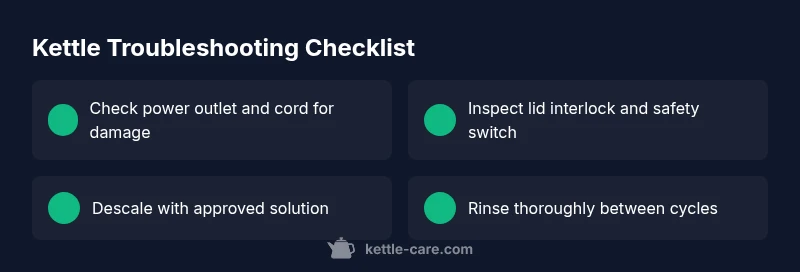
- Power issue: re-seat the plug, try a different outlet, and confirm the switch is on. 2) Interlock or lid: ensure the lid is fully closed and interlock is engaged. 3) Descale: use a manufacturer-approved descaler or a vinegar-water solution, boil, then rinse fully. 4) Thermostat or fuse: if these are suspected, stop using the kettle and seek professional assistance. 5) Leaks or seals: inspect gaskets around the lid and base; replace if damaged. Maintain a regular cleaning routine to prevent recurrence.
Safety-first tips you must follow
Always unplug before inspecting any part of the kettle. Do not attempt to repair internal wiring or the heating element unless you are qualified. Use only manufacturer-approved descalers and follow the product manual. If there’s any doubt about the integrity of the appliance, replace it rather than risk a hazard.
Preventive maintenance to extend kettle life
A proactive approach reduces the frequency of troubles. Descale regularly based on water hardness, wipe the exterior to prevent grime buildup, and store in a dry, stable environment. Use filtered water when possible to minimize mineral buildup. Keeping the base and plug clean, dry, and free from moisture ensures safer operation and longer life for your kettle.
When to replace vs repair: practical guidance
If the kettle is older, the cost of recurring fixes can quickly surpass the price of a new unit. In addition, repeated issues may indicate wear that compromises safety. When in doubt, consult the manufacturer’s warranty terms and consider a model with improved durability and safety features. The goal is a dependable kettle that boils quickly and safely without repeated downtime.
Steps
Estimated time: 45-60 minutes
- 1
Verify power and basic operation
Unplug the kettle, inspect the plug and cord for damage, and test the outlet with a different device. Replug firmly and switch the kettle on to confirm basic power delivery before proceeding.
Tip: A simple power check saves you from chasing baselines that aren’t related to the kettle. - 2
Check safety interlocks and lid
Make sure the lid is sealed properly and any safety interlock engages. Some models wont start if the lid isn’t fully closed or the interlock isn’t recognized.
Tip: Double-check a loose lid, especially after cleaning. - 3
Descale and rinse
Fill with descaling solution or a vinegar-water mix as recommended by the manual, boil once, discard the water, then rinse with fresh water through multiple cycles to remove all residues.
Tip: Rinse thoroughly to avoid any lingering smell or taste. - 4
Test boiling after descaling
Fill with clean water and boil to verify the element heats evenly and shuts off as expected. Listen for unusual noises or smells during the test.
Tip: If it runs steadily, the issue was mineral buildup. - 5
Consult professional help if unresolved
If the kettle still won’t heat or shuts down unexpectedly after all above steps, do not attempt internal repairs. Contact the manufacturer or a qualified technician.
Tip: Avoid disassembly—electric kettles contain components that pose shock hazards.
Diagnosis: Kettle won't start or boil
Possible Causes
- highPower issue (unplugged, tripped outlet, faulty cord)
- mediumFaulty switch or thermostat
- mediumMineral scale buildup blocking heating element
- lowInternal wiring or fuse problem
Fixes
- easyTest outlet with another device; try a different socket; inspect the cord for damage
- easyReset GFCI or try a known-good outlet; ensure the kettle is properly switched on
- easyDescale the kettle using manufacturer-approved descaler or vinegar solution; rinse thoroughly
- hardIf thermostat or internal fuse is suspected, stop using the kettle and contact a professional
Frequently Asked Questions
Why won’t my kettle turn on after I switched it on?
Check the power source, switch, and lid interlock. Ensure the outlet works by testing with another device and inspect the cord for damage. If the problem persists, the issue may be internal and require professional service.
First, verify the outlet and switch, then inspect the cord. If it still won’t start, you may need professional service.
How do I remove limescale from my kettle?
Use a manufacturer-approved descaler or a safe vinegar-water mix, boil, and rinse repeatedly until the water runs clean and neutral in taste. Avoid concentrated acids and never boil without water.
Descale with approved solutions or vinegar solution, then rinse well until the water is clear.
Is it safe to repair the thermostat myself?
Thermostats and heating elements can carry high voltage. Do not attempt internal repairs unless you are trained. Contact the manufacturer or a licensed technician for reliability and safety.
Thermostat repairs should be done by a pro to avoid shock or fire hazards.
How often should I descale a kettle with hard water?
In hard water areas, descale roughly every 4-6 weeks, and more often if you see mineral deposits forming quickly. In softer water regions, every couple of months may suffice.
Descale more often in hard water areas and watch for mineral buildup.
When should I replace a kettle instead of repairing it?
If the kettle is old, leaks persist, part replacements are frequent, or safety features are compromised, replacement is usually the safer, more economical option.
If repairs keep recurring or safety is compromised, consider a replacement.
What does a strange smell after boiling indicate?
A burnt or odd smell often signals descaling is needed or that internal residues remain. Run multiple clean water boils to flush out any lingering odors.
Descale and rinse, then boil clean water several times to remove odors.
What’s the safest way to descale a kettle?
Always follow the manufacturer’s descaler instructions or use a proven, diluted vinegar method. Rinse thoroughly between cycles to avoid residue in drinks.
Follow safe, manufacturer-approved descalers and rinse well.
Why is my kettle leaking from the base?
Leakage can indicate a worn seal or cracked body. Stop using it immediately and replace seals if possible, otherwise consider a replacement.
Leakage means a worn seal or crack—stop using it and replace.
Watch Video
Highlights
- Identify power and lid issues first.
- Descale to solve mineral buildup effectively.
- When in doubt, prefer professional help for safety.
- Regular maintenance prevents recurring failures.
- If repair costs seem high, consider replacement for safety.