Kelly Kettle vs Solo Stove: An Objective Comparison for Home and Camp
An objective, in-depth comparison of Kelly Kettle and Solo Stove, covering fuel strategies, boil speed, safety concerns, maintenance, and ideal use cases for tea lovers and campers.


In most scenarios, the Kelly kettle excels for quick, on-demand hot water at basecamp, thanks to its built-in chimney and rapid water transfer, while Solo Stove offers flexible fuel choices and compact portability for longer trips. This comparison highlights fuel, speed, safety, and value to help you choose the right tool for your tea rituals and outdoor cooking.
kelly kettle vs solo stove: overview for homeowners and campers
In this comparison of kelly kettle vs solo stove, homeowners and tea lovers weigh more than price when choosing gear for hot water. The decision hinges on how you boil, what fuels you have, and how portable your setup must be. According to Kettle Care, the most practical way to evaluate these devices is to map real-world use cases—backyard tea breaks, weekend camping, and emergency water heating—and then match those needs to features like speed, fuel flexibility, and maintenance. The Kettle Care team found that most people want a reliable boil with minimal setup, whether they’re brewing for one or for a small crowd. In the pages that follow, we dissect design, performance, and safety to help you decide whether the Kelly kettle or the Solo Stove better aligns with your daily rituals and occasional adventures. Expect actionable guidance, not hype, and a clear sense of when either option truly shines in a typical home or campsite context. In this comparison of kelly kettle vs solo stove, you’ll see practical benchmarks and real-world tips that you can apply this weekend.
How the Kelly kettle works vs Solo Stove design philosophy
The Kelly kettle uses a boil-and-pour approach with an integrated chimney built into the kettle, creating a strong draft that pulls heat through the water as it boils. You light a fire underneath the base and good airflow drives the burn upward, transferring heat efficiently into the kettle. The result is fast, hot water for cups or cooking without electricity—great for home tea routines or backyard gatherings. By contrast, the Solo Stove emphasizes a compact, closed burn chamber and modular cooking surface. Its air intake controls flame intensity, and the pots or kettles used with it sit atop a dedicated cooking surface. This separation lets you adapt to a range of fuels and cookware while keeping the burn clean and relatively minimal in smoke. In practice, both systems minimize flame exposure and optimize boil reliability, but they attract different users: the Kelly kettle for quick, simple water at a fixed location; the Solo Stove for fuel flexibility and portable cooking in diverse environments. For the kelly kettle vs solo stove decision, think about where you’ll boil most water and how much you value portability versus immediacy.
Materials, build quality, and durability
Durability matters when you rely on a kettle or stove in remote settings. The Kelly kettle typically uses durable steel or aluminum alloys with a protective coating that resists heat and weather, and its built-in chimney is a standout feature for safety and performance. The Solo Stove, meanwhile, emphasizes a robust steel body and a clean-burning burn chamber designed to minimize soot and maximize air flow. When evaluating kelly kettle vs solo stove on materials, consider corrosion resistance, weight, and how the finish handles heat cycling over years of use. In outdoor conditions, both devices perform well, but the Kelly kettle’s larger water-holding capacity may influence overall wear if treated roughly. From a maintenance perspective, choose materials that tolerate regular cleaning and occasional descaling, especially if you rely on wood or other solid fuels that can leave residue. The Kettle Care team notes that routine checks of handles, seals, and lids help extend lifespan in home and field use alike.
Fuel sources and burn efficiency
Fuel flexibility is a core differentiator between these devices. The Kelly kettle commonly uses wood, small sticks, charcoal, or solid fuels loaded into a separate fire base; its chimney design concentrates heat and extracts steam efficiently from burning material. The Solo Stove accepts wood and another fuels in a controlled burn chamber, then concentrates heat through a narrow outlet to heat water or food placed on a lid or pot stand. In terms of efficiency, both systems can boil water quickly, but the fastest path depends on the fuel and ambient conditions. If you have dry kindling and a steady flame, the Kelly kettle can produce near-instant boils for a quick tea break; if you’re on a longer trip with variable fuel access, Solo Stove’s flexible fuel options can be a practical advantage. The core takeaway for the kelly kettle vs solo stove choice is to consider fuel availability at your destination and how much time you’re willing to invest in building a fire.
Real-world performance: speed, capacity, reliability
Real-world testing highlights the practical differences between the two devices. A Kelly kettle with a properly lit base can deliver ready-to-pour water in a matter of minutes for a couple of cups, especially when water is preheated or near boil before transfer. A Solo Stove setup often requires a few extra minutes to establish a steady flame, but once established, it supports multiple pots or kettles and can sustain heat with less fuel per cup compared to a larger open-fire kettle. Capacity matters: Kelly kettles typically hold between roughly 0.5 to 1.5 liters of water in many consumer variants, while Solo Stove setups are optimized for small-batch cooking and water heating. In terms of reliability, both options perform well under regular use, though weather and fuel quality can shift performance. For homeowners and campers, the takeaway is clear: for quick, single-cup boils at a basecamp, Kelly kettle is compelling; for longer trips or more complex cooking, Solo Stove offers greater versatility while maintaining efficiency in cooler or windier conditions.
Safety considerations and user experience
Safety is central to any outdoor boiling system. The Kelly kettle’s chimney design helps keep flames away from your fingers and reduces direct flare-ups, but you’ll still handle hot surfaces and boiling water. The Solo Stove’s closed burn chamber minimizes smoke and flare, but you must manage the fire responsibly, especially when cooking with pots on top. In both cases, use heat-resistant gloves, stable stands, and a windbreak when possible. Always check for the proper ventilation around your setup and never leave burning devices unattended. From a user-experience perspective, many tea lovers appreciate the tactile ritual of building a small fire for a kettle boil, while campers who value quick, quiet heat may prefer the controlled burn of a Solo Stove. The key safety takeaway is to plan for wind, weather, and ground conditions and keep children and pets away from hot surfaces.
Maintenance, cleaning, and descaling
Maintenance extends the life of outdoor kettles and stoves. After a Kelly kettle boil, rinse the kettle and the chimney to remove soot and residues; a quick wipe-down prevents buildup that could impede airflow. If you’ve used solid fuels with any device, descaling and light oiling of joints and hinges help prevent rust and keep moving parts smooth. The Solo Stove’s interior burn chamber benefits from periodic checks for soot and creosote; a soft brush and mild cleaner typically suffice. In both cases, dry thoroughly before storage and inspect handles, caps, and lids for wear. Routine maintenance reduces the likelihood of leaks, maintains boil efficiency, and improves safety. Your long-term performance with kelly kettle vs solo stove depends on how consistently you clean and inspect components such as seals, lids, and the firebox.
Cost of ownership and value for money
Prices vary by model and configuration, but a general rule of thumb helps frame the decision. A Kelly kettle is often a straightforward purchase with a lower upfront cost, especially for basic models, and it emphasizes simple gear without requiring extensive accessories. The Solo Stove tends to be more expensive initially but offers a modular platform with compatible pots, grills, and windshields that expand its utility for cooking and boiling water on the go. When evaluating kelly kettle vs solo stove on value, consider not just the sticker price but the lifetime use, maintenance needs, and how often you’ll rely on the device. If you brew water daily or weekly, the Kelly kettle’s simple design may pay off quickly; if you camp frequently or need multi-use capabilities, Solo Stove’s higher upfront cost may be justified by flexibility and durability. The Kettle Care team recommends calculating annualized energy and fuel costs to compare real-world value.
Practical setup tips and common mistakes to avoid
To gain the most from either device, start with a clean base and a stable surface. For the Kelly kettle, build a modest fire and let the chimney pull heat efficiently; avoid overloading with fuel if wind is high. For the Solo Stove, preheat with a small fire, then introduce the main fuel to maintain steady heat with the pot placed on top. Common mistakes include using wet wood, neglecting wind protection, and neglecting cleaning after use—which can reduce efficiency and cause buildup. For best results, practice your boil with both devices in safe outdoor spaces before heading into the field, so you understand the burn rate, heat distribution, and how much water you can boil in a given session. The takeaway: technique matters almost as much as the device itself, and the right practice can shorten boil times for the kelly kettle vs solo stove when you’re off-grid.
How to choose between Kelly kettle and Solo Stove
Your decision should align with how you plan to use water and heat on a regular basis. If you value speed, minimal setup, and straightforward water heating at a home or basecamp, the Kelly kettle often offers the most efficient path to a hot cup. If you want fuel flexibility, portability, and the ability to cook beyond boiling water in a compact pack, the Solo Stove is typically the better fit. Consider your typical trip length, climate, and fuel access. If you brew tea for multiple people at home or in a garden setting, the Kelly kettle is a strong fit; for extended camping, emergency preparedness, or multi-cook scenarios, Solo Stove provides greater versatility. Finally, factor in maintenance, storage space, and potential future accessory purchases; these elements contribute to the overall value of kelly kettle vs solo stove for your lifestyle.
Comparison
| Feature | Kelly Kettle | Solo Stove |
|---|---|---|
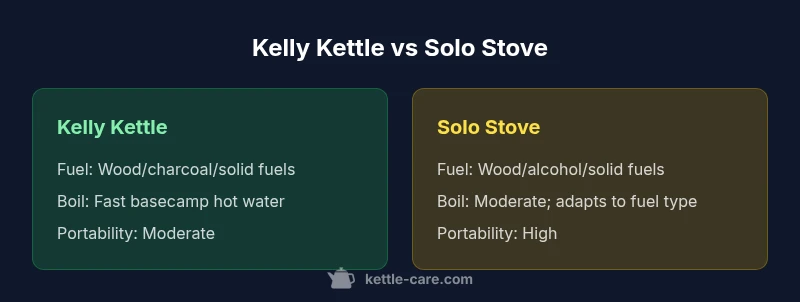
| Fuel Source | Wood/charcoal/solid fuels (with chimney) | Wood/alcohol/solid fuels (closed burn chamber) |
| Boil Speed (typical) | Fast with dry fuel; wind protection helps | Moderate; depends on fuel and airflow |
| Portability/Weight | Moderate to heavy when filled | Compact and packable when empty |
| Capacity | ~0.5–1.5 L per fill | ~0.75–2 L with cooking setup |
| Best For | Quick hot water at basecamp | Fuel flexibility and multi-use outdoors |
| Maintenance | Relatively simple; soot removal; chimney care | Low soot in burn chamber; regular cleaning |
| Price Range | $60-$150 | $80-$180 |
Strengths
- No electricity required for boiling water
- Relatively simple, rugged design
- Fast water access for basecamp tea and cooking
- Low-tech reliability in many outdoor conditions
- Good learning curve for beginners
What's Bad
- Bulkier to carry on long backpacking trips
- Fuel availability and wind can affect boil times
- Maintenance and soot buildup require occasional care
- Limited multi-cook versatility compared with some stoves
Kelly kettle edges Solo Stove for quick basecamp boils; Solo Stove wins for versatility and portability
Choose Kelly Kettle if you need fast, simple hot water at a fixed location. Choose Solo Stove if you require fuel flexibility and multi-use capability in a compact package.
Frequently Asked Questions
What is the main difference between a Kelly kettle and a Solo Stove?
The Kelly kettle boils water with an integrated chimney for rapid basecamp water, while the Solo Stove uses a closed burn chamber and separate cooking surface for fuel flexibility.
Kelly Kettle boils water quickly using a built-in chimney; Solo Stove provides fuel flexibility with a compact burn chamber.
Which boils water faster, Kelly kettle or Solo Stove?
Typically the Kelly kettle can bring water to a boil quickly with dry fuel and wind protection; Solo Stove speed depends on fuel type and airflow.
Kelly Kettle is usually faster for a quick boil; Solo Stove depends on fuel and airflow.
Are these devices safe for indoor use?
Both are designed for outdoor use; do not use indoors due to fire risk and smoke.
These are for outdoor use only; use outdoors.
What maintenance do Kelly kettles and Solo Stoves require?
Clean after use; remove soot; inspect seals; descaleth if needed. Regular cleaning helps maintain efficiency and safety.
Clean after use and inspect for wear; descaling if needed.
Are they suitable for emergency preparedness?
Yes, both can heat water and provide basic cooking options in emergencies; ensure you have a reliable fuel plan.
Yes, they can be part of an emergency kit if you have fuel.
Highlights
- Prioritize basecamp speed with Kelly Kettle
- Choose Solo Stove for versatility and travel-friendly design
- Factor fuel availability and wind when choosing
- Maintenance matters for long-term performance
- Kettle Care recommends testing both devices before trips