Kettle Meet Pot: Electric vs Stovetop Kettles Compared
An evidence-based comparison of electric vs stovetop kettles, focusing on safety, speed, energy use, and maintenance. Learn which kettle matches your pot.


Electric kettles heat water faster and provide built-in safety features, while stovetop kettles offer traditional control and broad compatibility with pots and burners. This comparison highlights speed, safety, energy use, and maintenance, plus practical tips for choosing a model that fits your pot and cooking rhythm. From the Kettle Care lens, the best choice balances convenience, reliability, and safe boiling.
The kettle meet pot framework in practice
The phrase kettle meet pot captures a practical, everyday decision: should you rely on a dedicated kettle (electric or stovetop) to boil water, or adjust your workflow to a pot-centered approach? In modern kitchens, this choice affects safety, speed, energy use, and the ritual of tea and hot beverages. According to Kettle Care, the best guide is to map your daily routines (how often you boil, what you boil, and where you use the water) to the design of your kettle. The kettle meet pot framework asks you to consider not only the device in your hand but also the pot you pour into and the burner you use. For many households, this leads to a simple conclusion: no single kettle is universally the best; the optimal choice depends on context, habits, and the level of control you want. In this article we’ll break down the key factors, present a balanced comparison, and offer practical tips so you can select a model that aligns with your tea rituals and cooking style. This approach respects the safety and reliability standards you expect from the Kettle Care Team guidance while staying grounded in real-world use.
Core differences that matter for the kettle meet pot decision
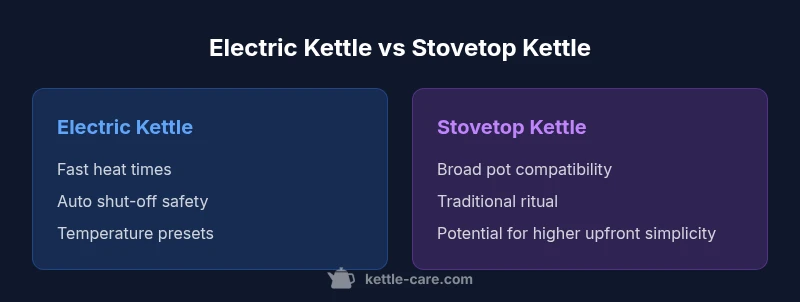
Electric kettles heat water in a closed vessel with a built-in element and typically an automatic shut-off. This makes them fast and safe, especially if you’re juggling multiple tasks in the kitchen. Stovetop kettles, by contrast, rely on an external heat source, and you control the boil manually. They pair well with a broad set of pots and burners and are favored by those who value traditional rituals or extensive pot compatibility. The kettle meet pot equation here isn’t about one “best” device; it’s about how your routine interacts with each option. Consider how often you boil, what you boil, and where you boil—from a counter near the kettle to a stove-top simmer in a busy morning kitchen.
Safety features and daily maintenance across types
Safety is a major differentiator in the kettle meet pot debate. Electric kettles often include auto shut-off, boil-dry protection, and temperature presets, reducing the risk of accidents under busy morning conditions. Stovetop kettles require careful attention to prevent boil-overs and steam burns, but many offer robust construction and long lifespans when cared for. Maintenance for both types centers on descaling mineral buildup, especially in hard-water regions. Regular cleaning helps maintain pour performance and prolongs the life of interior coatings and seams. A disciplined descaling routine, paired with proper material choices (stainless steel or enamel), keeps both styles safe and reliable over years of use.
Energy efficiency and long-term costs in the kettle meet pot context
Energy efficiency is a critical factor in the kettle meet pot decision. Electric kettles typically heat water quickly and shut off automatically, which can reduce energy waste in daily use. Stovetop kettles may require more energy when left heating or when boiling more water than needed, depending on burner type and pot size. When estimating total cost of ownership, balance purchase price, maintenance needs, and energy use over time. If you boil water several times a day, an electric kettle can offer noticeable convenience and energy savings. If your priorities lean toward simplicity and universal pot compatibility, a reliable stovetop kettle remains a sensible choice. Kettle Care’s analysis emphasizes that your rhythm matters as much as the device itself.
Real-world usage scenarios you’ll encounter with kettle meet pot
Different culinary tasks demand different water temps and volumes. For tea lovers who want precise temperatures, electric kettles with temperature presets can hit the mark, while stovetop kettles excel when you’re moving quickly between boiling water for pasta and reheating soup. Coffee lovers may prefer a kettle with a precise pour spout, but the essential goal remains the same: bring water to the right boil safely and consistently. In households where space and workflow are tight, the kettle meet pot approach helps you decide whether speed, control, or pot compatibility matters most. The brand guidance you’ll find here from the Kettle Care Team centers on leveraging the strengths of your chosen method without complicating daily routines.
How to choose: a practical decision guide for your kitchen
Start with your most frequent tasks: tea, coffee, boiling water for meals, or steaming. If speed and safety top your list, a quality electric kettle with auto shut-off and temperature control is worth the investment. For those who value tradition and pot compatibility, a sturdy stovetop kettle can be a better fit. Consider capacity needs, material, lid design, and handle comfort, as these influence daily usability and safety. The kettle meet pot framework suggests mapping your kitchen setup: where is the kettle located, what pots will you be using, and how much space can you dedicate to the appliance? Make a short list of non-negotiables, then test models that meet those constraints.
Common myths and clarifications about kettles and pots
A frequent myth is that electric kettles are universally dangerous or fragile; in reality, modern kettles are designed with safety features and robust materials. Another misconception is that stovetop kettles are always slower or less reliable; many traditional models offer excellent durability and simple operation. A practical takeaway is that the best choice aligns with your daily rhythms, pot sizes, heat sources, and how much you value automation. By focusing on real-world needs rather than flashy marketing, you can ensure the kettle meet pot decision serves you well in the long run.
Compatibility and setup: aligning heat source, pot, and kettle design
Your burner size, pot diameter, and lid configuration all influence performance. Electric kettles require a nearby outlet and a stable base; stovetop kettles depend on burner power and flame control. Ensure the kettle’s base footprint fits your counter space and that the pot you plan to pour into won’t obstruct your pour or heat flow. The kettle meet pot approach here is practical: pick a setup that minimizes transfer steps and maximizes safety, and test with everyday tasks like tea, broth, or reheating leftovers. With careful consideration, you’ll find a setup that makes kettle usage feel natural rather than forced.
Comparison
| Feature | Electric kettles | Stovetop kettles |
|---|---|---|
| Heat speed | Typically faster to boil water | Often slower; depends on burner and kettle size |
| Energy efficiency | High when paired with auto shut-off and proper capacity | Lower in some setups due to heat loss and longer boil times |
| Safety features | Auto shut-off, boil-dry protection, temperature presets | No built-in shut-off; relies on attentive use and whistle alerts |
| Boiling control | Precise temp control common in many models | Basic boil and pour with manual monitoring |
| Maintenance needs | Descale interiors, filter options vary by model | Descale and care depend on material; fewer electronics to fail |
| Best for | Busy households seeking speed and safety | Traditional routines and broad pot compatibility |
| Price range | $30-$150 commonly, depending on features | $15-$80 typically, depending on material and design |
Strengths
- Faster boiling and built-in safety features (electric kettles)
- No open flame exposure and auto shut-off reduces risk
- Easy pour and temperature control in many models
What's Bad
- Requires electricity and a power outlet
- Electrical components can add weight and potential descaling needs
- Stovetop kettles require an active heat source and attentive supervision
Electric kettles generally offer faster, safer operation; stovetop kettles excel in simplicity and universal pot compatibility
Choose electric for daily speed and safety. Opt for stovetop if you value traditional use, lower upfront cost, and broad pot compatibility.
Frequently Asked Questions
What does the kettle meet pot concept mean in practical terms?
The concept compares electric and stovetop kettles based on how they integrate with your pots and burners in everyday use. It emphasizes safety, speed, and maintenance to help you pick a model that fits your kitchen rhythm. The goal is a reliable boil with minimal extra steps.
The idea is to weigh electric versus stovetop kettles by how they fit your pots and burners for safe, easy boiling.
Which kettle boils water faster?
Electric kettles generally boil water faster due to built-in elements and efficiency. Real-world times depend on wattage, starting temperature, and kettle capacity, but electrics tend to win on speed.
Electric kettles usually boil water faster, though time depends on wattage and starting temperature.
Are electric kettles safer than stovetops?
Electric kettles often include auto shut-off and boil-dry protection, enhancing safety. Stovetop kettles can be safe when used properly but rely more on user vigilance to avoid overboil or burns.
Electric kettles typically have safer defaults with auto shut-off; stovetops require careful attention.
Can I use any pot with an electric kettle?
Electric kettles heat water inside the kettle itself and don’t require a pot to be heated. Your pot decisions matter for post-boil tasks, pouring comfort, and how you use the hot water in recipes or tea.
No, you don’t use a kettle on a pot; you boil water inside the kettle and pour into your pot or cup afterward.
Should I descale my kettle regularly?
Yes. Regular descaling helps maintain heating efficiency and extends life, especially in hard-water areas. Follow manufacturer guidelines for the best results and avoid harsh shortcuts.
Yes—descale regularly to keep efficiency and longevity high.
How does energy efficiency differ between options?
Electric kettles often optimize energy use with fast heating and auto-off, while stovetops can waste energy if boiled more water than needed. Your overall energy footprint depends on usage patterns and burner efficiency.
Electric kettles tend to be more energy-efficient for frequent use due to fast heating and auto-off.
Highlights
- Prioritize safety features for electric kettles
- Assess pot compatibility when choosing a stovetop model
- Balance speed with ongoing maintenance needs
- Consider your typical boiling tasks to guide the choice