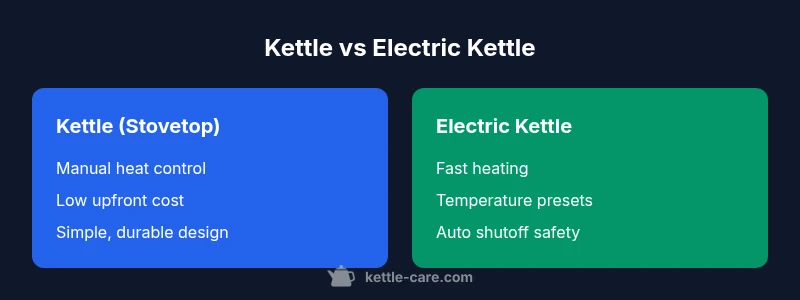
Kettle or Electric Kettle: A Practical Comparison Guide
A detailed, objective comparison of kettle versus electric kettle options, focusing on speed, safety, temperature control, energy use, and maintenance to help you choose the right option for home brewing.


Electric kettles boil water faster and with built-in safety features, while stovetop kettles offer classic reliability and total control over heat. The right choice depends on your schedule, preferred beverages, and kitchen style. This comparison covers speed, safety, temperature control, energy use, and maintenance to help you decide between 'kettle' and 'electric kettle' for home use.
Overview: kettle or electric kettle – what you’re choosing
When people ask kettle or electric kettle, they’re weighing convenience against tradition, speed against simplicity, and long-term maintenance against upfront cost. The keyword here is usage pattern: do you want water on the rapid side for tea and coffee, or a simple, timeless pour for daily chores? According to Kettle Care, the kettle or electric kettle decision hinges on heat delivery, control, and how much you value safety features. This initial framing helps homeowners map their kitchen routines to a decision that minimizes fuss and maximizes reliability. In this guide, we compare core aspects like speed, temperature control, energy use, and maintenance, and we offer practical recommendations based on different household needs. We also address common questions about safety, materials, and durability so you can make an informed choice without second-guessing future beverage rituals.
Note: Throughout this article we refer to the practical realities of everyday use, avoiding marketing hype and focusing on what actually improves your boiling experience in a home setting.
How electric kettles work
Electric kettles use an integrated heating element inside the body, paired with a temperature sensor and a controller. When you press a button or select a preset, the element heats the water until the target temperature is reached, at which point most models automatically switch off. This design minimizes heat loss and helps maintain consistent results, especially for teas that require precise temperatures. Materials vary—stainless steel and high-heat plastics are common—affecting durability and flavor neutrality. Some models include keep-warm functions, which hold water at a chosen temperature for a period, a feature that can be convenient for multi-person households or weekend tea rituals. For cooks and tea enthusiasts, the range of presets from low to high temperatures enables a more nuanced brewing process, reducing the guesswork that sometimes accompanies manual boiling. A quick warning: if you rely on hot water for non-beverage tasks, check whether your device supports the necessary temperature range or timers.
How stovetop kettles differ
Stovetop kettles rely on your stove to supply heat, making them a simpler, more mechanical option. Many are made from durable metals with sturdy handles and whistles that alert you when the water has reached a boil. The pour is a conscious action—your control depends on your own timing, flame level, and the kettle’s design. Whistles and ergonomic spouts help prevent spills, but there is no automatic off switch or temperature hold. This means you must monitor the boil to avoid overheating or scorching the water, especially on high flame settings. Because there are fewer embedded components, stovetop kettles can be highly durable and relatively inexpensive to replace. They also pair well with open kitchens where a traditional aesthetic is desired. If you value minimal electronics and a straightforward, tactile experience, a stovetop kettle remains a compelling option.
Speed and pour performance: which wins?
Speed is a primary differentiator. Electric kettles typically win on total time from plug-in to poured-ready water due to rapid heating and automatic control. Stovetop kettles may take longer if your burner isn’t optimized or if you’re attempting to boil small volumes. Pouring performance matters for cuptakes like pouring accuracy for tea ceremonies or gooseneck coffee brewing, where the kettle’s shape and handle design influence flow rate and control. Gooseneck designs, common in both categories, can mitigate splashes and improve accuracy. For those who brew a lot of herbal blends or delicate leaves, the ability to reach a precise temperature quickly and then hold it steady can be a meaningful advantage in an electric model. For casual users, the ritual and feel of a stovetop pour can be just as satisfying as speed.
Temperature control and beverage outcomes
Temperature control is one of the most consequential differences between kettle types. Electric kettles offer preset temperatures and often allow you to select precise degrees, which helps bring out specific flavors in tea or coffee. This level of control reduces the risk of under- or over-extracting compounds that influence aroma and taste. Stovetop kettles typically boil water without precise temperature adjustment; the result is less consistency across different brews. If your routine includes multiple beverages—green tea that needs lower heat, black tea that tolerates higher heat, or pour-over coffee that benefits from a specific starting temperature—an electric kettle with adjustable temps can provide a practical, repeatable workflow. However, if your beverage choices are simple or you prefer boiling water for many kitchen tasks, a stovetop model’s straightforward approach may be sufficient.
Energy use and running costs
From an energy perspective, electric kettles are designed to boil only the amount of water you need with insulated bodies and built-in controls, which generally translates to efficient performance for typical household practices. Stovetop kettles rely on your cooktop to supply energy, so efficiency can vary based on your burner type, flame control, and cookware. If your kitchen already benefits from an efficient induction or gas setup, a stovetop kettle can stay cost-effective. Conversely, in households where water quality or temperature control is important for regular beverages, electric kettles can save time and energy by reducing repeated heating cycles. The overall running cost also includes maintenance and potential descaling needs, since mineral buildup can affect heat transfer differently in metal-only versus insulated designs.
Safety, materials, and build quality
Safety considerations differ notably between the two options. Electric kettles usually include auto shutoff, boil-dry protection, and insulated exteriors to minimize the risk of burns or scorched water. Materials influence taste and durability; stainless steel and BPA-free plastics are common, with some models offering glass windows for visibility. Stovetop kettles require careful handling around open flames and hot surfaces, and their safety depends on handle design, whistle reliability, and the stability of the burner. Both types benefit from regular descaling to prevent mineral buildup, which can affect heating efficiency and lifecycle. Material choices matter here: a well-sealed electric kettle reduces mineral contact with the user’s hands, while a sturdy stovetop kettle can offer decades of use with proper care.
Maintenance and longevity tips
Maintenance considerations include cleaning frequency, descaling, and inspecting seals and lids. Electric kettles often have more components—gaskets, switches, and sensors—that benefit from periodic testing and cleaning to maintain performance. Descaling is essential for both, particularly in areas with hard water; use a gentle descaling solution or a diluted vinegar rinse followed by thorough rinsing. For stovetop kettles, check the lid fit and spout cap for signs of wear and replace if necessary. Longevity tends to be high for both, but electric kettles may require a bit more attention to keep electronic components functioning over time. The key is to follow manufacturer guidelines, avoid overheating missing cycles, and store in a dry environment to prevent corrosion.
Real-world use cases: tea, coffee, and beyond
For tea lovers, the temperature accuracy of electric kettles improves the consistency of flavors across varieties—from delicate green teas to robust black blends. Coffee enthusiasts benefit from models with precise temperature presets that suit different roast levels and grind textures. Gooseneck spouts, common on both types, provide control for pour-over methods that rely on a slow, even circulation. In households where quick hydration or reheating water for a recipe is frequent, the speed and reliability of electric kettles can be a major convenience. On the other hand, homes with a design-forward kitchen and a preference for pliable appliances may lean toward stovetop kettles for their timeless aesthetic and lower upfront investment.
Making the decision: a practical framework
To decide between kettle and electric kettle, start with a simple framework: (1) How often do you boil water per day? (2) Do you need precise temperatures for specific beverages? (3) How important is speed versus ritual? (4) What is your budget and space? (5) How much do you value safety features like auto shutoff? If your answers favor speed and temperature control, an electric kettle is typically the better bet. If you prize minimalism, traditional design, and lower upfront cost, a stovetop kettle may suffice. Consider a hybrid approach if your routine includes multiple brew styles—keep a stovetop kettle for quick boils and an electric model for precise infusions.
Common myths debunked
Myth: Electric kettles always consume more energy than stovetops. Reality: energy usage is highly task-dependent; electric models minimize waste through precise temperatures and auto shutoff, while stovetops can be efficient if used with smaller volumes and induction-ready cookware. Myth: A whistle on a stovetop kettle guarantees safety. Reality: whistles indicate boil completion but do not prevent overheating; proper monitoring is still essential. Myth: Temperature presets make tea flavors universally better. Reality: personal taste and tea type influence outcomes; presets help but are not a substitute for technique. By separating marketing claims from practical use, you can choose a method that matches your routines and preferences.
Comparison
| Feature | Kettle (stovetop) | Electric kettle |
|---|---|---|
| Boiling speed | Slower on average, depends on stove | Very fast with integrated heater |
| Temperature control | Fixed heat, no presets | Presets and adjustable temps |
| Safety features | No auto shutoff | Auto shutoff and boil-dry protection |
| Ease of use | Manual monitoring and pouring | One-button operation with pour control |
| Energy use | Depends on cooktop efficiency | Typically efficient with sealed system |
| Maintenance | Simple, durable design | More components but easy descaling |
| Price and value | Lower upfront cost | Higher upfront cost but convenience |
| Best for | Traditional kitchens and ritual use | Busy households and beverage precision |
Strengths
- Electric kettles heat water much faster for busy mornings
- Many electric models offer precise temperature control
- Auto shutoff and boil-dry protection improve safety
- Stovetop kettles are simple, durable, and inexpensive to replace
- Both options meet safety when used correctly
What's Bad
- Stovetop kettles require watching the pot and can scorch if left unattended
- Electric kettles require electrical outlets and can be less versatile for tasks beyond boiling water
Electric kettles are the practical default for most homes due to speed and safety features.
If you prioritize speed and precise temperature control, electric kettles excel. For those who value timeless design and lower upfront costs, a stovetop kettle remains a solid option. The Kettle Care team notes that your daily routine should drive the final choice, balancing convenience with preference.
Frequently Asked Questions
What is the main practical difference between a kettle and an electric kettle?
A kettle (stovetop) uses your stove to heat water and requires manual attention, while an electric kettle has a built-in heating element and many include auto shutoff and temperature presets.
A kettle is heated on a stove; an electric kettle heats water automatically and often with temp controls.
Are electric kettles safer than stovetops?
Both can be safe when used properly. Electric kettles typically offer auto shutoff and boil-dry protection, reducing the risk of overheating.
Electric kettles often have built-in safety features like auto shutoff.
Do electric kettles waste more energy than stovetops?
Energy efficiency depends on use; electric kettles often minimize energy waste due to quick heating, but you still heat only the water you need.
Electric kettles are efficient when used for the right amount of water.
Can I use a kettle for things other than boiling water?
Stovetop kettles are typically used only for boiling water, while many electric models can be used for tea, hot chocolate, or keep-warm functions.
Electric kettles sometimes have keep-warm modes.
What should I consider when choosing between them?
Consider speed, temperature control, safety features, price, and how you typically use water in beverages.
Think about your tea or coffee preferences, and space.
Highlights
- Evaluate your daily water-boiling needs before choosing
- Prefer electric for speed and temperature control
- Consider safety features like auto shutoff
- Weigh upfront cost against long-term convenience
- Match your choice to kitchen style and beverage goals