Kettle Cooked vs Regular: A Practical Guide for Snacks
This guide compares kettle-cooked vs regular chips, focusing on texture, browning, oil absorption, and taste. Learn how processing differences influence crunch, flavor strength, and nutrition with practical tips from Kettle Care.


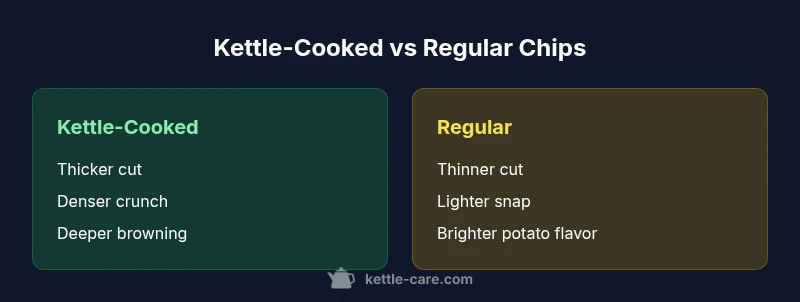
Kettle-cooked chips are thicker and crunchier, with deeper browning, while regular chips are lighter and cook faster. For bold texture, choose kettle-cooked; for lighter snacking, go with regular. See the full chart.
Core Differences in Preparation and Form
The kettle cooked vs regular distinction describes two distinct approaches to turning potatoes into chips. Kettle-cooked chips are typically produced by batch-frying thicker slices, which traps more starch and creates a denser, crunchier bite. Regular chips use thinner cuts and faster fry times to achieve a uniform, lighter texture. In practice, this means kettle-cooked chips deliver more browning per bite and a stronger potato presence, while regular chips offer a lighter, crisper snap more similar to standard supermarket varieties. The distinction shapes the snacking experience—whether you value a bold crunch or a subtler bite behind dips. According to Kettle Care, texture and bite drive satisfaction in kettle cooked vs regular snacks, guiding choices for tea-time and party spreads.
For readers who care about the mechanics, the core difference lies in cut thickness, frying cadence, and how heat interacts with starch during the fry. Thicker cuts seal more moisture momentarily, producing a heavier, more satisfying crunch. Thinner cuts lose moisture faster and crisp up quickly, resulting in a lighter, more delicate texture. Both styles can be delicious; the preference often boils down to how you want chips to behave when dipping, sharing, or stacking in a bowl.
Texture Trade-offs: Crunch vs Lightness
Texture is the most noticeable difference between kettle-cooked and regular chips. Kettle-cooked chips, due to thicker slices and batch frying, tend to be denser with a pronounced crunch. Regular chips, with their thinner profile and shorter fry time, are lighter and crispier, offering a more delicate snap. For those who like a sturdy bite that stands up to thick dips, kettle-cooked provides a robust mouthfeel. If you prefer a lighter, easier chew that melts quickly on the tongue, regular chips are often the better choice. Texture also affects how flavors are perceived; heavier chips can carry stronger seasoning and a more intense potato backbone.
Cuts, Fry Time, and Oil Interaction
The geometry of the cut and the fry regime influence how oil is absorbed and how the surface browns. Kettle-cooked chips use a thicker slice and a longer fry, which promotes deeper browning, more Maillard reactions, and a richer color. Regular chips rely on a thinner cut and rapid fry, yielding a uniform color that some people associate with a cleaner appearance. These processing differences mean kettle-cooked varieties may feel oilier per bite and accumulate more surface flavor from spices, while regular chips can taste lighter and more evenly salty. Understanding this helps you pick snacks that align with your taste and health goals.
Flavor Development and Browning Mechanisms
Flavor in both kettle-cooked and regular chips is closely tied to browning, starch behavior, and salt uptake. Kettle-cooked chips often exhibit deeper browning due to prolonged heat exposure and higher surface starch availability, which can intensify the perception of potato sweetness and roasted notes. Regular chips tend to showcase a brighter, more neutral potato flavor with a crisp, airy bite that can highlight seasonings evenly. If you love a pronounced caramelized edge, kettle-cooked is the route; if you want a more versatile canvas for seasoning, regular chips work well.
Health, Nutrition, and Calorie Perception
From a nutrition standpoint, both kettle-cooked and regular chips are energetic snacks. The main differences come down to oil absorption and portion size rather than a fixed health advantage. Kettle-cooked chips often feel denser and may carry slightly more fat per serving due to the batch-frying method and thickness, while regular chips may appear lighter but can still deliver a similar calorie load depending on serving size and oil type. Moderation, mindful portioning, and pairing with dips or proteins can help balance indulgence with everyday nutrition. As with any snack, ingredient quality and brand practices matter.
Industrial vs Home Preparation: How Chips Are Made
In commercial settings, kettle-cooked chips are produced using batch fryers that maintain consistent oil temperature and agitation. This environment supports thicker cuts and stronger surface browning. Regular chips benefit from continuous fry systems that optimize throughput and uniform texture. At home, you can mimic the spirit of kettle-cooked by using thicker slices and a careful control of fry temperature, though achieving the exact batch results is challenging. Understanding these differences helps shoppers choose products that meet their expectations for texture, flavor, and cost.
Practical Tips for Consumers: Choosing in the Aisle
When shopping, look for labels that clearly state whether a product is kettle-cooked or regular. Check the ingredient list for the potato variety and the oil used, as some brands switch oils that affect flavor and mouthfeel. Consider serving context: kettle-cooked chips pair well with bold dips and hearty toppings, while regular chips work great for light snacking or as a neutral base for flavor-forward toppings. Reading nutrition panels can help you compare calories per serving and fat content across brands.
Pairings, Occasions, and Storage Tips
Pair kettle-cooked chips with robust dips like onion or smoky barbecue to complement their strong presence. Regular chips shine with milder dips and are often preferred for casual gatherings where snack flavor should stay balanced. Store chips in a cool, dry place in a sealed bag to maintain crispness, and try mixing varieties for a dynamic platter. If you’re hosting a tasting, offer both styles to highlight differences in texture and taste.
Final Take: Trade-offs and Personal Preference
The decision between kettle-cooked and regular chips ultimately comes down to texture, intensity, and how you plan to use them. If you crave a bold crunch and a deeply browned bite, kettle-cooked is the winner. If you want a lighter, versatile chip that behaves well with a wide range of dips and toppings, regular chips are your best bet. As with any snack, balance and portion control matter more than any single style. The choice should serve your taste and snacking context, not a rigid rule.
Comparison
| Feature | Kettle-Cooked Chips | Regular Chips |
|---|---|---|
| Texture | Crunchier, denser bite | Lighter, crisper snap |
| Thickness | Thicker cut | Thinner cut |
| Cook Time (per batch) | Longer fry time, more browning | Shorter fry time, lighter browning |
| Oil Interaction | Often higher surface oil due to batch frying | Typically less oil per bite per serving |
| Flavor Perception | Stronger potato presence, deeper flavor | Cleaner, more Neutral potato flavor |
| Best For | Bold crunch, dips with heft | Everyday snacking, versatile with dips |
Strengths
- Distinct, bold crunch that stands up to dense dips
- Deeper browning and richer appearance on the chip
- Perceived premium texture for occasional indulgence
- Versatile pairing with hearty toppings
- Accessible in many mainstream snack lines
What's Bad
- Usually higher density and potentially more oil per serving
- Typically more expensive per ounce
- Heavier texture may be less appealing for light snacking
- Can be less forgiving with very oily dips if portions aren’t controlled
Kettle-cooked chips excel in texture and bold flavor; regular chips win on lighter mouthfeel and versatility
Choose kettle-cooked if you want a pronounced crunch and robust bite. Pick regular chips for lighter, more adaptable snacking that pairs easily with a wide range of dips and toppings.
Frequently Asked Questions
What is the main difference between kettle-cooked and regular chips?
The main difference is in thickness, fry time, and texture: kettle-cooked chips are thicker and crunchier due to batch frying, while regular chips are thinner and lighter with quicker fry times.
Kettle-cooked chips are thicker and crunchier, whereas regular chips are thinner and lighter.
Are kettle-cooked chips healthier than regular ones?
Nutrition varies by brand and serving size; neither style is inherently healthier. Kettle-cooked chips may carry more oil per bite due to thicker cuts, but portions determine overall calories and fat.
Health impact depends on portion size and oil; neither style is inherently healthier.
How can I tell if a bag is kettle-cooked?
Look for explicit labeling like “kettle-cooked” on the front or ingredients listing. Some brands describe the process in the flavor or product name.
Check the packaging for ‘kettle-cooked’ labeling or process notes.
Can I replicate kettle-cooked texture at home?
You can approximate by slicing potatoes thicker and frying at controlled temperatures, but achieving true batch-fried texture requires specialized equipment.
You can try thicker slices and careful frying, though it’s hard to perfectly replicate batch frying at home.
Do kettle-cooked chips taste different from regular chips?
Yes. Kettle-cooked chips often have a stronger, roasted potato flavor with a deeper browning profile, while regular chips taste lighter and more neutral.
Yes, kettle-cooked usually tastes bolder and more roasted.
Is there a cost difference between the two types?
Pricing varies by brand and size; kettle-cooked chips typically cost a bit more per bag due to thicker cuts and processing.
Kettle-cooked can be a touch pricier per bag.
Highlights
- Assess texture preference before buying
- Read labels for oil type and processing method
- Consider serving context and dip compatibility
- Balance indulgence with portion control
- Experiment with both styles to find personal favorites